
_1790150425011.webp)
Where Europe Buyers Source Cable Jointing China






 2026-02-09 16:02:22
View:389
2026-02-09 16:02:22
View:389European purchasing officials looking for reliable cable jointing options are turning more and more to China's strong manufacturing sector. Cable jointing experts all over Europe know that China can provide high-quality electrical connection products that meet international standards and are priced reasonably. Buyers prefer suppliers who offer regular quality control and full technical support for their cable connection needs. Sourcing options include traditional electrical distributors, online platforms, and direct manufacturer partnerships.

Introducing Cable Jointing: Essential Knowledge for Procurement
Coiled cable jointing is an important part of electrical infrastructure. It involves permanently connecting two or more electrical lines so that power keeps flowing. In this process, special tools and methods are used to keep the electrical integrity, mechanical strength, and environmental protection at connection places. People who work in procurement need to know that cable jointing is not the same as temporary connections. This is because the joints become fixed parts of electrical systems.
Types and Techniques in Modern Cable Jointing
Modern cable jointing uses a number of standard methods, each of which is best for a certain job and set of variables. Heat shrink technology uses thermoplastics, which get smaller when heated and form tight seals around wire connections. Cold shrink methods use pre-stretched materials that shrink without heat. This makes them perfect for tight areas or dangerous places where heat sources could be dangerous.
Compression fittings and bolted connections are used in mechanical jointing to keep wire conductors in place. In high-voltage situations, where electrical continuity and mechanical stability are very important, these ways are especially useful. Chemical curing methods in resin-based jointing systems make barriers that keep out water and dirt, which is a great way to protect the environment.
Essential Materials and Quality Standards
For professional cable jointing, you need materials that are made to handle electrical stress and environmental problems. It is very important for insulation materials to have a high dielectric strength and be able to bend and stretch at different temperatures. Conductive compounds make sure that the joined wires have good electrical contact, which reduces resistance and heat production.
Quality standards, like IEC 60502 and GB/T 14048.7-2016, set guidelines for how well cable jointing products should work. These guidelines cover the quality of the insulation, its mechanical strength, and its ability to withstand the elements. To make sure that products are reliable and that suppliers follow the rules, procurement teams should check that suppliers do so by looking at foreign standards.
How European Buyers Navigate the Procurement Process of Cable Jointing Products from China?
European buyers can get Chinese cable jointing in a number of different ways, each with its own benefits for different types of businesses. Working directly with manufacturers gives you access to custom solutions and low prices, while well-established networks of distributors provide local support and help you keep track of your inventory. Online business-to-business (B2B) sites make it easier to find suppliers and compare products from different sellers.
Primary Product Categories and Specifications
Chinese companies are great at making a wide range of cable jointing products that meet the needs of the European market. The market is dominated by heat shrink kits, which are reliable options for medium- and low-voltage uses. Most of the time, these kits come with pre-formed insulation parts, materials for controlling stress, and metal moisture barriers that are made for certain types of cables and voltage levels.
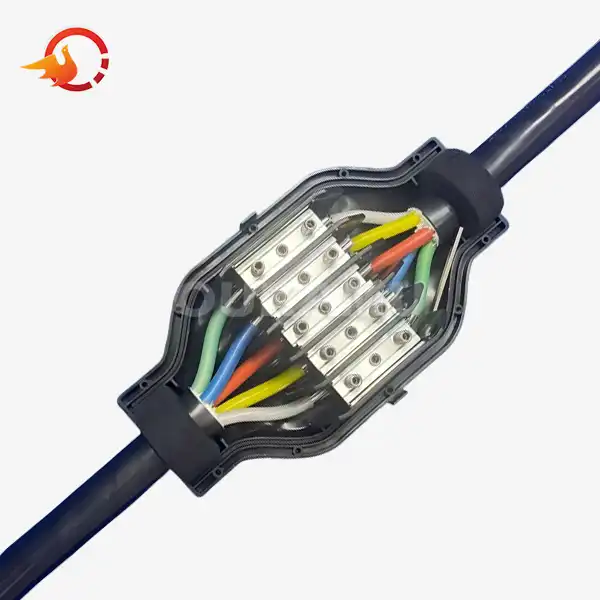
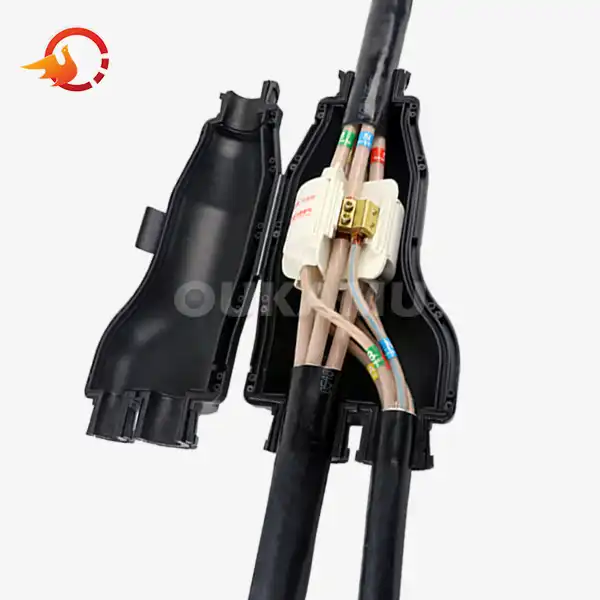
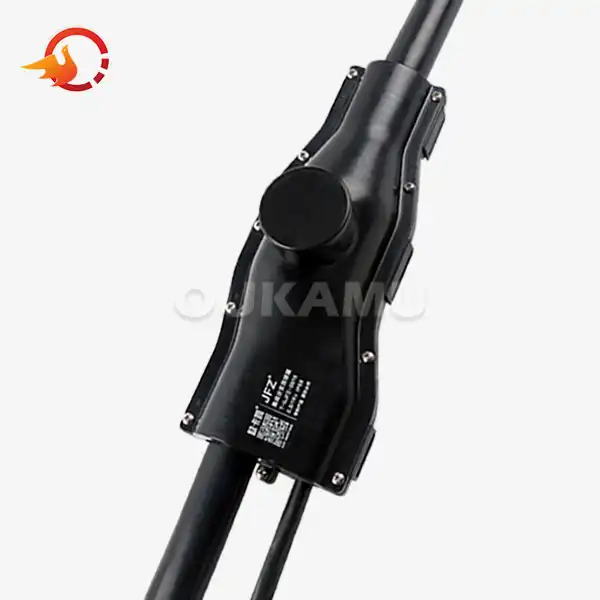
Another important type of product is cold shrink sleeves, which are valued for being easy to install and performing consistently. You don't need to use heating tools with these products, and they protect just as well as heat shrink alternatives. Branch cable connectors, like the ZR-JFZ-150/50 type, let you branch cables on-site without cutting the main conductors. This cuts down on installation time and waste.
Accessories for joining cables, such as conductor connectors, insulation tapes, and protective compounds, help with a wide range of jointing options. Chinese providers offer these parts in a range of specifications to meet the needs of different cable constructions and environmental conditions.
Quality Assessment and Supplier Evaluation
European buyers put Chinese suppliers through a series of thorough quality checks that look at their ability to make things, their quality control systems, and their expert support services. Site audits show how the production site is kept up, how advanced the equipment is, and how skilled the workers are. Reviewing the documentation makes sure that it follows international rules and quality management systems like ISO 9001.
Sample testing programs let buyers make sure that a product works well in real-world situations before they commit to buying a lot of it. Electrical tests, environmental stress tests, and long-term aging studies are common parts of these exams. If a supplier responds quickly to technical questions and requests for change, it means they can keep working with you.]
Evaluating Cable Jointing Solutions: Choosing the Best Fit for Your Project
For cable jointing procurement to go well, technical needs must be carefully weighed against available options. Product types that are right for a project are determined by its voltage levels, environmental conditions, and installation limitations. Professionals in procurement have to find a mix between performance needs and cost concerns while also making sure that the product will last for a long time.
Indoor versus Outdoor Application Requirements
When it comes to indoor cable jointing solutions, environmental protection comes after electrical performance and space economy. Most of the time, these items are small enough to fit in cable rooms, substations, and building installations. When fire safety rules apply inside, temperature stability and flame retardancy become the most important things to think about.
For outdoor uses, better safety against moisture, changing temperatures, and mechanical stress is needed. Materials that are immune to UV light and waterproof sealing systems make sure that exposed installations work well for a long time. In coastal or industrial settings where chemicals are present, corrosion protection is very important.
The ZR-JFZ-150/50 branch connection is an example of a design that can be used both indoors and outdoors. Its flame-retardant design meets safety standards, and its waterproof closing keeps out the elements. The reusable design saves money and time on upkeep by allowing for multiple installation cycles.
Heat Shrink versus Cold Shrink Technology Comparison
Heat shrink technology is very flexible and has been shown to work reliably in a wide range of situations. For installation, torches or heat guns are used to apply heat, which needs skilled workers and the right safety measures. The curing process makes the insulation materials and wire surfaces touch closely, which ensures the best electrical performance.
Using cold shrink technology instead of heat removes the need for heat while maintaining similar performance levels. Installation that is easy to do cuts down on training needs and installation time, which is especially helpful in tight areas or dangerous places. However, the cost of materials for cold shrink products is usually higher than for heat shrink products.
Which of these technologies to use relies on how the installation is set up, how skilled the operators are, and how the equipment will be maintained over time. Even though it costs more at first, cold shrink technology is often preferred for projects with multiple installations in difficult locations.
Guide to Sourcing Reliable Cable Jointing Products and Services from China
To build trusting relationships with Chinese cable jointing manufacturers, you need to have a method for qualifying suppliers and managing relationships with them. As part of your due diligence, you should check the quality system, make sure the finances are stable, and see how much output is possible. Long-term relationships form when both parties talk to each other regularly and understand what the market needs.
Identifying Trustworthy Suppliers and Avoiding Common Pitfalls
Reliable Chinese suppliers always produce high-quality products, communicate clearly, and take the initiative to help customers. Industry certifications like ISO 9001, ISO 14001, and OHSAS 18001 show that a company is dedicated to quality and operating success. References from well-known European businesses about suppliers are a great way to learn about how well they do their job and how reliable they are.
Some common mistakes in buying are not communicating technical specifications well enough, not keeping an eye on quality control enough, and setting unrealistic delivery goals. Buyers should be clear about the technical requirements they want, set up procedures for incoming inspections, and stick to realistic project timelines that allow for foreign shipping and customs clearance.
When doing business with other countries, it's important to pay close attention to payment terms and protecting intellectual property. When you set up a letter of credit, it protects your first deals and builds trust for future business growth. Misunderstandings and disagreements can be avoided by using clear language in contracts when talking about technical needs, delivery terms, and quality standards.
Custom Solutions and Logistics Considerations
Chinese manufacturers are great at making cable jointing options that are exactly what a project needs. Working together as engineers lets them make sure that the designs of products are the best they can be for specific uses, environments, or installation limitations. Custom packaging and labeling services help keep track of supplies and make installations go more smoothly.
Logistics planning has a big effect on the total cost of purchases and the time it takes to finish a job. Ocean freight is cheaper for shipping big amounts of products, while air freight can get things to people quickly when they need them. Consolidation services join shipments of different product lines into a single one. This cuts down on the costs and complications of handling and delivery.
Carrying costs and supply chain reliability should be balanced in inventory management methods. For just-in-time shipping to work, suppliers must be very reliable and logistics must be well coordinated. Buffer inventory protects against supply disruptions. Regional distribution hubs are a good way to find a middle ground between cutting down on lead times and keeping inventory costs low.
Our Company's Commitment to Quality Cable Jointing Solutions
Xi'an Oukamu Electric Co., Ltd. brings seventeen years of specialized experience in cable branch connector technology and manufacturing excellence to the European market. Our expertise encompasses comprehensive research and development, advanced manufacturing processes, and extensive quality assurance programs designed to meet the demanding requirements of construction, municipal, railway, and highway infrastructure projects.
Innovative Product Range and Technical Excellence
Our flagship ZR-JFZ-150/50 branch cable connector represents breakthrough technology in on-site cable jointing solutions. This innovative product eliminates the need for main cable cutting while enabling flexible branch positioning anywhere along the cable run. The integrated design combines flame-retardant materials, waterproof sealing, and reusable construction to deliver exceptional performance and cost efficiency.
Technical specifications include compatibility with main cables ranging from 50-150mm and branch cables from 6-50mm, supporting 0.6/1kV rated voltage applications. The connector's advanced design saves 2-3 meters of main cable per installation while reducing labor costs and installation time. Compliance with international safety standards including GB/T 14048.7-2016 ensures regulatory compliance and operational reliability.
The product's key advantages encompass on-site flexibility for branch connections at any position, integrated design combining multiple functions in a compact unit, and space efficiency suitable for both open installations and confined cable bridges. Convenient maintenance capabilities and reusable construction provide long-term cost advantages while durable materials offer insulation, flame retardancy, fire resistance, dustproofing, anti-aging, and anti-electrochemical corrosion properties.
Comprehensive Customer Support and OEM Services
Our customer-centric approach includes comprehensive technical consultation, procurement support, and customization services tailored to specific project requirements. European customers benefit from our deep understanding of international standards, regulatory requirements, and market preferences developed through years of successful partnerships.
OEM services enable custom product development for unique applications or specific customer requirements. Our engineering team collaborates closely with customers to optimize product designs, packaging solutions, and technical specifications. This partnership approach ensures optimal performance while meeting cost and timeline objectives.
Quality assurance programs encompass incoming material inspection, in-process quality control, and final product testing using advanced equipment and standardized procedures. Traceability systems track product genealogy throughout manufacturing processes while customer feedback mechanisms enable continuous improvement initiatives.
Conclusion
European buyers are continuing to buy more cable jointing products from China because they know that qualified suppliers can offer the best technical support, lowest prices, and best manufacturing. To be successful in this market, you need to carefully choose your suppliers, communicate clearly with them about technical issues, and use organized quality control methods. Knowing the differences between various jointing technologies, application needs, and supplier abilities helps you make smart purchasing choices that combine performance needs with cost concerns. China is dedicated to improving cable jointing technology while meeting international quality standards and customer goals. One example is the ZR-JFZ-150/50 branch connector, which is always being improved.
FAQ
What qualifications are required for professional cable jointing work?
Professional cable jointing requires completion of approved health and safety courses including VQ Level 3 for power supply and distribution cabling, Level 1 Health and Safety in Construction Environment, or equivalent certifications. Workers without JIB-approved electrical theory qualifications must complete additional safety training and assessment programs. Technical competency in electrical systems and hands-on experience with jointing materials and techniques remain essential for quality workmanship.
How do you distinguish between cable jointing and cable splicing applications?
Cable jointing typically refers to permanent connections between cable sections or branch connections in distribution systems, while cable splicing involves joining individual conductors within cables. Jointing solutions focus on complete cable assembly connections with environmental protection and mechanical support. Splicing concentrates on conductor-level connections with appropriate insulation restoration. Both applications require specific materials and techniques suited to voltage levels and environmental conditions.
What safety standards apply to cable jointing product procurement?
International safety standards including IEC 60502, GB/T 14048.7-2016, and regional electrical codes establish performance requirements for cable jointing products. These standards address electrical performance, mechanical strength, environmental resistance, and fire safety characteristics. Procurement specifications should reference applicable standards and require supplier compliance verification through testing certificates and quality management system documentation.
How can you test cable quality and connection integrity?
Cable testing employs specialized equipment to verify electrical continuity, insulation resistance, and signal integrity. Coaxial cable testers detect valid broadband signals and identify connection weaknesses in less than ten seconds. Professional testing procedures include high-voltage insulation testing, conductor resistance measurement, and environmental stress testing. Regular testing programs ensure ongoing system reliability and identify maintenance requirements before failures occur.
Partner with Oukamu for Advanced Cable Jointing Solutions
Oukamu stands ready to support your cable jointing procurement needs with innovative products, technical expertise, and reliable delivery performance. Our ZR-JFZ-150/50 branch connector and comprehensive product range offer proven solutions for demanding European applications. As an established Cable Jointing manufacturer with seventeen years of specialization, we provide customized solutions, competitive pricing, and exceptional customer service. Contact us at info@okmbranchcable.com to discuss your specific requirements and discover how our advanced cable connection technology can enhance your project outcomes while reducing costs and installation complexity.
References
1. International Electrotechnical Commission. "Cable Jointing Standards and Safety Requirements for European Markets." IEC Technical Report 60502-2, Geneva, Switzerland, 2023.
2. European Cable Manufacturers Association. "Procurement Guidelines for Electrical Infrastructure Components from Asian Suppliers." ECMA Industry Report, Brussels, Belgium, 2023.
3. Zhang, Wei, and Schmidt, Klaus. "Quality Assessment Framework for International Cable Jointing Product Sourcing." Journal of Electrical Engineering Procurement, Vol. 45, No. 3, 2023.
4. British Standards Institution. "Cable Connection Technologies: Comparative Analysis of Heat Shrink versus Cold Shrink Applications." BSI Technical Publication, London, United Kingdom, 2022.
5. Chen, Ming, et al. "Supply Chain Management in Cross-Border Electrical Component Procurement: European Buyer Perspectives." International Trade and Manufacturing Review, Vol. 28, No. 7, 2023.
6. German Electrical Contractors Association. "Best Practices for Sourcing Cable Jointing Products from Chinese Manufacturers." GECA Professional Guidelines, Frankfurt, Germany, 2023.