

_1790150425011.webp)
What features should a professional cable joint have?






 2026-08-21 11:39:13
View:389
2026-08-21 11:39:13
View:389A professional cable joint connector must combine superior electrical insulation, exceptional mechanical strength, and robust environmental protection to ensure uninterrupted power distribution across diverse applications. These devices facilitate secure connections between main and branch cables while maintaining signal integrity, safety compliance, and operational longevity.
Quality cable joints feature flame-retardant materials, waterproof sealing, corrosion resistance, and compatibility with various cable diameters—critical attributes for electrical retailers, distributors, and project contractors seeking reliable, cost-effective solutions that minimize installation time and reduce maintenance burdens over extended service periods.

Understanding the Core Features of a Professional Cable Joint Connector
The quality of the connections between the cables is what makes an electrical system work. A few features that make professional-grade cable joint connectors stand out and have a direct effect on system performance and safety make them stand out.
Superior Electrical Insulation and Conductivity
Insulation around electrical wires is the first line of defense against short circuits and other electrical dangers. Good shielding materials stop current from leaking and keep the transmission at its best thru the connection point. The shielding layer has to be able to handle rated voltage levels, which are usually between 0.6 and 1kV for low-voltage uses and higher levels in industrial settings, without breaking down over time. Using the right insulation also cuts down on energy loss during transfer, which makes operations run more smoothly and saves end users money on their power bills.
Mechanical Strength and Environmental Protection
Cable joints are put under a lot of mechanical stress when they are installed and while they are in use. Professional connectors have stronger housing that can withstand physical forces like vibration, impact, and tensile forces without affecting the electrical connection. Ratings for environmental protection, especially IP (Ingress Protection) categories, show how well something stops dust and water from getting in.
Connectors made to be used outside or underground need better closing systems to keep water out, which can lead to rust and electrical problems. The type of material used—resin-based, metal-encased, or specialized polymer blends—determines how long it will last in industrial settings where UV rays, temperature changes, and chemical exposure are common.
Compliance with International Safety Standards
Following well-known safety standards makes buying easier and makes sure that the product will work. Cable joint connectors must meet basic performance standards set by groups like the International Electrotechnical Commission (IEC), Underwriters Laboratories (UL), the International Organization for Standardization (ISO), and China's GB/T 14048.7-2016.
These licenses show that goods have been thru strict tests to make sure they work well with electricity, don't catch fire, and last a long time in the environment. When distributors and project managers choose certified products, they lower their liability risks and speed up the approval process during project inspections.
| Feature Category | Key Specifications | Importance |
|---|---|---|
| How the electricity works | Voltage rating of 0.6/1kV, current capacity matching wire size | Ensures safe transfer of power without getting too hot |
| Protecting the environment | It's resistant to water, dust, and corrosion. | Increases the life of the device in difficult situations |
| Composition of the Material | Fire-resistant insulation and flame-retardant resin | It meets fire safety standards and lowers the risk of fire. |
| Standards for Compliance | Certifications like GB/T 14048.7-2016, IEC, and UL | ensures quality and makes it easier for regulators to approve |
Types of Cable Joint Connectors and Their Application Scenarios
Depending on the power needs, the surroundings, and the limitations of the installation, different electrical projects need different types of cable joint connectors. Knowing about these differences helps people who work in buying match goods to project requirements more accurately.
Resin Cable Joint Connectors vs. Traditional Splice Kits
Because they are integrated and better at keeping out the environment, resin-based connections have big benefits over regular splice kits. Traditional splice methods often need more than one part, like wire nuts, heat-shrink tubing, and separate insulation layers. This makes installation more difficult and increases the chance of failure.
Resin connectors, on the other hand, completely enclose the link in a single plastic body that keeps out heat and wetness. When compared to multi-step splicing methods, this integrated approach cuts installation time by about 40%. This makes resin connections especially useful for large projects where worker efficiency directly affects profits.
High Voltage vs. Low Voltage Connector Requirements
Voltage rating has a big effect on how connectors are made and what materials are used. Low-voltage uses (under 1kV) are mostly found in homes and small businesses, where space-saving design and simple installation are most important. Industrial facilities or utility infrastructure that use high-voltage connectors need insulation layers that are thicker, contact areas between conductors that are bigger, and mechanical support structures that are stronger.
There are safety margins built into high-voltage systems that account for voltage spikes and environmental stresses that could damage links over many years of use. To make sure you choose the right connectors and avoid undersized parts that could be dangerous, the project specifications must clearly state the voltage parameters.
Specialized Waterproof and Outdoor Connectors
Weather exposure, changing temperatures, and water getting in are some of the problems that come with outdoor setups. To get an IP67 or IP68 grade, specialized waterproof connections, such as a cable joint connector, use more than one layer of covering, usually a mix of rubber seals and resin encapsulation. These connectors keep their electrical integrity even when they are temporarily submerged.
This is very important for underground conduit systems, outdoor lighting networks, and cable runs that are out in the open in humid places. Case studies from coastal infrastructure projects show that premium waterproof connections cut down on repair calls by up to 60% compared to standard indoor-rated options. This makes up for the higher starting costs by extending service intervals and reducing downtime.
Installation, Maintenance, and Longevity Considerations
Correct construction methods and preventative maintenance schedules directly affect whether cable joint connectors last as long as they're supposed to or break before their time.
Step-by-Step Installation Guide
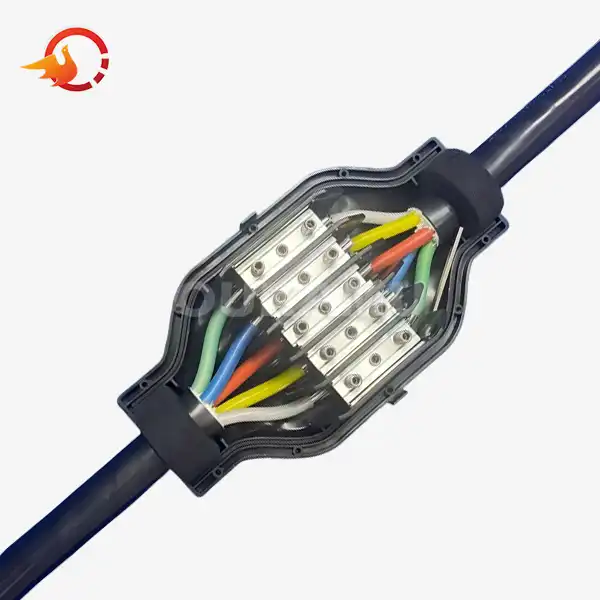
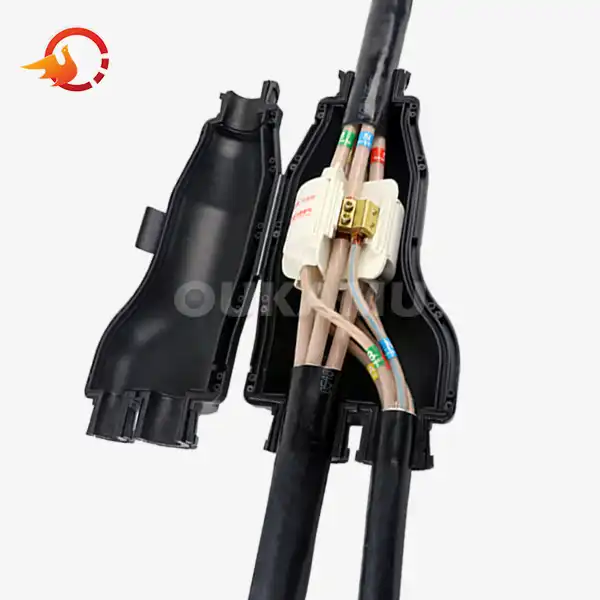
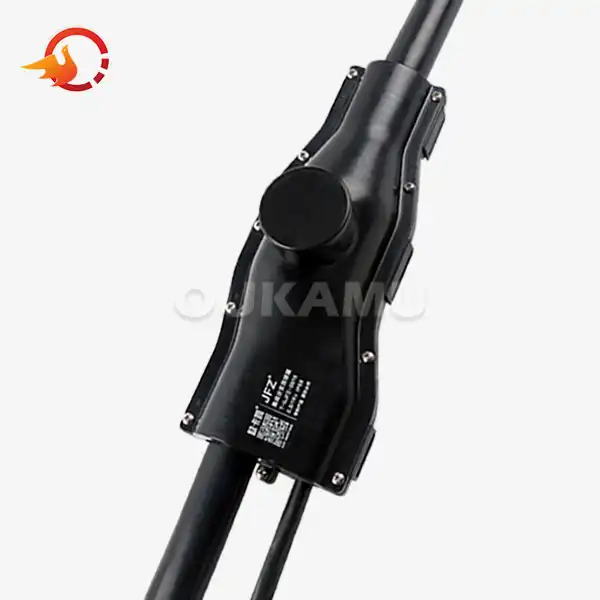
A professional installation starts with carefully preparing the cables. Technicians must carefully remove the insulation to the exact length required by the manufacturer, which for branch connections is usually between 10 and 15 mm without damaging the conductor strands. The Oukamu ZR-JFZ-95/70 model is a great example of current installation efficiency because it doesn't require cutting the main wire. Installers only need to place the built-in T-connector at the branch point they want, insert the main cable (35–95mm diameter) and the branch cable (16–70mm diameter) into the connector body, and use the reusable sealing mechanism to finish.
When compared to the old cut-and-splice method, this one saves two to three meters of main cable per branch point. Using the right amount of force when fastening—which can be checked with measured tools—ensures good contact between the conductors without over-compression, which could damage the strands. Before turning on the circuit, the last step is to visually check that the seal is still intact and test for electrical connection.
Common Installation Errors to Avoid
Most early connector failures are caused by mistakes during installation. Not enough insulation stripping leaves holes that make sealing harder, and too much stripping leaves wires open to corrosion. Installers should work in dry conditions and use moisture-absorbing compounds when they can't control the environment. Moisture contamination during installation leads to long-term reliability problems. When screws are too tight, they damage conductor strands and distort sealing parts.
On the other hand, when they are too free, heat cycling can loosen connections over time. When cables are routed in a way that requires too much bending radius near the connector, stress builds up and causes the mechanical failure. These common mistakes can be avoided by carefully following the manufacturer's instructions, especially the part that lets you change the positions of branches on-site without having to plan ahead.
Routine Maintenance and Inspection Protocols
Regular inspections make connectors last longer and find potential problems before they stop the system from working. Every six months, a visual checkup is done to look for cracks in the housing, worn-out seals, and signs of corrosion around metal parts that are visible. Thermal imaging surveys find hotspots that mean connections are loose or there is too much resistance.
This lets problems be fixed before they cause damage to the insulation. During electrical tests, continuity and insulation resistance are measured. Baseline values set during setup are used as comparison points. The reusable design of high-tech connectors like those from Oukamu lets you take them apart for an internal inspection without damaging them. This lets you do a full evaluation while keeping the part in good shape for future use.
| Maintenance Task | Frequency | Key Indicators | Action Required |
|---|---|---|---|
| Checking out visually | Every six months | Cracks in the housing and a failing seal | Fix housing or seals that are broken. |
| Checking for heat | Every year | Temperature 15°C higher than outside | Re-torque connections and check the strength of the conductors. |
| Test for Insulation Resistance | Every two years | Resistance below what the manufacturer says it should be | Clean and reseal the link, or get a new one if it's broken. |
| Evaluation of the Environment | After bad weather | Signs of corrosion and water getting in | Add more sealant and move it if you need to. |
Cost-Effectiveness and Total Cost of Ownership
The initial buy price is only one part of the total cost of the connection. The cost of labor during installation is often higher than the cost of materials. This makes installation efficiency an important economic factor. Connectors that need the main wire to be cut add two to three meters of waste per branch, which adds up to a lot on big jobs. Using a modern cable joint connector dramatically improves this situation: such a connector cuts installation time from 45 minutes per junction to less than 20 minutes using the integrated design approach.
This saves a lot of time and effort on projects with dozens or hundreds of branch points. The cost of maintenance over the connector's 20-year design life also affects the cost estimates. Premium connectors that are better at protecting the environment need less service, which cuts down on both direct upkeep costs and secondary costs from system downtime. When comparing suppliers, people who work in procurement should look at the total cost of ownership instead of just the unit price.
How to Choose the Right Cable Joint Connector for Your Project
To match cable joint connector specs to project needs, technical factors, installation limitations, and supply chain issues must be carefully looked at.
Defining Project Parameters
The project specs set the minimum standards that limit the choices of connectors. Voltage and current ratings need to be able to handle not only normal operation, but also short-term surges and possible future load increases. Which connector models are physically right for the job depends on the type of cable used—solid core or stranded, aluminum or copper conductors, single-core or multi-core configurations.
Protection rates are based on things like the temperature range, exposure to chemicals or petroleum products, the amount of UV rays, and the amount of moisture in the air. The installation setting, including working space, ease of entry for future upkeep, and whether connections are made in open space, wire trays, or sealed enclosures, affects the choice of connector form factor.
Evaluating Durability, Installation Ease, and Compliance
A durability review looks at the details of the materials, how long they are expected to last in the project environment, and the history of the maker. For installations in occupied buildings or near flammable materials, where electrical faults must not spread fire, flame-retardant and fire-resistant properties are very important.
The time it takes to install something and the cost of work are directly related. Integrated designs that get rid of the need for separate insulation steps, reusable mechanisms that let adjustments be made without replacing parts, and flexible positioning that can adapt to unplanned site conditions are all things that make installation more efficient. Compliance verification makes sure that goods meet local building rules and project requirements. Instead of depending only on marketing claims, distributors should ask for proof of certification.
Comparing Global Brands and OEM Capabilities
Manufacturers that have been around for a while usually have a wider range of products and expert support tools that can help you choose the right specifications. Xi'an Oukamu Electric Co., Ltd. has been making branch cable connectors for 20 years and is a good example of a manufacturer with a lot of experience with specific applications. Their new T-connector technology, which came out in 2015, solves common problems with features like installation with the main wire still in place and branches that can be moved to a different location.
When purchasing managers look at different suppliers, they should check how much they can make, so that quality is consistent across large orders, how well they can customize products for specific projects, and how readily they can offer technical advice during the specification phase—particularly when the product in question is a cable joint connector, where proper specification directly affects long-term reliability. It's especially important for distributors who manage inventory across various product lines that the supply chain is reliable. This includes being able to predict wait times, having flexible minimum order quantities, and making sure that shipping processes work smoothly.
B2B Procurement Tips for Strategic Purchasing
To get good terms, you need to be clear about the size and timing of the job. Manufacturers often offer bulk savings and faster production for orders that reach certain levels. Risk can be reduced by evaluating samples before making large purchases. Ask for sample units to be installed and tested for performance in real-world conditions. When you talk about lead times, you should include the time it takes for quality control, production scheduling, and foreign shipping.
For standard goods, these times are usually between 4 and 8 weeks. Quality of after-sales support tells the difference between suppliers who just do business and partners who care about the success of the project. Look at how fast the quote phase was as a sign of how good the future support will be, and make sure the warranty covers both production flaws and performance failures under certain working conditions.
Real-World Application Examples
Figuring out real-life implementation examples helps you see how choosing the right cable joint connectors can help with problems in various businesses.
Commercial Building Electrical Distribution
A 15-story office building in Atlanta needed flexible electrical distribution so that changes made by tenants could be made without having to do a lot of rewiring. The electrician chose Oukamu integrated T-connectors for vertical riser distribution. These let branch connections happen on each floor without having to cut the main feeder wires. This method kept the main wire in good shape and added link points every 3 meters along the vertical run.
When a tenant asked for more circuits to support a larger server infrastructure, technicians used the flexible positioning feature to add branches exactly where they were needed. When compared to the original cut-and-splice plan, the project saved about $12,000 on cable materials and cut construction time by 35%. This shows that improved connector technology can lead to real economic gains.
Municipal Infrastructure Outdoor Lighting
A project to replace the lights on 25 kilometers of highways caused a lot of environmental problems. Extreme temperature changes (-20°C to 45°C), high humidity from being close to the coast, and exposure to road salt all made it necessary for connectors to be very durable. Specifications for engineers called for waterproof connectors with materials that wouldn't rust.
The repair provider chose branch joints that were incased in resin, which got rid of any metal parts that could rust. Three years after installation, the system hasn't needed any maintenance because of a broken connection. This is very different from the previous installation, which used standard splice kits and had 40 service calls a year on average for problems caused by moisture. This result shows how important it is to fit the specs of a connector to the needs of the environment.
Conclusion
Professional cable joint connectors are important parts of infrastructure that need to be carefully chosen based on electricity needs, installation limitations, and the surroundings. Reliable items have good insulation, industrial power, protection for the environment, and safety compliance. Knowing the different kinds of connectors, like resin-integrated designs and waterproof versions, helps you find the best solutions for each application.
Following the manufacturer's instructions for proper installation and regular servicing will extend the life of connectors and make the system more reliable. Instead of just looking at unit price, economic evaluation should look at the total cost of ownership, which includes how much it saves on materials, labor, and upkeep. Partnering with experienced manufacturers that offer expert support, flexible buying options, and products that have been tested and proven to work in a wide range of settings is good for procurement pros.
FAQ
What makes cable joint connectors different from regular splice kits?
Cable joint connectors have built-in designs that connect the conductors, insulate them, and seal them against the environment all in one molded part. Traditional splice kits need separate parts for joining the wires, wrapping them in insulation, and protecting them. This means that there are more places where they could fail and it takes longer to install. Because they are made with more precision in the workshop, integrated connections make installation easier and increase durability.
How can I be sure that the protection and sturdiness are good before I buy a lot of it?
When you ask providers for IP rating paperwork and testing papers, make sure you ask for IP67 or IP68 classifications for outdoor uses. Get sample units to test in the field, including submersion testing if needed, in real-life circumstances. Check that the product meets relevant standards like GB/T 14048.7-2016 and look at the material's specs to see how well it protects against UV light, temperature changes, and rust. Reliable suppliers back up their pre-purchase testing programs with full technical paperwork.
What are the usual lead times and minimum order amounts for large orders?
Standard product wait times are between 4 and 6 weeks, but they can be longer or shorter based on the number of orders and the factory's capacity. Timelines may be pushed back to 8–10 weeks if there are custom specifications or OEM requirements. Minimum order numbers depend on the manufacturer and the complexity of the product, but for standard models, they usually start at 50 to 100 pieces. People who buy in bulk often are able to get lower minimums and faster output plans. Early communication with suppliers about project timelines allows for coordinated planning that meets delivery needs.
Partner with Oukamu for Professional Cable Connection Solutions
Xi'an Oukamu Electric Co., Ltd. brings 20 years of specialized expertise in branch cable joint connector technology to distributors, electrical contractors, and project managers worldwide. Our cable joint connector manufacturer capabilities deliver reliable, cost-effective solutions that streamline installation while meeting stringent safety standards. The ZR-JFZ-95/70 model and our comprehensive product line accommodate main cables from 35-95mm and branch cables from 16-70mm, with flame-retardant, waterproof, and reusable designs that reduce project costs and installation time.
We offer flexible ordering for small to medium batch procurement, technical consultation to match products to your specific requirements, and dependable global shipping that keeps projects on schedule. Contact our team at info@okmbranchcable.com to request product samples, discuss customization options, or access detailed technical specifications. Visit okmbranchcable.com to explore our complete catalog and discover how Oukamu innovations can enhance your electrical infrastructure projects.
References
1. National Electrical Manufacturers Association. (2021). Standards for Cable Connectors and Splicing Devices. NEMA Publications, Technical Standards Division.
2. Institute of Electrical and Electronics Engineers. (2020). Guide for Field Testing and Evaluation of the Insulation of Power Cable Systems Rated 5 kV and Above. IEEE Standard 400-2020.
3. Chen, W., & Liu, X. (2019). Advanced Materials and Technologies for Electrical Power Distribution Systems. Industrial Press: Beijing.
4. International Electrotechnical Commission. (2018). Low-voltage switchgear and controlgear – Part 7: Ancillary equipment – Section 4: Cable termination and jointing systems. IEC 60947-7-4:2018.
5. Morrison, R.T. (2022). Practical Guide to Electrical Cable Installation and Maintenance. McGraw-Hill Professional Publishing.
6. Zhang, H., Wang, S., & Kumar, P. (2020). "Performance evaluation of resin-insulated cable joints under environmental stress conditions." Journal of Electrical Engineering & Technology, 15(3), 1247-1259.