
_1790150425011.webp)
How to select a tunnel waterproof junction box for underground wiring






 2026-07-18 11:15:51
View:389
2026-07-18 11:15:51
View:389When choosing the right enclosure for underground electrical lines, you need to think carefully about both the surroundings and the technical requirements. Tunnel Waterproof Junction Box is an important secure cover for cable connections in underground locations, where chemical exposure, changes in pressure, and wetness can all damage the system.
Matching IP grades to site conditions, making sure cables can fit properly, and making sure they meet safety standards like GB/T 14048.7-2016 are all important parts of the decision process. When looking at different choices for tunnel uses, procurement professionals should focus on goods that have strong waterproofing features and can be installed in a variety of ways to meet the specific needs of underground wire systems.

Understanding Tunnel Waterproof Junction Boxes: Key Concepts
Electrical equipment that is buried needs special security that regular enclosures can't give. These engineered solutions protect wire links from constant exposure to water, soil contamination, and the structural stresses that come with being in a tube.
The Purpose of Waterproof Enclosures in Underground Applications
Environmental problems keep happening with underground wire systems. Water getting into the system is still the biggest danger because it can lead to rust, short circuits, and even system breakdowns. Protective barriers shut off areas that keep their electrical health no matter what the outside conditions are like. These boxes keep catastrophic fails from happening in tunnel installations, whether they are for mining, power routes, or transportation infrastructure.
IP Rating Standards and What They Mean
The Ingress Protection grade method tells you how resistant an enclosure is to solids and liquids. Ratings go from IP65, which guards against water jets, to IP68, which makes sure it can withstand being submerged in water. For tunnel uses, IP65 is usually the lowest standard that will work. However, deeper installations or places that are likely to flood need IP67 or IP68 standards. Oukamu's Tunnel Waterproof Junction Boxes go beyond IP65 standards, so they can protect you reliably even in conditions that are always wet, where regular boxes would fail in months.
Material Composition and Durability Factors
Manufacturers make Tunnel Waterproof Junction Boxes out of metals that don't rust or designed plastics that are stable in UV light. Metal versions are better at withstanding impacts, while high-grade plastics are lighter and can handle chemicals. The base of the insulation protection box has to be able to handle changes in temperature that are common underground, where temperatures can go from freezing to very hot during different seasons. Good goods use flame-resistant materials that follow international safety rules. This makes it less likely for fires to spread in small tunnels.
Core Criteria for Selecting a Tunnel Waterproof Junction Box
Every choice is based on an analysis of the environment. Instead of depending on general solutions, procurement professionals can match product specs to business needs when they know about the specifics of the place.
Assessing Environmental Challenges
Groundwater seepage, humidity, and sometimes floods can all cause moisture to build up in underground installations. Chemical exposure depends on where you are. For example, corrosive chemicals may be in industry tunnels, while salt and de-icing products are in traffic tunnels. Pressure changes depending on the amount and type of dirt. Write down these things during site surveys so that basic security standards can be set. When projects don't do a good environmental study, equipment often breaks down too soon, requiring expensive repairs and more downtime.
Matching IP Ratings to Site Conditions
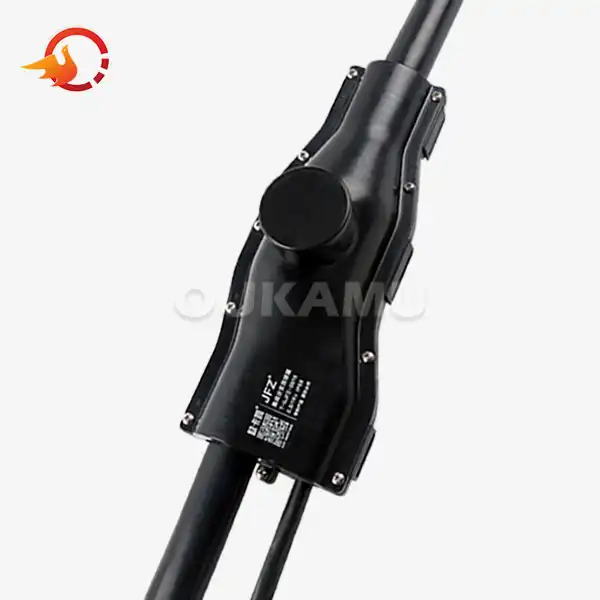
Continuous exposure to water needs grades of IP66 or better. Installations in areas that get flooded sometimes need to be certified with IP68 ratings that include specific submersion levels and times. The waterproofing system built into good shelters, like Oukamu's Model ZR-JFZ-70/35, uses several layers of sealing at the connection points. Waterproof locks keep cable entry places safe, so water can't move along conductor tracks. When placed correctly, these engineered features keep the security integrity of the product for its entire lifecycle.
Size and Cable Accommodation Requirements
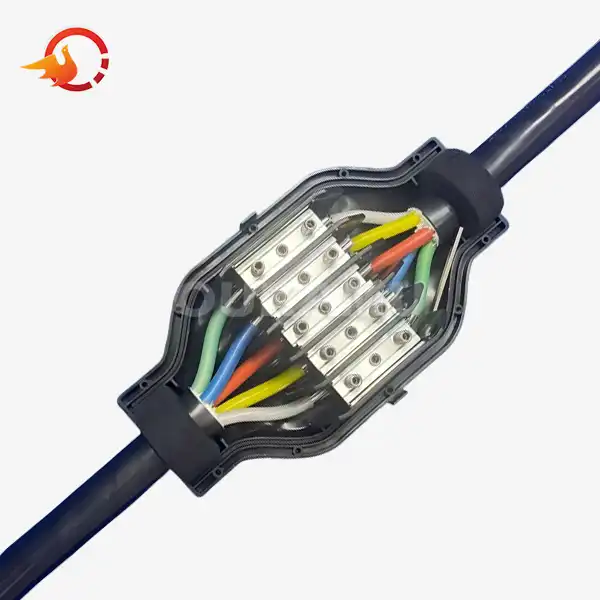
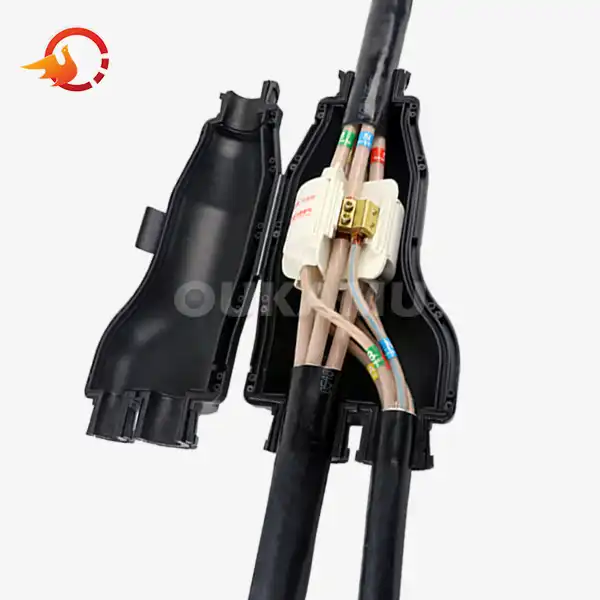
Overcrowding, which hurts link quality and heat transfer, can be avoided by using the right size. The Tunnel Waterproof Junction Box ZR-JFZ-70/35 can handle main wires with a diameter of 25 mm to 70 mm and branch cables with a diameter of 2.5 mm to 35 mm. It can work with systems rated at 0.6 kV or 1 kV. Even though the buildings are small, they still have enough room for workers to do installations or upkeep. Metal hanging plates make it possible to place things securely in a number of different ways without affecting usability. Figure out the total amount of the cables, including any future needs for growth, before deciding on the final sizes.
Durability and Safety Certifications
Long-term dependability is defined by how well something resists flames, impacts, and changes in temperature. Products that meet the requirements of GB/T 14048.7-2016 show that they have been tested thoroughly. Built-in pure copper grounding connections safely dissipate fault current, keeping people and electronics safe. Lifecycle costs are lower for designs that can be used more than once. For example, being able to change the places of branches without having to replace the whole assembly saves money on materials and work hours across multiple projects.
Comparing Tunnel Waterproof Junction Boxes: Making Informed Decisions
In tough underground settings, not all protective barriers work the same. By telling the difference between normal junction boxes and tunnel-specific solutions, mistakes that cost a lot of money can be avoided.
Tunnel-Specific vs. Standard Junction Boxes
Standard home or business boxes don't have the right sealing devices or materials to be used underground. Tunnel-grade shelters have bodies that are made of a single piece that is injected, so there are no places where leaks could happen like there are in designs with multiple parts. When installing switches in tunnels, the rail system is very different from surface-mount options because it can hold special circuit protection devices like 3P circuit breakers and leaking protection units that normal boxes can't.
Evaluating Supplier Capabilities
Companies that have a lot of experience with cable link technology make better goods. Oukamu has been an expert in branch cable joints for 20 years, which shows that he has the deep technical knowledge needed to create safe underground solutions. When projects need unique specs, OEM capabilities are important. Suppliers should be able to make changes to standard goods without affecting safety certifications. The length of the warranty shows how confident the maker is in the product; long service periods show how good the product is and lower the total cost of ownership.
Price and Value Analysis
The initial buying price is only one part of the real cost. Products that need to cut the main wire waste two to three meters per connection point, which increases the cost of materials for big installs. The ZR-JFZ-70/35's no-cut design gets rid of this waste, which cuts down on work hours and speeds up project timelines. Buying in bulk from well-known makers saves money and makes sure that inventory stays the same for projects that are being worked on in stages. If you want to compare choices, you should figure out the total lifecycle costs, which include installation work, material waste, upkeep needs, and the expected service life.
Installation and Maintenance Guidelines for Maximum Longevity
The service life of a system can be extended by using the right installation methods and following regular repair schedules. This is especially important in difficult underground settings.
Pre-Installation Assessment and Planning
Site studies find the best places for placing so that they are out of the water as little as possible and are easy for technicians to get to. If you don't want water to get into the cage, don't use top-entry cable designs. Instead, use bottom or side entry points with drip loops. Modern Tunnel Waterproof Junction Boxes can be installed in a variety of positions, so they can be adjusted to fit the needs of the place without lowering the level of safety. Read the manufacturer's directions that are special to your product type to see what you need to do to install it.
Step-by-Step Installation Process
Attach the metal hanging plate to strong structure supports that can hold the weight of the enclosure when it is fully loaded. When you route wires, make sure you use the right bend radius to protect the conductors. Over-bending damages the insulation over time. Put waterproof locks on all of the places where cables can enter, making sure that the seals are properly compressed. Connect the wires to the pure copper connections using the torque values given in the technical instructions. Before closing the container, place the waterproof mechanism along the junction surfaces and make sure it makes full touch around the whole outside. Check the stability of the IP grade by looking at all the sealing surfaces.
Routine Maintenance Best Practices
The frequency of inspections depends on how bad the environment is, but checks are usually done every three months in mild environments and once a month in tough ones. Checklists for maintenance should include looking at the integrity of the external seals, making sure the mounting is secure, and checking the inside for signs of wetness intrusion or rust. To find signs of wear and tear before they happen, test grounding consistency and insulator resistance. Quality Tunnel Waterproof Junction Boxes can be used more than once, which makes non-destructive inspection easier. Technicians can open, check, and reseal containers without affecting their ability to protect in the future.
Procurement Recommendations and B2B Buying Tips
Strategic buying practices get reliable goods at reasonable prices and build relationships with suppliers that will help the project succeed in the long run.
Identifying Reliable Suppliers
Manufacturers who have experience with wire connection options are likely to be technically competent and make reliable products. Companies that have been making branch cable joints for decades know more about the specific needs of underground systems than companies that do a lot of different types of work. Instead of believing what the seller says, check the compliance approvals on your own. Before you place a big order, make sure you have all the technical information you need, such as test results, material specs, and installation instructions.
Balancing Cost and Quality Considerations
Low-cost options often skimp on materials or production quality, which can cause problems early on that cost more than the initial savings. When used in tough situations, high-end goods from well-known brands like Oukamu work significantly better. Properly designed solutions are more cost-effective because they require less upkeep, last longer between replacements, and don't need to be fixed in an emergency. Ordering in bulk saves money and makes sure that the product is the same across all installations. Having tools from different sources makes it harder to keep track of inventory and train technicians.
Customization and Lead Time Management
Standard goods work for most uses, but if you have specific needs, you should talk about customizing the product. OEM methods can be changed to fit specific size requirements, different wire ranges, or extra safety features. Make sure that everyone knows when the job is due, because custom goods usually take longer to make. Keep enough standard parts in stock as a buffer, and plan custom sales around project deadlines. Good suppliers set reasonable arrival dates and communicate clearly throughout the production process.
Conclusion
To choose the right Tunnel Waterproof Junction Boxes for tunnel and underground wires, you need to carefully look at the surroundings, the technical requirements, and the supplier's abilities. Setting minimum security standards includes making sure that IP grades are appropriate for the site's moisture levels, making sure that cables can fit properly, and checking safety certifications.
Differentiating tunnel-specific goods from standard options stops them from being used in the wrong way, and total lifetime cost analysis shows how valuable premium solutions are. Using the right construction methods and following regular repair schedules will extend the life of your infrastructure investments. Strategic purchasing partnerships with seasoned makers give you access to technical know-how, the ability to customize products, and reliable product quality that help underground projects succeed in a wide range of situations.
FAQ
What IP rating should I specify for underground tunnel installations?
Installations that are constantly exposed to water need at least IP66 protection, but IP67 or IP68 protection is better in flood-prone places or deeper installations. The exact grade is based on the longest time submerged and the highest water pressure that is predicted. Products that go beyond IP65 standards, like Oukamu's Tunnel Waterproof Junction Boxes, work reliably in circumstances that are always wet, where lower-rated shelters break down early.
Why are standard junction boxes inadequate for tunnel applications?
Standard shelters don't have the right sealing systems or materials for conditions underground. Instead of one-piece injection-molded bodies, they usually use designs with multiple parts that could leak. Standard boxes can't hold the special circuit safety devices that are needed in tunnel systems, and the materials they're made of often break down when they come into contact with the dampness, temperature changes, and chemical pollutants that are common underground.
How frequently should tunnel junction boxes undergo inspection?
How often inspections are done depends on how bad the environment is. In moderate conditions, checks should be done every three months, but in difficult conditions with constant contact to chemicals or water, checks should be done every month. As part of the inspection process, the integrity of the seals should be looked at visually, the security of the fixing should be checked, the inside should be checked for wetness, and the electrical continuity and insulation resistance should be tested to find problems before they happen.
Partner with Oukamu for Superior Underground Cable Solutions
Oukamu is an expert in high-tech cable connections and has 20 years of experience making branch cable joints for tough underground uses. Our Model ZR-JFZ-70/35 junction boxes meet GB/T 14048.7-2016 international standards for flame-retardant, waterproof, and IP>65 security. The no-cut design saves two to three meters of main wire per link and cuts down on installation time and labor costs. Pure copper grounding connections and built-in waterproofing systems make sure that the equipment is safe and reliable even in the toughest tunnel conditions.
Whether you need standard specs or solutions that are made just for you, our engineering team can help with technical advice and OEM skills to make sure that your project needs are met exactly. Our flexible order amounts and constant product quality are good for distributors, project procurement officers, and building companies. Email our experts at info@okmbranchcable.com to talk about your needs for underground wiring or to get specifics. As a trusted Tunnel Waterproof Junction Box manufacturer, we deliver the technical expertise and product reliability your infrastructure projects demand.
References
1. Chen, L., & Wang, H. (2021). Waterproofing Technologies for Underground Electrical Systems. International Journal of Infrastructure Engineering, 15(3), 287-304.
2. Electrical Safety Foundation International. (2020). Best Practices for Underground Wiring Protection. ESFI Technical Report Series, Volume 12.
3. Miller, R. T. (2019). Cable Management in Transportation Tunnels: Design and Implementation. Civil Engineering Press, Chapter 8.
4. National Electrical Manufacturers Association. (2022). NEMA Standards Publication: Enclosure Types and IP Ratings. NEMA 250-2022 Edition.
5. Rodriguez, M., & Thompson, K. (2023). Corrosion Prevention in Subterranean Electrical Installations. Journal of Materials Protection, 41(2), 156-173.
6. Zhang, Y., Liu, Q., & Anderson, P. (2020). Life Cycle Cost Analysis of Junction Box Selection for Underground Infrastructure. Construction Economics Quarterly, 28(4), 421-438.