

_1790150425011.webp)
Choosing Armoured Cables: Key Factors to Consider






 2026-04-30 14:59:45
View:389
2026-04-30 14:59:45
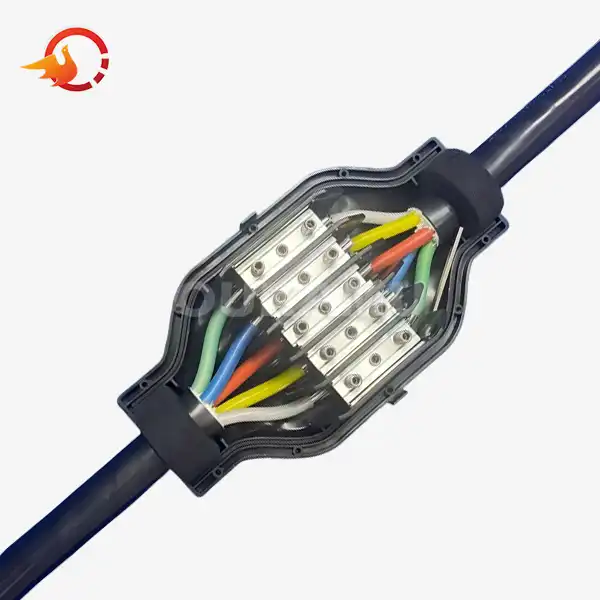
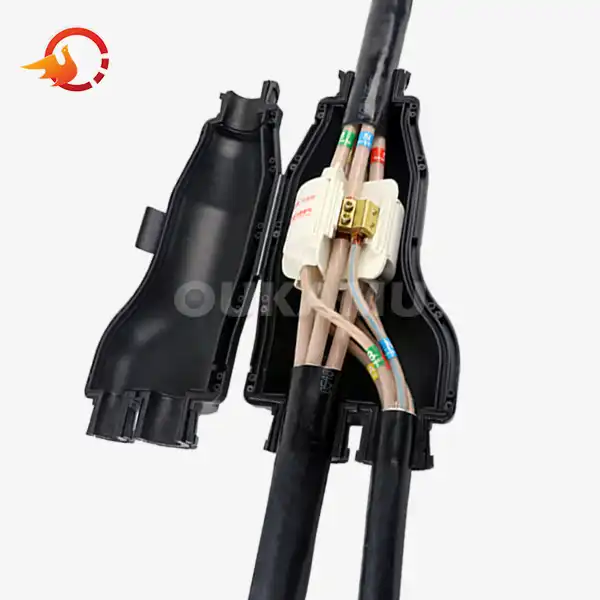
View:389There are more options than just wire-to-wire communication to consider when choosing cable connection solutions for electricity distribution systems. An Armoured Cable Branch Joint is a long-term investment in infrastructure that affects safety, working efficiency, and managing costs over time. With these special connectors, branch connections can be made at exact places along major distribution cables, without having to cut the cables or make large cable reserves. The best option strikes a balance between technical performance and practical installation needs. This is especially important for stores, wholesalers, and project procurement teams that are in charge of handling a wide range of electricity installations in business, industry, and infrastructure settings.

Understanding Armoured Cable Branch Joints: Types and Working Principles
Cable branch joints are the most important part of electrical networks because they connect main distribution lines to secondary circuits and allow power to be sent through them. Modern branch joints keep the purity of the trunk cable while making safe branch connections. This is different from older methods of connection that require cutting the main cable.
Core Design Types and Their Applications
In different project settings, different joint designs are needed. Insulated branch joints offer complete electrical safety by including built-in safety materials that stop unexpected touch and pollution of the environment. These designs work well in places where people or weather could be dangerous.Non-insulated versions are easier to put in controlled settings that already have extra protective enclosures. On the other hand, flexible joint designs allow for movement and vibration in industrial settings that are always changing, while rigid builds offer the most stability for long-term installs underground.Waterproof cable joints use sealing technologies to keep water out, which is why they are necessary for outdoor installations, underground lines, and wet industrial settings. Which of these types to use varies on the conditions of the place and the needs of the business.
Technical Specifications That Matter
The maximum amount of electricity that branch joints can carry is set by their voltage ratings. Low-voltage distribution systems usually work at 0.6/1kV, but different levels may be needed for certain tasks. Another important requirement is that the joints must be able to handle both main cable sizes (which are usually between 4mm and 240mm in cross-section) and branch cable sizes (which are between 1.5mm and 70mm).Ratings for environmental protection show how joints work when they are exposed to high and low temperatures, chemicals, UV light, and dynamic stress. Products must follow strict safety and performance standards set by industry testing methods when they comply with international standards such as IEC 61238 and GB/T 14048.7-2016.
Key Factors to Consider When Choosing Armoured Cables and Branch Joints
When buying cable hookup systems, you need to carefully consider a lot of different factors. Teams can find solutions that meet technical needs, budget limits, and practical goals with the help of a structured screening method.
Environmental Conditions and Installation Settings
Material needs and amounts of protection are set by the project setting. Installations that are buried have to deal with earth chemical, moisture, and mechanical loads caused by ground movement. In these situations, you need waterproof seals, materials that don't rust, and strong mechanical building.Chemical exposure, temperature changes, and electromagnetic interference are some of the problems that come up in industrial sites. To protect workers, special features are needed. It is important for commercial buildings to have small designs that can fit into small service areas and still meet fire safety standards. By being aware of these differences, buying teams can choose the right joint types from the start.
Load Demands and Electrical Performance
The current-carrying ability must match the needs of the circuit while leaving enough room for error. Joints that are too small cause resistance heating, which speeds up the breakdown of insulation and raises the risk of failure. On the other hand, components that are too big add cost without improving efficiency.How well joints stop leaking currents and keep circuit separation is based on the electrical insulation resistance. Good insulation materials keep working well in a wide range of temperatures and through age cycles, so they don't need as much care over time. Testing standards make sure these qualities are correct by following strict procedures that mimic years of heavy use.
Regulatory Compliance Across Markets
In different areas, electrical rules and certification standards are different. In the US, standards are based on the National Electrical Code (NEC), while in other areas, they are based on IEC standards. Products that are sold in more than one place need certificates that show they meet the safety standards of each area.In addition to simple electricity safety, environmental laws are having a bigger impact on how products are made. RoHS rules limit the use of dangerous materials in electrical parts, and REACH rules make sure chemicals are safe throughout the whole span of a product. By choosing joints that meet these standards, you can avoid future problems with the law and help your company live up to its green promises.
Installation Complexity and Labor Considerations
Installation time has a direct effect on the costs and plans of a project. Cutting the main wire for traditional cable joints requires a lot of work, like removing the insulation, getting the conductors ready, putting on the connectors, and putting the protected layers back on. These steps require skilled workers and make the installation process take longer.Modern branch joint designs don't require cutting the main wire, so techs can make connections without stopping the trunk line. This method cuts the time it takes to install from hours to minutes and doesn't need many special tools. Another benefit of reusable designs is that joints can be moved or rearranged as system needs change without having to replace any parts.
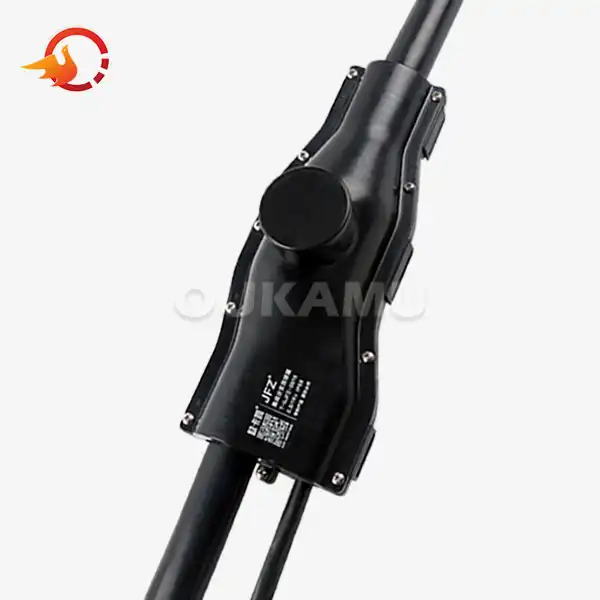
Take a look at the Oukamu FH-JFZ-16/10 model to see how these fitting benefits work. This joint works with main cables that are 4 mm to 16 mm wide and branch cables that are 1.5 mm to 10 mm wide. It gets rid of the need to cut main cables or keep certain lengths. Technicians put in links exactly where the project calls for them. This way, there is no wasted wire or measurement mistake that can happen with planned branch points. The method cuts down on work time and complexity by a huge amount while saving two to three meters of main cable per installation.
Cost Considerations and Long-Term Value
The initial buying price is only one part of the total cost of owning. The real economic effect is based on the costs of installation, the need for upkeep, and the expected service life. Products that need a lot of work to install may be cheaper up front, but they end up costing more in the long run than more expensive units that are easier to install.
Accessibility for maintenance has a big effect on ongoing costs. When joints are put in places that are easy to get to, they can be inspected and maintained regularly, which extends their useful life. On the other hand, it costs a lot to service connections that are hidden in walls or underground conduits, so beginning dependability is very important.Reusable joint designs have special cost benefits for systems that need to be reconfigured on a regular basis. Instead of throwing away and buying new parts during repairs or additions, reused joints can be changed to fit different shapes. This cuts down on both material waste and the cost of replacements.
Comparing Armoured Cable Branch Joints: Making Informed Procurement Decisions
When buying teams know how different connection options stack up against each other, they can choose the best goods for each job. Depending on the needs of the project and the goals of operations, each system has its own benefits.
Branch Joints Versus Alternative Connection Methods
Straight joints permanently connect two sides of a cable. They are usually used to make cable runs longer or fix broken parts. For these openings to be sealed, both wires must be cut and the conductors must be carefully lined up. Straight joints work well for what they're meant to do, but they can't handle branch links without extra parts.Compression or bolted systems are used by mechanical connections to connect wires. These devices are easy to connect and separate, but they don't usually have the environmental safety that is needed for installations that will be open to the elements. Mechanical links are good for short-term ties or places that need extra protection.
Insulated piercing connections (IPCs) make electrical contact with the wire without removing the jacketing. They do this by going through the insulation. IPCs are useful for overhead lines and some utility applications, but they don't provide as strong of links as integrated branch joints, and they might not be able to meet the needs of important infrastructure applications.Armoured Cable Branch Joints combine several functions into a single part: they connect electrically, seal against the environment, and protect against mechanical damage. This combination makes things more reliable than multi-component options while also making installation easier and lowering the number of places where things could go wrong.
Protection Levels for Different Environments
The highest standards of security are needed for sites that are buried. Moisture getting into the system breaks down shielding and corrodes conductors, which can lead to catastrophic failures. Branch joints that are waterproof and have an IP67 or IP68 grade protect well against water immersion and dirt contaminants.In industrial settings where chemicals are present, parts must be made from materials that are resistant to chemicals. Flame-retardant and fire-resistant qualities are very important in places that work with burning materials or where there is a high risk of fire. Products that meet these standards help places keep their insurance coverage and stay in line with regulations.Commercial sites inside may need less environmental protection, but they usually have to follow strict fire safety rules. Flame-retardant and low-smoke materials keep joints from spreading fire or harmful fumes during situations in the building.
Customized Solutions Versus Standard Products
Standard branch joints are available right away, have been used before, and are priced competitively. These items work well in common situations with common wire sizes and normal environmental conditions. When stores and distributors offer basic models that meet most customer needs, they save money on inventory.Customized solutions can meet specific needs that standard goods can't, like when the climate is harsh, the cables are an odd size, or there are special installation limitations. Custom joints usually have longer lead times and cost more per unit, but they solve problems that would need a lot of solutions or make the system less effective otherwise.
Vendor Evaluation and Supply Chain Considerations
Project plans and long-term product support are affected by how reliable a supplier is. You can be sure that the products you buy will be of good quality and always be available from well-known makers. When it comes to product creation and technical support, companies like Oukamu, which has been dealing in branch cable joints for twenty years, bring a lot of knowledge to the table.Order delivery is affected by production capacity, especially when buying in bulk to support seasonal inventory changes or marketing efforts. When market conditions change, suppliers who can handle changing order amounts give you more options.
Technical help services are very useful in addition to selling products. When manufacturers give installation help, troubleshooting help, and application engineering, they help customers get the most out of their products while reducing the problems they cause during implementation. This help is especially useful when bringing new goods to markets or uses that haven't seen them before.Logistics skills affect both the total cost of landing and the dependability of delivery. When suppliers have good transportation networks, shipping costs and times are cut down. For distributors who manage goods in various places, being able to split orders and schedule deliveries at different times from suppliers makes the best use of warehouse space.
Installation, Testing, and Maintenance Best Practices to Enhance Cable Joint Performance
Following the right steps for installation and regular care has a direct effect on how reliable the system is and how long the joints last. Following well-known best practices lowers the chance of failure and raises the return on investments in infrastructure.
Pre-Installation Inspection and Preparation
By inspecting each part carefully before installation, faulty goods are kept out of service. Visual inspection finds damage from shipping, flaws in the manufacturing process, or contamination that could affect performance. Before techs start working in the field, they make sure that the model's specs match the fitting requirements.Cleaning the circuit surfaces, getting rid of rust, and making sure the insulation is properly stripped are all parts of preparing a cable. When wires are contaminated or not properly prepared, they make high-resistance links that heat up and speed up degradation. Following the manufacturer's instructions for setting up cables sets the stage for long-lasting, effective performance.
Assembly Standards and Quality Verification
How to install each type of joint is different, but there are some general rules that apply to all of them. Using the right amount of torque on mechanical links makes sure that there is enough contact pressure without hurting the wires or end hardware. When connections are not tight enough, they create a lot of resistance. When unions are too tight, they can break the wire or deform the terminal.To meet certain entry protection standards, sealing components must be carefully put together. O-rings, gaskets, and sealing solutions must be put in the right place and pushed down according to the manufacturer's instructions. Before turning on wires, seal integrity testing makes sure that the fitting was done right.
Testing Protocols for New Installations
Insulation resistance testing checks how well wires and ground are electrically isolated from each other. Megohm readings above the manufacturer's minimums show that the insulation is properly sealed before it is turned on. This test doesn't damage anything, so it can find mistakes in the installation, broken insulation, or moisture buildup before they cause service interruptions. Another useful testing tool is thermal imaging. Infrared cameras can find strange patterns of heat that can mean that links have a lot of resistance, circuits are overloaded, or heat isn't being removed properly. By doing thermal scans soon after the system is turned on, you can set baseline temperature profiles that can be used for comparison during future checks, especially when working with Armoured Cable Branch Joints.
Preventive Maintenance and Inspection Schedules
Visual checks done on a regular basis can find damage to the surroundings, physical stress, or wear and tear before they lead to failures. The number of times a building needs to be inspected depends on its surroundings. Harsh conditions need to be inspected more often than safe indoor locations.Regular checking makes sure that the electricity keeps working right. If you test the insulation resistance once a year or every other year, you can see how it's breaking down over time and repair it before it fails. Using thermal imaging during times of high load can show problems that might not show up during times of low load.Good maintenance plans use good documentation techniques. Keeping track of installation dates, inspection findings, and test results provides history records that help with replacement choices and finding areas that have been giving problems for a long time and need to be fixed.
Advantages of Choosing High-Quality Armoured Cable Branch Joints for B2B Applications
Investing in high-quality cable connection goods has measured business benefits that go far beyond the initial cost saves. Differences in quality show up in terms of dependability, safety, working efficiency, and total cost performance.
Enhanced System Reliability and Uptime
When an electrical system fails, it stops activities, damages equipment, and puts people in danger. Better materials, strict quality control during production, and tried-and-true designs make high-quality branch joints less likely to fail. This dependability immediately means fewer sudden power blackouts and lower costs for emergency repairs.The unified design method used in advanced branch joints gets rid of many of the weak spots that come with systems with multiple parts. When there are fewer connections, there are fewer chances for water to get in, for machines to break, or for electricity to get worse. Products that meet the requirements of GB/T 14048.7-2016 go through a lot of tests that make sure they work well under real-life working pressures.
Safety Performance and Risk Mitigation
Electrical problems can be very dangerous to people and property. Arc flashes, lightning dangers, and fire starters can all start fires. There are several safety features built into good branch joints that make these risks less likely. Flame-retardant materials keep joints from spreading fire, and fire-resistant designs keep the circuits working when there is an emergency.When repair workers do regular service tasks, proper electrical insulation keeps them from getting shocked. Sealed casings keep people from touching live parts by mistake and keep outside contaminants from getting into the internal connections. These safety features help businesses stay in line with OSHA rules and lower their risk of being sued.
Operational Efficiency and Installation Advantages
The Oukamu method for designing branch joints shows how careful engineering can lead to practical benefits. Installation is much easier with these joints because they don't require cutting any cables. Electrical workers can finish setups faster with fewer specialized tools, which cuts down on the time and money needed for labor. Flexible branch position adjustment lets you deal with changes in the design or unexpected conditions on the job site without having to trash cables or do extra work.
This ability to be changed is especially useful for renovation projects where the actual conditions are different from the architecture plans. Cable length mismatches can cause delays and budget overruns, but being able to change branch sites on-site stops these problems. Reusability makes a product valuable after it has been installed once. Reusable joints, like Armoured Cable Branch Joints, can be used in different ways without having to be replaced as the building's uses change and its electricity distribution needs change. This feature cuts down on material waste and supports green building practices.
Total Cost of Ownership Benefits
Even though luxury goods cost more at first, they often have lower total costs of ownership than cheaper options. Less work needed for installation cancels out the buying fees right away. The Oukamu FH-JFZ-16/10 model saves two to three meters of wire per installation. This is a big savings that add up quickly when you connect it to a lot of different places.Less upkeep is needed, which lowers the ongoing costs of running the business. When a building lasts its normal amount of time, reliable parts rarely need to be replaced and need to be inspected less often. Because it lasts so long, it doesn't need to be replaced often, and it doesn't cause as much trouble when it breaks down early.
Longer service lives delay the need to repair capital. Good joints usually work for decades without losing their effectiveness, while bad ones might need to be replaced after just a few years. Spreading the initial investment out over longer service periods lowers the total cost of ownership each year by a large amount.
Regulatory Compliance and Sustainability
Meeting foreign safety standards makes it easier to get into markets and makes getting certified easier. When products meet IEC standards and regional rules, they are accepted in more than one market. This helps businesses grow into new areas.Environmental duty is becoming more and more important in buying choices. RoHS-compliant materials and environmentally friendly production methods are used to make products that are in line with companies' environmental promises. Using flexible construction methods and designs that can be used again and again can help the cycle economy while also having a smaller effect on the environment.
Quality badges show that a maker is dedicated to doing a great job. ISO 9001 quality control systems make sure that production standards are always met, and independent tests for each product confirm that it lives up to its performance promises. These qualifications give customers more faith in the product and set it apart from cheaper options.
Conclusion
Choosing the right cable branch joints means finding a balance between technical performance, ease of installation, and cost. Modern solutions get rid of the need to choose between usefulness and ease of use. Products like those made by Oukamu offer full functionality through combined designs that make installation easier while also improving reliability. Moving from old-fashioned cutting-and-splicing methods to more modern branch joint technology is a big step forward in making the electrical grid more efficient. Partnering with manufacturers that offer proven knowledge, wide product lines, and quick technical help is good for procurement teams that serve a variety of customers. Quality goods that meet international standards protect assets by lasting longer, requiring less upkeep, and working reliably in a wide range of challenging situations.
FAQ
Can you install branch connections without cutting the main cable?
These days, branch joint technology lets you connect any point along the main lines without having to cut through the trunk conductors. In these systems, special contact mechanisms go through the cable covering to make an electrical link while keeping the main cable's continuity. This method gets rid of the need to decide ahead of time where branches will go during the initial installation, giving you the freedom to change things as needed. Products like the Oukamu FH-JFZ-16/10 show this ability. They let techs put branches exactly where they need to be without wasting cables or doing a lot of work to get ready.
What cable sizes work with standard branch joints?
Branch joint fit is based on how the products are made. Most entry-level models can handle main wires with a cross-section of 4mm to 16mm and branch cables with a cross-section of 1.5mm to 10mm. Industrial versions that are built to last can handle much bigger conductors—main lines up to 240 mm and branch cables up to 70 mm. When you mention branch joints, make sure that the sizes of both the main cable and the branch cable are within the ranges recommended by the maker. Matching the right sizes makes sure that there is enough current capacity and mechanical link power for long-term dependability.
How do waterproof branch joints protect against moisture?
Multiple covering technologies are used in waterproof wire joints to keep water out. When elastomeric seals are pressed around wire jackets, they make the main defenses against water getting in. Internal sealing chemicals fill in gaps around conductors, blocking any ways for moisture to get in. The building materials don't rust and keep their shape when they're immersed. When put correctly, waterproof joints get ingress protection grades of IP67 or IP68, which means they can keep working in wet places without losing any performance. These types of protection are good for systems that are buried, used outside, or in industrial settings where water is often present.
Are reusable branch joints as reliable as permanent connections?
Quality reusable branch joints are just as reliable as fixed links and are better for reconfiguring. The key is in how the contacts are made and which materials are used. When the temperature changes or the machine shakes, spring-loaded plates keep the pressure constant. Corrosion-resistant materials keep things from breaking down over long periods of time. Connections meet electrical performance standards if they are installed correctly and according to the manufacturer's instructions. When changes are made to a system, the main benefit of reuse designs comes out: joints can be moved or taken out without damaging any parts. This cuts down on material waste and replacement costs during repairs or additions.
Partner with Oukamu for Reliable Cable Connection Solutions
For twenty years, Oukamu has been a leader in branch cable joint technology, creating new products that solve real-world installation problems and provide better long-term performance. Our Armoured Cable Branch Joint provider range has options for cables ranging in size from 1.5 mm to 240 mm, so it can be used in almost all low-voltage distribution tasks with a 0.6 kV regulated voltage.The FH-JFZ-16/10 type is a great example of our engineering theory, which is to make designs that are useful and easy to install without sacrificing safety or dependability. This product doesn't require cutting of main cables, saves a lot of cable length, and allows flexible branch placement that can be changed to fit the needs of the site. Construction that is flame-retardant, fire-resistant, and waterproof guarantees effective performance in a wide range of settings.
In addition to making great products, we also offer full expert support to help wholesalers, retailers, and project procurement teams choose the best options for each job. Our research and development center is always coming up with new ideas that improve cable hookup technology and meet the changing needs of the market. Oukamu provides quality goods with dependable supply and quick service, whether you're getting ready to run a promotional campaign, filling big restocking orders, or looking for custom solutions for unique projects. Get in touch with us at info@okmbranchcable.com to talk about your needs and find out how our cable branch joints can help you give better products and meet your customers' electricity infrastructure needs.
References
1. International Electrotechnical Commission. (2018). "Compression and Mechanical Connectors for Power Cables for Rated Voltages up to 30 kV: Test Methods and Requirements." IEC 61238 Series Standards Documentation.
2. National Fire Protection Association. (2020). "National Electrical Code: Article 334 - Armored Cable Type AC and Article 326 - Medium Voltage Cable Type MV." NFPA 70 Standards Publication.
3. Institute of Electrical and Electronics Engineers. (2019). "Cable Systems in Underground Conduit and Duct: Installation Practices and Performance Requirements." IEEE Standard 1480 Technical Documentation.
4. Standardization Administration of China. (2016). "Low-Voltage Switchgear and Controlgear - Part 7: Ancillary Equipment - Terminal Blocks for Copper Conductors." GB/T 14048.7-2016 National Standard.
5. Electric Power Research Institute. (2021). "Cable Joint Performance in Underground Distribution Systems: Field Study Results and Reliability Analysis." EPRI Technical Report Series Volume 47.
6. Copper Development Association. (2017). "Cable Joint Selection Guide: Technical Considerations for Electrical Distribution Applications in Commercial and Industrial Facilities." CDA Publication 203 Technical Reference.