
Cable Waterproof Joint vs Cable Gland: Which One Should You Choose?






 2026-10-23 11:02:28
View:389
If you manage electrical procurement for construction projects, you have likely faced this question: should I use a cable waterproof joint or a cable gland? Both protect cables from moisture, but they solve different problems. A cable waterproof joint seals a splice or branch connection along the cable's length — ideal for underground runs or outdoor distribution points. A cable gland, by contrast, secures a cable where it enters an enclosure or panel. Choosing the wrong one increases labor costs, risks failed inspections, and causes premature failures in the field.

Understanding Cable Waterproof Joints and Cable Glands
Before comparing these two products, it helps to understand what each one actually does and where it performs best.
What Is a Cable Waterproof Joint?
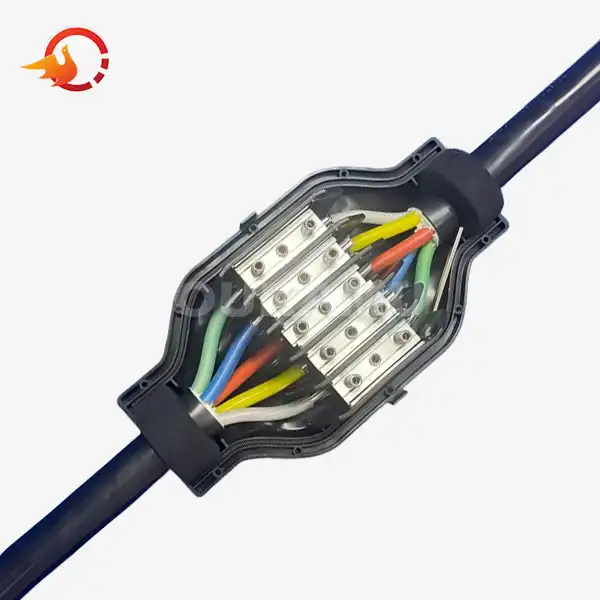
A cable waterproof joint protects a splice or branch point along a cable's run. Types include gel-filled, heat shrink, and resin-cast designs. They are widely used in underground distribution, outdoor lighting circuits, and basement power routing — any location where the connection point faces soil moisture, standing water, or condensation. According to IEC 60529, gel-filled designs can reach IP68 certification, meaning continuous submersion protection.
What Is a Cable Gland?
A cable gland (also called a cord grip) is fitted at the point where a cable enters an enclosure, junction box, or control panel. It maintains the watertight seal at that entry point and provides strain relief to protect conductors from mechanical stress. Cable glands come in brass, nylon, aluminum, and stainless steel. They are standard equipment in manufacturing plants, wastewater facilities, and marine installations.
Key Application Summary
| Feature | Cable Waterproof Joint | Cable Gland |
|---|---|---|
| Primary Function | Seals splice / branch connection | Seals cable entry into enclosure |
| Typical IP Rating | IP67–IP68 | IP54–IP68 (varies by type) |
| Installation Location | In-line, underground, outdoor | Panel wall, junction box entry |
| Cable Cutting Required | No (T-type designs) | Yes — cable passes through gland |
Key Differences Between Cable Waterproof Joints and Cable Glands
These two products are not interchangeable. Understanding where they diverge helps you avoid both over-engineering and under-protecting your installation.
Sealing Mechanism
A cable waterproof joint wraps or encases the entire splice zone. Gel-filled versions flood the cavity with a dielectric compound that blocks water ingress from all sides. Cable glands compress a rubber gasket or o-ring around the cable jacket at the enclosure wall, creating a localized seal at that single penetration point.
Installation Complexity
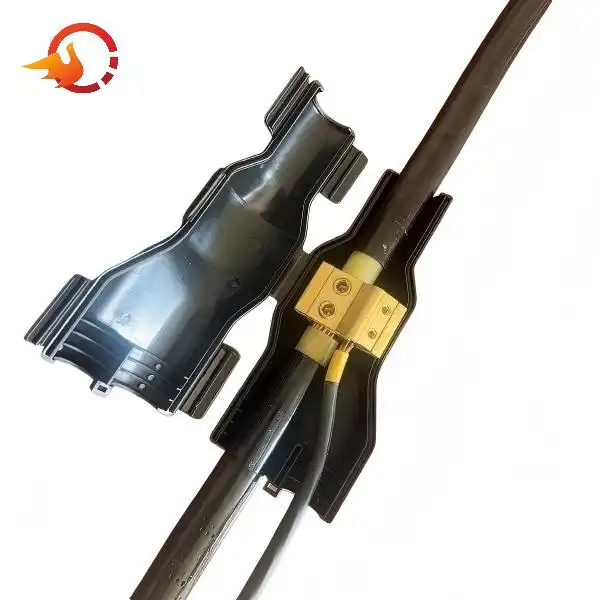
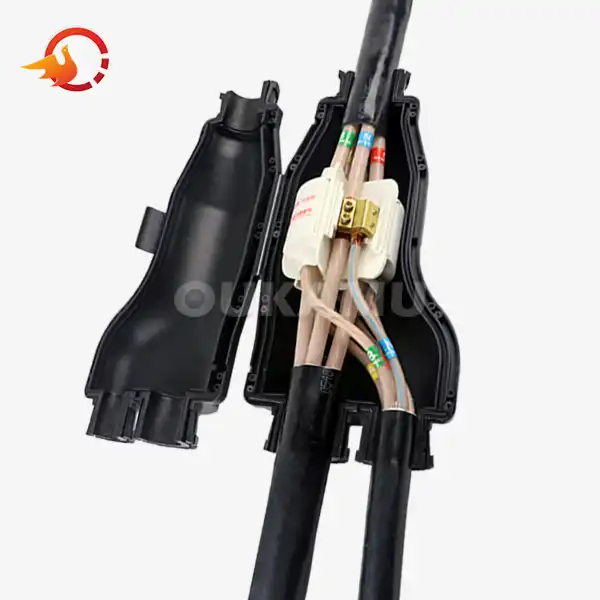
Cable glands are generally faster to fit — thread the nut, insert the cable, tighten. Cable joints take longer because they require careful preparation of conductors, correct seating of the connector body, and verification of full insulation coverage. However, T-branch joint designs like the Oukamu T-GJFZ-16/10 remove the need to cut the main cable entirely, which cuts installation time compared to traditional splice methods.
Durability and Environmental Resistance
Both products can achieve high IP ratings, but the threat environments differ. Joints buried in soil face long-term chemical exposure, ground movement, and moisture infiltration. Glands on panel exteriors face UV exposure, vibration, and thermal cycling. Confirm the product's rated material — nylon glands degrade under prolonged UV; brass or stainless steel holds up better outdoors.
How to Choose the Right Solution for Your Project
Choosing between these two products comes down to three practical questions: Where is the connection point? What environmental load will it face? And what does your compliance checklist require?
Match the Product to the Connection Type
If you are routing a branch circuit off a main feeder cable — in a basement riser, an underground parking lot distribution line, or a school building corridor — you need a cable waterproof joint. If you are sealing the point where that circuit enters a distribution board or weather-proof enclosure, you need a cable gland. Many installations require both, at different points along the same cable run.
Evaluate Compliance Requirements
Projects subject to GB/T 14048.7-2016 or equivalent low-voltage switchgear standards must use certified components. Verify that your supplier provides traceable test reports. The Oukamu T-GJFZ-16/10 carries IP68 certification and conforms to applicable GB standards, making it a straightforward choice for inspectors reviewing residential, commercial, or hospital electrical systems.
Consider Total Installation Cost, Not Just Unit Price
Here is a factor that often gets overlooked during procurement: labor accounts for a large share of field costs. A gel-filled cable waterproof joint that eliminates cable cutting can save two to three meters of main cable per connection point and reduce the electrician's on-site time per connection. Across a 20-floor residential tower with dozens of branch points, that adds up quickly.

Oukamu T-GJFZ-16/10: A Practical Case Study
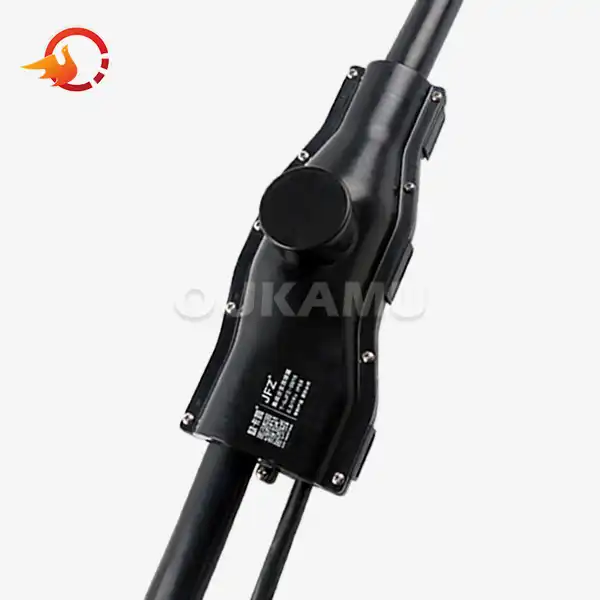
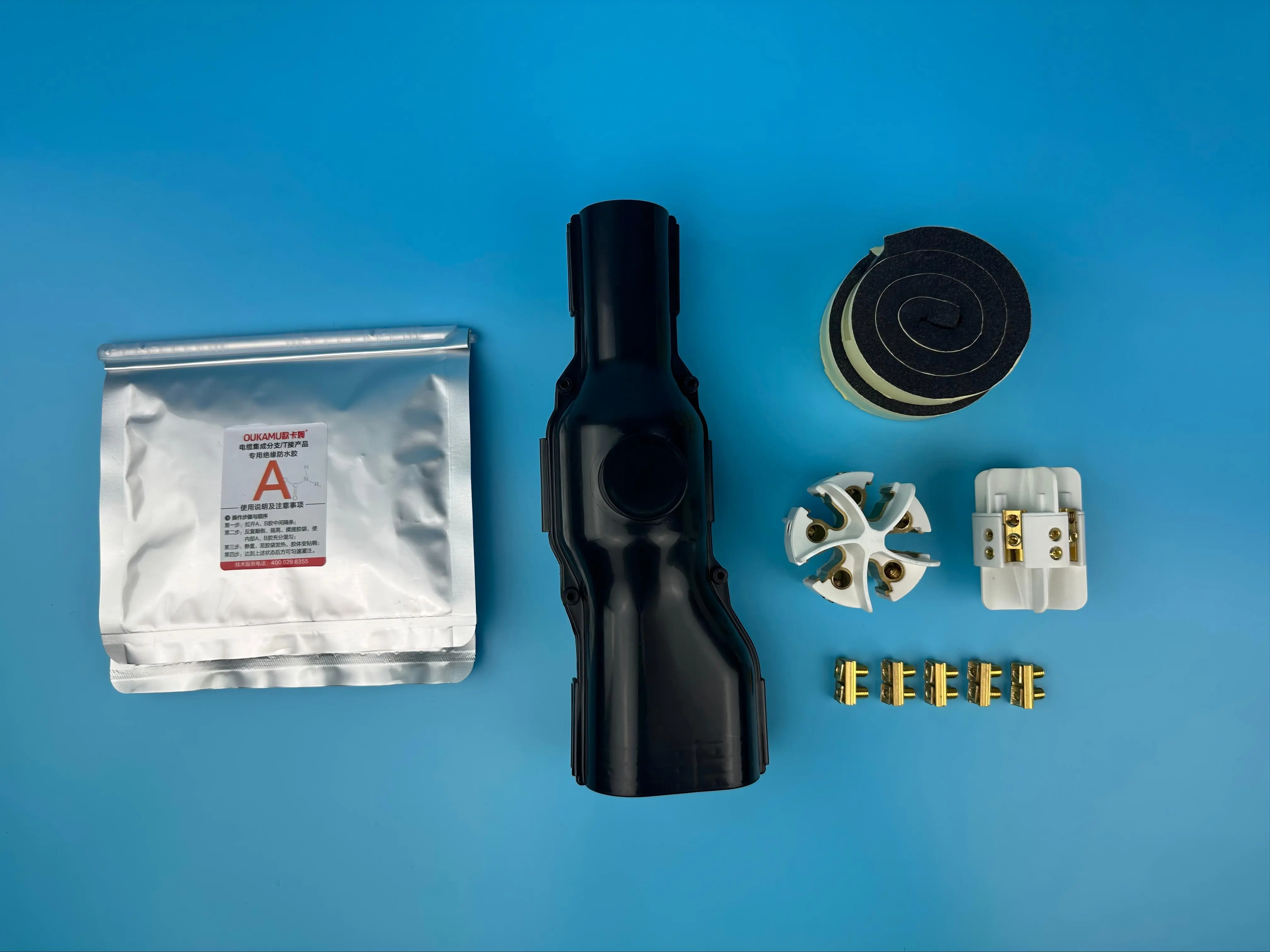
The T-GJFZ-16/10 is Oukamu's gel-filled IP68 branch cable connector designed for low-voltage distribution in civil and commercial construction. Here are its core technical parameters:
| Specification | T-GJFZ-16/10 Details |
|---|---|
| Model | T-GJFZ-16/10 |
| IP Rating | IP68 |
| Main Cable Range | 4–16 mm² |
| Branch Cable Range | 1.5–10 mm² |
| Sealing Method | Gel-filled, double-layer insulation |
| Installation Method | Direct burial or concealed in wells |
| Cable Cutting Required | No |
Here are the core advantages of this device, which address common procurement concerns directly:
- No main cable cutting needed: The T-connector body clamps onto the live main cable without breaking continuity. This removes the single most time-consuming step in traditional branch splicing and eliminates the risk of a wiring error during re-termination.
- IP68 gel-filled double protection: The gel compound fills all voids inside the connector body, blocking water under continuous submersion conditions. A secondary insulation layer adds redundancy.
- Flexible installation positioning: The branch point can be placed at any position along the cable run, adjusted to match actual on-site equipment locations — no pre-set spacing, no cable waste from design-to-field mismatches.
- Compact form factor: The small body fits inside cable trays, conduit bridges, and utility wells without requiring additional housing.
These advantages directly address the two biggest cost drivers in branch circuit installation: excess cable waste from fixed-position designs, and labor time for cutting and re-terminating main feeders.
Real project context: On a hospital electrical installation project involving multiple basement distribution points, procurement teams using gel-filled T-branch joints reported eliminating reserved cable lengths at each branch node, reducing material waste and cutting per-connection installation time. The IP68 rating satisfied the waterproofing requirements for below-grade installations without requiring additional conduit sealing at each branch point.
Installation and Maintenance Best Practices
Correct installation is what converts a quality product into a reliable long-term connection. Following these steps avoids the most common field failures.
Pre-Installation Preparation
Clean the cable jacket at the branch point when installing the cable waterproof joint. Remove any grease, dust, or surface oxidation. Verify the cable cross-section falls within the connector's rated range — for the T-GJFZ-16/10, confirm main cable is 4–16 mm² and branch cable is 1.5–10 mm² before opening the package.
Sealing and Closure Steps
Insert the branch cable into the designated port. Close the connector body fully until the locking mechanism seats completely. Confirm the gel fills the entire internal cavity with no visible air pockets. For direct-burial applications, verify there is no mechanical pressure on the connector body during backfill.
Routine Inspection Checklist
Inspect accessible joints annually for jacket abrasion, connector body cracking, or signs of gel migration. For underground or concealed joints, inspection at maintenance access points should confirm no moisture ingress indicators — discoloration, corrosion at terminals, or insulation softening.
Cost Analysis and Procurement Insights
Price Drivers and Benchmarks
Cable glands are generally low-cost consumables — nylon versions run under a dollar per unit in volume; brass and stainless steel glands range from a few dollars up depending on size and IP rating. Gel-filled branch joints carry a higher unit cost due to material complexity and precision molding. However, the correct comparison is not unit price but total installed cost per connection point, including electrician labor, cable material, and inspection time.
Procurement Logistics
For project-phase procurement, consider ordering in floor-by-floor or zone batches to match installation sequencing. Oukamu supports small-batch sample orders for project confirmation before full-volume commitment, with short lead times suitable for the one-to-four-week procurement cycles typical in commercial construction. OEM and custom specification services are available for contractors with non-standard cable sizes or project-specific installation requirements. Contact info@okmbranchcable.com for sample requests and compliance documentation.
Conclusion
Choosing between a cable waterproof joint and a cable gland is straightforward once you define the connection point clearly. Joints belong in-line along the cable run — at splices, branch points, and buried distribution nodes. Glands belong at the entry point into enclosures.
For branch circuit distribution in basements, parking structures, hospitals, and schools, a gel-filled T-branch joint like the Oukamu T-GJFZ-16/10 delivers IP68 protection, eliminates main cable cutting, and reduces both material and labor costs per connection. Match the product to the job, verify compliance documentation, and your installation will pass inspection the first time.
FAQ
Can I use a cable waterproof joint and a cable gland together in the same installation?
Yes. They address different points along a cable run. A branch joint protects the in-line splice or branch connection; a cable gland seals the cable's entry into the downstream enclosure. Using both is standard practice in outdoor and underground distribution circuits.
What IP rating should I require for underground or basement applications?
For direct-burial or below-grade installations subject to standing water, specify IP68 as a minimum. IP67 covers temporary submersion up to one meter; IP68 covers continuous submersion at greater depths. The T-GJFZ-16/10 carries IP68 certification for these environments.
What certifications should I verify before purchasing?
Request the product's test report referencing GB/T 14048.7-2016 or IEC 60529 for waterproof rating verification. For projects requiring CCC certification or VAT invoicing, confirm these with your supplier before placing volume orders.
Does the T-GJFZ-16/10 work with fire-resistant cables?
Yes. It is compatible with flame-retardant, fire-resistant, and mineral-insulated fire-resistant cables in low-voltage applications up to 0.6/1kV.
How do I confirm the correct connector size for my cable?
Match the main cable cross-section to the rated range (4–16 mm² for the T-GJFZ-16/10) and the branch cable to 1.5–10 mm². When in doubt, request a sample from Oukamu to test fit before committing to volume procurement.
Get the Right Waterproof Connection Solution from Oukamu
Oukamu has specialized in branch cable connectors for over 20 years, and our T-GJFZ-16/10 cable waterproof joint supplier capabilities include OEM services, sample programs, and full compliance documentation. Whether you are specifying a hospital basement distribution system or a multi-building residential project, our team will match the right product to your cable specs and project timeline. Reach our team directly at info@okmbranchcable.com or visit okmbranchcable.com to request samples, download test reports, or place a batch order.
References
1. International Electrotechnical Commission. IEC 60529: Degrees of Protection Provided by Enclosures (IP Code). IEC, 2013.
2. National Standards of China. GB/T 14048.7-2016: Low-Voltage Switchgear and Controlgear — Part 7: Ancillary Equipment. Standardization Administration of China, 2016.
3. Thomas, M. Electrical Wiring: Residential. Cengage Learning, 2022.
4. Whitfield, J. The Electrician's Guide to the 18th Edition of the IET Wiring Regulations. ElevenPlus Exams, 2019.
5. Earley, M. W., et al. NFPA 70: National Electrical Code Handbook. National Fire Protection Association, 2023.
6. Anders, G. J. Rating of Electric Power Cables in Unfavorable Thermal Environment. IEEE Press / Wiley, 2005.