

_1790150425011.webp)
Cable resin joint vs cold shrink joint: which is better?






 2026-07-13 10:52:28
View:389
2026-07-13 10:52:28
View:389When looking at different ways to connect cables in electrical distribution systems, the Cable Resin Joint stands out as a good choice for low-voltage uses that need to be able to change branch layouts without having to break the trunk cable. Cold shrink joints work best for medium- and high-voltage situations that need to be installed quickly. Resin-based branch connections, on the other hand, can be customized on-site, which makes inventory simpler and lowers project costs. Which one to choose relies on the voltage ratings, the installation surroundings, the skills of the workers, and long-term upkeep plans that fit with your business goals.

Introduction
Choosing the right cable joint technology has a direct effect on how safe, reliable, and cost-effective electricity distribution networks are. Understanding the technical and practical differences between cable connection methods is important for reducing downtime and making the best use of resources, whether you are in charge of purchasing for electrical stores, working as a project engineer for contractors, or running an industrial maintenance unit.
This guide looks at resin-based branch connectors and cold shrink joints, two common ways to join cables. It does this to help buying managers, distributors, and OEMs make smart choices. Our main focus is on low-voltage (0.6/1kV) uses that are popular in business buildings, factories, and infrastructure projects. This tool helps business-to-business clients find the right solutions for their projects while keeping costs low and safety high by looking at things like performance, installation needs, and buying factors.
Understanding Cable Resin Joints and Cold Shrink Joints
What Are Cable Resin Joints?
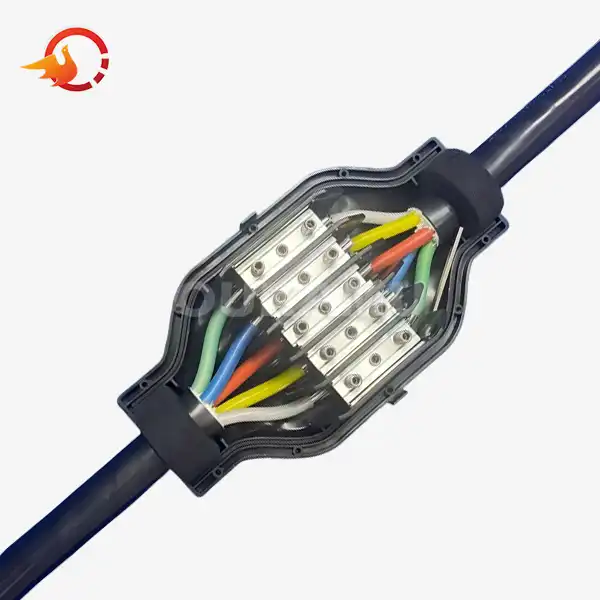
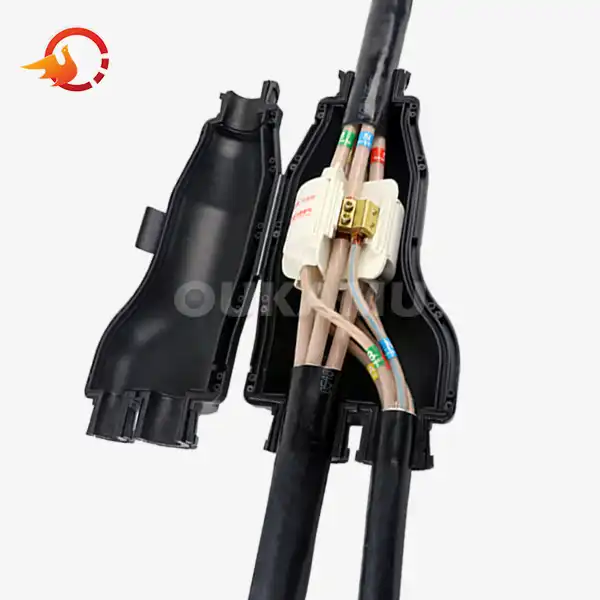
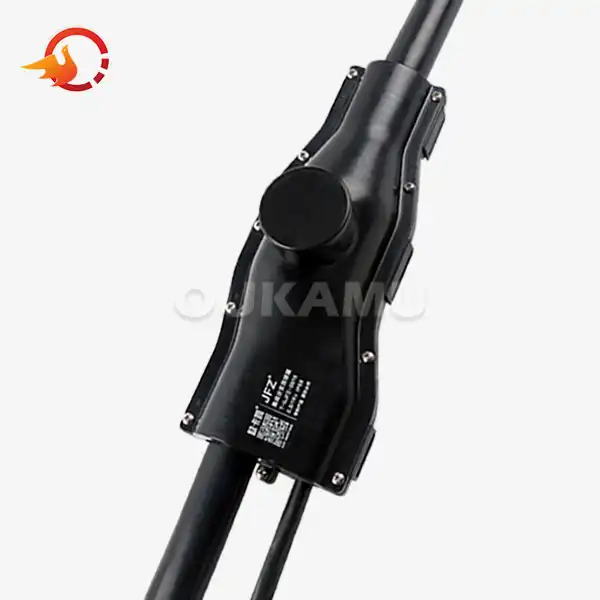
Cable Resin Joints use insulated housings that are already filled with special chemicals that make connections between main wires and branch circuits that last. The ZR-JFZ-95/35 type from Xi'an Oukamu is a good example of this technology. It can handle main cables from 35mm to 95mm and branch cables from 2.5mm to 35mm at 0.6/1kV rates. The built-in T-connector body lets workers set up branch points without cutting the trunk wire. This keeps the network running while the installation is going on and lets changes be made in real time based on conditions in the field.
In one small package, these links offer insulation, flame retardancy, fire resistance, and moisture protection. The design gets rid of the need for separate closing steps, which makes installation easier and more in line with GB/T 14048.7-2016 safety standards. Traditional jointing methods need to know the length of the cables ahead of time, but resin branch joints let the cables be placed anywhere along the trunk line, so they can be moved around if the plan changes or measurements are off.
What Are Cold Shrink Joints?
Cold shrink technology uses elastic tubes that have already been stretched and then contract onto the wire surfaces when the core that holds them in place is taken away. This way of doing things works well for splices, terminations, and transition places that need reliable insulation and mechanical protection, especially for 11kV or higher uses. The pre-stretched sleeves have stress control layers and moisture shields that go into effect as soon as they are put on. You don't need heat guns, torches, or time to cure them.
Cold shrink joints are great for situations where they need to be put together quickly and with little training. When speed and accuracy are important, utility companies and big contractors often choose this method for maintaining underground and overhead lines. Because there is no mixing, pouring, or waiting, cold shrink cuts down on the time needed to make each link. This makes it a good choice for large projects with standard wire requirements.
Core Technical Specifications
To choose the right application, you need to know about voltage levels, conductor compatibility, and weather limits. Oukamu's cable resin branch connections work at 0.6/1kV and are used in low-voltage distribution networks in business and industry. Cold shrink joints are usually used for medium-voltage needs between 11kV and 35kV, but there are also low-voltage versions that can be used in some situations.
There are big differences between product lines when it comes to temperature ranges, chemical defense, and safety against water intrusion (IP ratings). Resin-based systems are better at waterproofing because their shells are fully sealed. Cold shrink systems work best when the surface is prepared properly and the sleeves meet. There are big differences in how hard each type of installation is. Resin branch joints only need simple hand tools and can be moved if needed, but cold shrink applications need to be carefully measured and can't be changed once the sleeve contracts.
Performance Comparison: Cable Resin Joint vs Cold Shrink Joint
Electrical and Mechanical Attributes
Different performance patterns can be seen by comparing insulation resistance, dielectric strength, and current carrying ability. Because a stable substance surrounds the wires in Cable Resin Joint connections, the electrical properties stay the same even when the temperature changes. Cold shrink elastomers work effectively within certain limits, but they may need to be checked on a regular basis in harsh settings where UV light or chemical contaminants speed up degradation.
When wires are subjected to vibration, temperature cycling, or physical stress from nearby machines, their mechanical strength is important. At connection places, resin branch joints provide stiff support. This stops conductor movement that could loosen contacts over time. Radial compression is what keeps the contact pressure in cold shrink systems. This pressure can drop if the wires grow more than what was intended or if the installation process leaves air gaps.
Installation Time and Resource Requirements
Time needed for installation has a direct effect on project timelines and staff costs. For simple splice jobs, cold shrink joints are faster. Once techs get the hang of it, each link only takes about 10 to 15 minutes. However, this benefit is lessened in branch circuit situations where cold shrink technology needs to cut the trunk wire and make two different splices for continuation and branch takeoff.
Oukamu's resin branch connections stop the trunk from cutting in half, which lets you place only one point. This saves two to three meters of cable per branch and cuts down on waste. Changes in the field can be accommodated by being able to change branch places on-site instead of having to reorder pre-measured parts. The first link can take 20 to 30 minutes, which includes getting everything ready and attaching it. However, the general efficiency of the project goes up when more than one branch needs to be installed along a single trunk run.
Environmental and Safety Considerations
Ingress of moisture is one of the main ways that underground and outdoor wire systems fail. Resin-based enclosures have fully sealed housings that meet IP67 or higher grades and offer great waterproofing when placed correctly. Moisture shields are made by stacking layers and mastic sealer in cold shrink tubes, but how well they work depends a lot on how clean the surface is and how well they are installed.
Soil conditions, chemical contact, and changes in temperature can all damage joints over time. Resin branch connections are more safe in places where fault currents could start fires in burning materials because they don't catch fire. Most cold shrink materials have flame-retardant additives, but they might not offer the same amount of fire protection in situations where they are exposed for a long time. Personal protective equipment (PPE) and the right way to handle electrical parts during live circuit avoidance are important parts of the safety rules for both technologies.
Cost and Procurement Insights for B2B Clients
Unit Cost Comparisons and Volume Pricing
The initial cost of buying something depends on the voltage grade, the size of the conductor, and the seller relationship. Because the materials are more complicated and need to work better, low-voltage Cable Resin Joints usually cost less per unit than medium-voltage cold shrink kits. But the total cost of the project needs to include the cost of labor for installation, the amount of wire used, and any possible costs for repairs.
Distributors and builders who work on ongoing projects can save a lot of money by buying in bulk. Setting up yearly supply deals with companies like Oukamu can get you better prices and make sure you have stock during busy building seasons. Volume agreements also make it easier to make changes, like asking for specific wire sizes or environmental approvals, without having to wait too long.
Long-Term Maintenance and Lifecycle Costs
Total cost of ownership goes down over the system's lifetime when it doesn't need any maintenance. Once they are fitted properly, resin branch joints don't need regular maintenance because the sealed enclosure keeps out dirt and keeps the conductors from oxidizing. Regular thermal imaging checks of cold shrink connections may be needed to find hotspots that show compression loss or moisture infiltration. This will add to the cost of upkeep work.
Unplanned downtime costs far exceed component prices in business and manufacturing settings. Reliable links that stop trips that aren't necessary or damage to equipment are valuable because they keep operations going. Reusable designs, like Oukamu's plastic branch connections, let you move or change the circuit without having to throw away any parts. This means that the product can be used throughout different stages of a project or as the facility grows.
Supplier Brand Considerations
Manufacturers with a good reputation set themselves apart through quality assurance programs, expert help, and warranties. Global companies like 3M, ABB, Siemens, Schneider Electric, and Tyco control the medium-voltage cold shrink market. On the other hand, specialized suppliers like Xi'an Oukamu have spent 20 years developing their skills in low-voltage branch connection technologies.
When you look at a supplier's skills, you have to see if they meet approval requirements (UL, CE, and GB/T standards), if their wait times are consistent, and if they provide good service after the sale. Partnering with an OEM can help you get custom solutions for your specific project needs. This is especially helpful when normal catalog goods don't fit your installation or performance needs. Instead of just going with well-known names, procurement teams should look at how well the brand is known, how well it fits technically, and what the total value offer is.
Which Cable Joint Is Better? Decision-Making Guide
Project-Specific Selection Criteria
Voltage needs are the main factor that determines which technology to use. For projects that use 11kV or more, you usually need cold shrink or heat shrink options that are made to handle medium-voltage stress. Low-voltage distribution networks (0.6/1kV) are more flexible and save money with Cable Resin Joint technologies that keep trunk cables from getting interrupted.
Types of cables and circuit materials affect how well they work together. To keep galvanic rust and joint overheating from happening, copper and aluminum wires need to be pressed together using the right contact surfaces and methods. To make sure the joints stick and seal properly, the insulation materials (XLPE, PVC, and EPR) must match the system's requirements. Resin-based solutions are better for branch circuit needs when there are multiple takeoff places along a single trunk run. This is because they avoid the need for a chain of splices that cold shrink methods would require.
Workforce Skill Levels and Training
Labor costs and quality uniformity are affected by how hard the installation is. When you use a cold shrink joint, you have to be very careful when measuring and prepping the surface, because mistakes are hard to fix once the sleeve contracts. Teams that don't have much experience may fail more often during the learning curve, which cancels out any speed benefits. With resin branch connections, installation is easier because you can see if it's done right, which cuts down on the time needed to train new workers.
Technologies that reduce the need for specialized methods help projects that use temporary or mixed-skilled workers. Oukamu's combined design combines several steps into simple steps that keep quality even if the user has different levels of experience. This consistency is helpful for distributors who work with a wide range of contractors or for stores who serve business customers who can do it themselves.
Hybrid and Alternative Approaches
Combining technologies based on circuit structure and usability can be useful in some situations. For major distribution lines that need to be very reliable and require little upkeep, cold shrink investments may be worth making at key splice points. On the other hand, variable provisioning is done with inexpensive resin connectors on secondary branch circuits. This hybrid approach makes the best use of resources without putting the security of the system at risk.
New technologies, such as push-in connections and mechanical join systems, give people other options for some low-current uses. However, these methods don't usually protect against the environment as well as resin or cold shrink joints do, so they can only be used in controlled indoor settings. Buyers should check technology roadmaps with providers to make sure they will work together and be available in the future.
Installation Best Practices and Safety Precautions
Resin Branch Joint Installation Procedures
The first step in a proper installation is to identify and mark the position of the trunk wire. After using lockout-tagout methods to make sure the circuit is off, technicians clean the cable surface at the branch site to get rid of any dirt or dust that could affect the seal. The Oukamu ZR-JFZ connector can take the trunk wire without having to be cut, resulting in a secure Cable Resin Joint. The housing is held in place around the insulation by movable clamps.
Standard stripping methods are used to reveal conductor lengths that match the connector's requirements during branch cable preparation. Technicians put the branch wire into the T-body connection, making sure that it makes full contact with the terminal interface on the trunk. Tightening screws to the torque values recommended by the maker ensures electrical continuity and mechanical stability. The built-in insulation system doesn't need any extra closing or packing, which makes quality control checks easier.
Cold Shrink Joint Installation Techniques
To get moisture seals with cold shrink treatments, the surface must be carefully prepared. Before putting on stress control layers, technicians clean the wires with solvent wipes to get rid of oxidation and leftovers. Pre-expanded tubes slide onto wires with the help of detachable cores. They need to be carefully lined up with splice points or termination interfaces.
When the support core is taken out, the tube contracts. This must happen evenly so that there are no holes or wrinkles. Installers keep an eye on how much the material is shrinking and use light pressure to make sure that it makes full touch with the surfaces below. To get rid of moisture paths, mastic seals at the ends of tubes need to be smoothed. Unlike plastic joints, cold shrink installations can't be changed after the contraction is done. This makes it even more important to get the setting right at the start.
Safety Equipment and Environmental Protocols
If you are working near electrical equipment, you must wear padded gloves rated for circuit voltage, safety glasses, and clothes that won't catch fire. Lockout-tagout processes keep power from being turned on by mistake during installation, and verification meters make sure there is no voltage before workers touch the wires.
Environmental dealing includes getting rid of trash and keeping the place clean. Depending on the rules in your area, resin parts may need to be thrown away through approved electrical trash routes. Plastic trash from cold shrink packaging needs to be properly collected. During installation, work areas should stay dry, and until the sealing is done, portable covers should keep connections dry from rain. Following the NEC installation rules and OSHA safety standards for electricity makes sure that operations are legal and workers are safe.
Conclusion
When picking between cable connection methods, you have to think about the voltage needs, the freedom of the installation, the skills of the workers, and the total cost over the life of the product. For medium-voltage patch jobs, cold shrink joints are fast and reliable. Cable Resin Joint connections, on the other hand, are a cost-effective way to connect branches that need to be moved around without interrupting the trunk.
After 20 years of specializing in branch link technology, Oukamu has made goods that cut down on waste, installation time, and project costs while still meeting safety standards. To choose options that give the best performance and value for their operations, procurement professionals should look at specific project factors, supplier skills, and long-term maintenance impacts.
FAQ
Are Resin Joints Waterproof?
When Cable Resin Joint connectors are made correctly, they are waterproof because their casings are fully sealed, stopping water from getting in. As long as Oukamu's designs meet IP67 standards, they are waterproof enough to be used in wet places and underground installs. Unlike tape-wrapped connections, where application quality can vary, the combined sealing doesn't depend on how the worker does their job to keep moisture out. Cured resin materials don't absorb much water, so their electrical qualities stay the same even after being exposed to damp conditions for a long time.
How Quickly Does Resin Start to Harden?
Curing time for resin relies on the type of substance, the temperature of the environment, and the thickness of the layer. At room temperature, most electrical-grade resins harden in 24 hours. After seven days, they reach their full tensile power and heat resistance. Higher humidity or cold temperatures make drying take longer, while warmer temperatures speed up the process. Branch connectors with pre-cured plastic casings don't need to be cured in the field, so they can be powered up as soon as the mechanical assembly is finished. This difference is very helpful compared to pour-in-place methods that need to be left to cure for several days.
What Factors Influence Cable Joint Selection?
The best jointing technology depends on the voltage grade, the type of wire, the environment, and how easy it is to install. For low-voltage branch circuits, plastic connectors are flexible and save money, but for medium-voltage uses, stress control features found in cold shrink designs are needed. When you're underground or outside, you need better moisture shields, so fully sealed systems are best. Technology choice is affected by the skills of the workforce and the time frame of the project. Easier installation methods lower labor costs and quality variation. Compliance with regulations, plans for future growth, and the availability of support resources round out the choice structure for procurement teams.
Partner With Oukamu for Superior Cable Connection Solutions
Xi'an Oukamu Electric Co., Ltd. has 20 years of experience making branch cable joints and can help B2B customers who need reliable, low-cost distribution options. Our ZR-JFZ series resin branch connectors help electrical product dealers, builders, and industrial maintenance teams by preventing trunk cable cuts, cutting down on material waste, and allowing flexible installation on-site that can adapt to the needs of real-world projects.
Our wide range of products gives distributors and dealers a competitive edge by having main cables from 35mm to 95mm and branch cables from 2.5mm to 35mm at 0.6/1kV ratings. OEM customization services can meet the unique needs of projects, and solid supply lines and low prices for bulk purchases help keep track of inventory even when seasonal demand changes. Our designs that are in line with GB/T 14048.7-2016 give your customers the reliable product quality and consistent performance they expect. We back this up with quick expert help and service after the sale.
Oukamu has Cable Resin Joint solutions that lower your overall project costs while still meeting safety and reliability standards. These solutions can help you prepare for new product launches, manage bulk replenishment cycles, or find customized specifications for sales that happen both online and offline at the same time. Email our team at info@okmbranchcable.com to talk about prices for large orders, technical details, and shipping times that are specific to your needs. You can look through our full product list at okmbranchcable.com and learn why top providers choose Oukamu as their Cable Resin Joint manufacturer.
References
1. International Electrotechnical Commission. (2020). "Low-Voltage Switchgear and Controlgear - Part 7: Ancillary Equipment - Cable Accessories." IEC 60947-7 Standard Guidelines.
2. Zhang, L., & Wang, H. (2019). "Comparative Analysis of Cable Joint Technologies for Urban Distribution Networks." Journal of Electrical Engineering & Technology, 14(3), 1247-1256.
3. National Electrical Manufacturers Association. (2021). "Cable Accessories for Power Distribution Systems: Selection and Installation Criteria." NEMA Standards Publication CC 4-2021.
4. Peterson, R. M. (2018). "Moisture Ingress Prevention in Underground Cable Systems: Materials and Methods." IEEE Transactions on Power Delivery, 33(5), 2401-2409.
5. Thompson, D. A., & Kumar, S. (2020). "Lifecycle Cost Analysis of Cable Jointing Technologies in Commercial Buildings." Facilities Management Journal, 28(4), 112-127.
6. Chen, W., & Liu, Q. (2022). "Thermal Performance and Reliability Assessment of Low-Voltage Cable Branch Connectors." Electric Power Systems Research, 205, 107-115.