

Branch Cable Joints vs Straight Cable Joints Explained






 2026-11-17 15:37:33
View:389
When project managers face critical decisions about electrical distribution systems, choosing between branch and straight cable joints directly impacts installation timelines, safety compliance, and overall project costs. Branch cable joints create power distribution points without cutting the main cable, enabling multiple circuits from a single trunk line.
Straight cable joints, conversely, reconnect severed cables to restore continuous electrical pathways. Understanding these fundamental differences helps procurement teams specify the right solution for infrastructure projects ranging from subway systems to industrial facilities, where installation efficiency and long-term reliability determine project success.
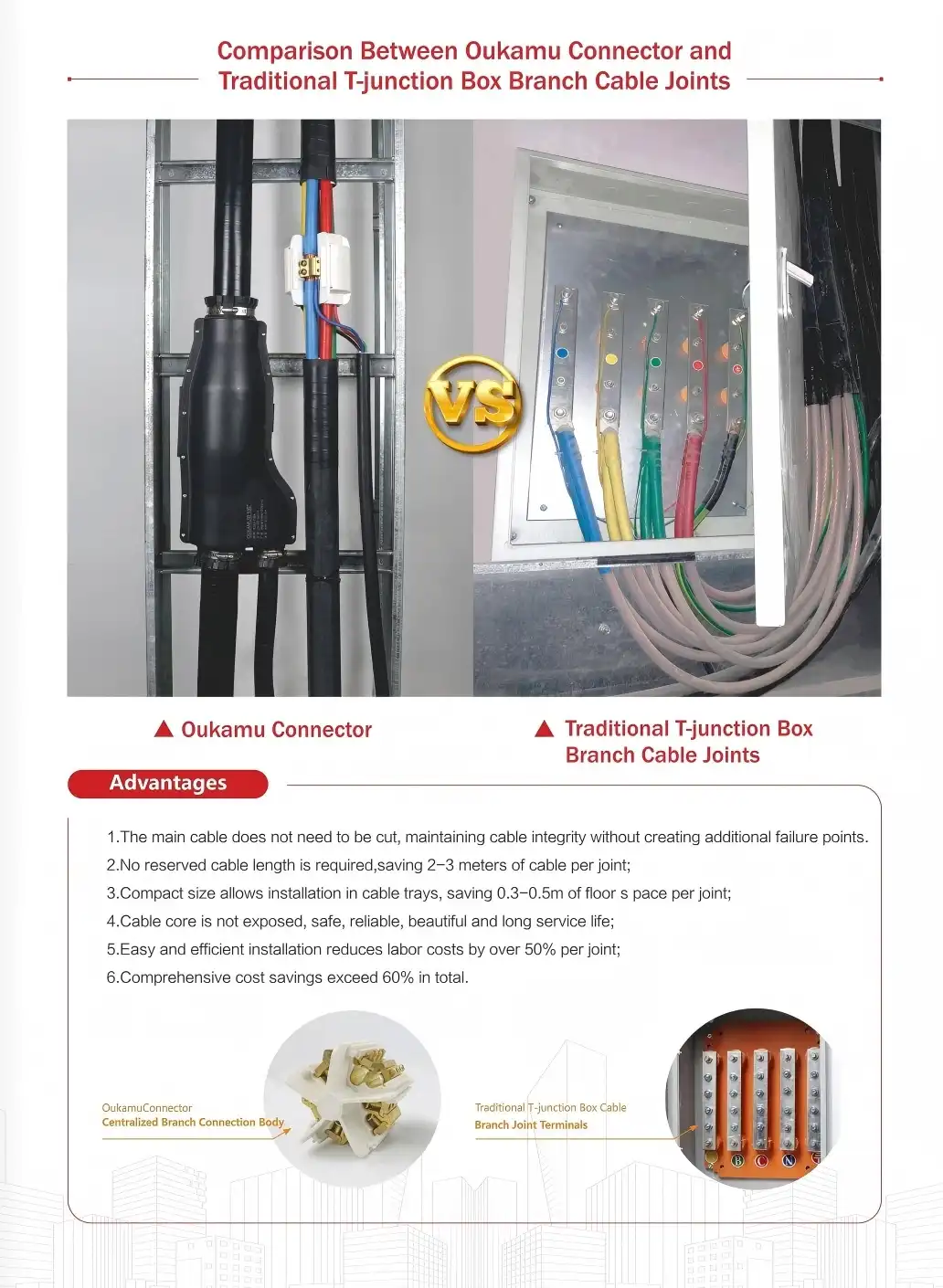
Understanding Branch Cable Joints and Straight Cable Joints
Electrical distribution networks need strong ways to connect that keep the power flowing while also meeting the needs of complex routing. Branch Cable Joints let you tap into power at any point along the main cable run, making distribution points without cutting the primary conductor. This technology is very helpful in buildings with many floors and tunnels, where strict planning ahead of time doesn't always match up with what happens in the field.
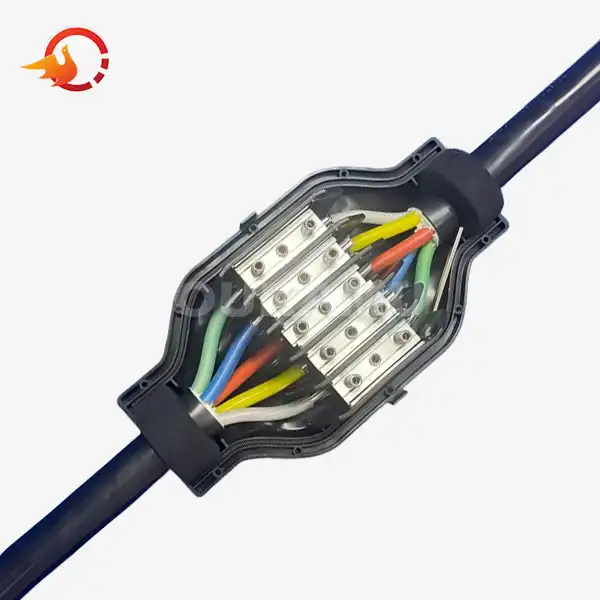
Straight wire joints are used for something completely different. When wires get damaged or need to be extended past their original lengths, straight joints connect the ends of two cables to restore electrical connection. The electrical properties of the original cable, such as its voltage rating, current capacity, and insulation resistance, must be kept by these joints. To make the new wire work as well as the old one, the joining process includes carefully aligning the conductors, repairing the insulation, and sealing it against the environment.
Regulatory Standards and Material Considerations
International standards, such as IEC 60502 for power lines and GB/T 14048.7-2016 for low-voltage switchgear assemblies, must be met by both types of joints. These standards say what the minimum requirements are for electrical properties, temperature ranges, and mechanical strength. The choice of material has a big impact on performance. For example, flame-retardant chemicals stop fires from spreading, and waterproof seals keep electrical integrity in wet places. For projects near the coast or underground systems, better corrosion protection is often needed, which means using special metals and coatings.
The voltage rating tells you how thick the insulation is and how strong the dielectric is. Standard insulation materials are enough for 0.6/1kV distribution systems that are typical in business buildings. But in industrial settings with harsh chemicals or high temperatures, you might need special elastomers or cross-linked polyethylene compounds that don't break down after decades of use.
Branch Cable Joints vs Straight Cable Joints: Technical and Functional Comparison
The difficulty of installation changes a lot between these types of joints. To make a branch connection, you have to carefully prepare the cables by removing the insulation to the right lengths, cleaning the wires to get rid of oxidation, and tightening the connections with torque control to keep them from coming loose.
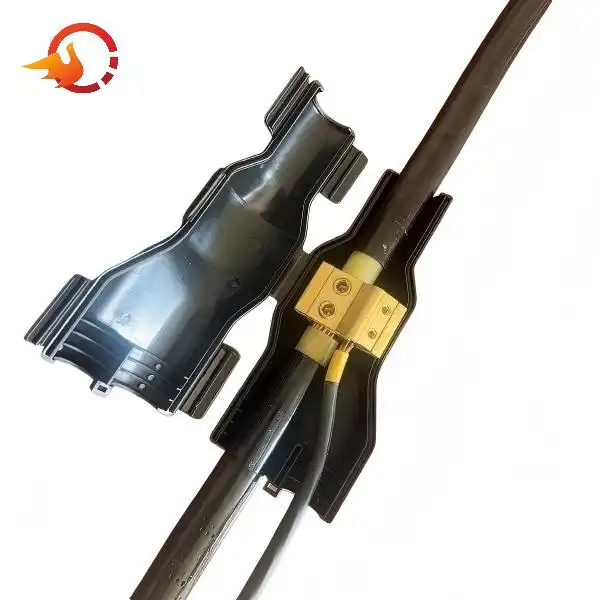
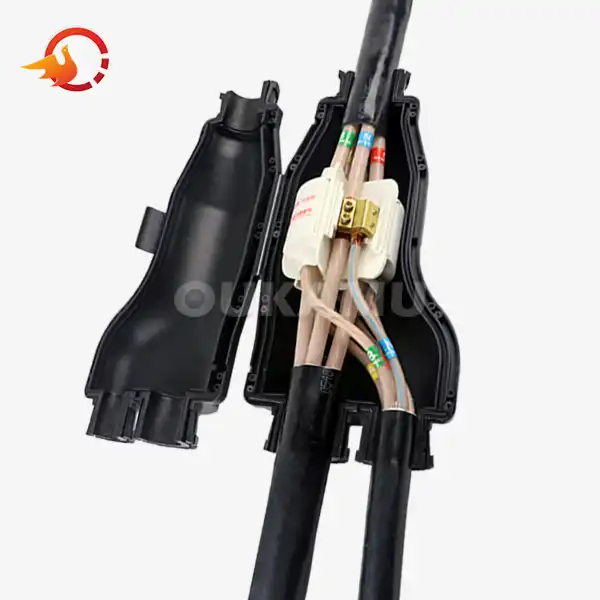
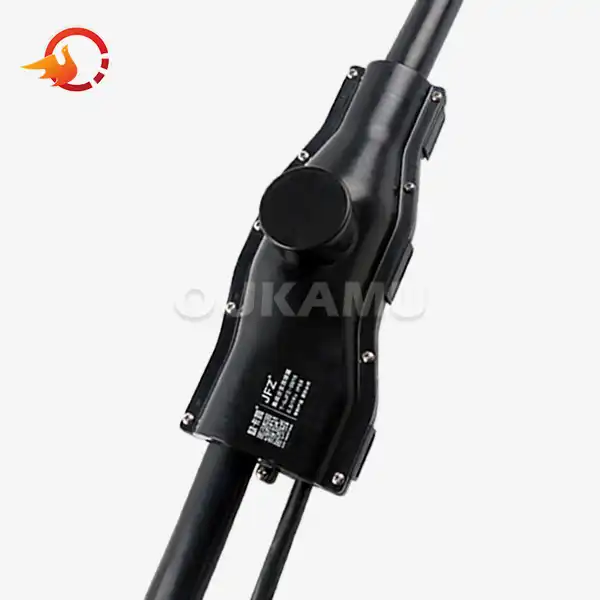
Modern branch joint design is shown by the ZR-JFZ-70/35 type, which can hold main wires from 25mm to 70mm and branch cables from 2.5mm to 35mm without cutting the primary conductor. With this feature, you don't have to save extra cable length for possible branch points, which is a common way for standard setups to waste materials.
When it comes to technology, straight joints need different care. Installers have to carefully match the sizes of the conductors, line up the phases of the cable correctly, and rebuild the insulation layers to meet factory standards. Heat shrink and cold shrink technologies make installation easier in the field, but resin-filled joints protect against moisture better in places that stay damp all the time, like underground vaults.
Performance Metrics That Matter
Durability in the environment determines long-term dependability. Protection grades above IP65 make sure that dust can't get into joint housings and that they can resist water jets coming from any direction. This is very important for outdoor installations or places that need to be cleaned. Key success indicators are shown below in a table:
| Parameter | Branch Joint (ZR-JFZ-70/35) | Typical Straight Joint |
|---|---|---|
| Voltage Drop | <3.2mV | 2.5-4mV |
| Withstand Voltage | 3.5kV (5min, no breakdown) | 3.0-4.0kV |
| Insulation Resistance | >500MΩ | >200MΩ |
| Protection Level | IP65+ | IP54-IP68 |
| Installation Time | 15-20 minutes | 30-45 minutes |
Based on these specs, it's clear that Branch Cable Joints often provide better electricity performance while requiring less installation work. The higher insulation resistance cuts down on leaking current, which makes occupied areas safer. Less voltage drop means less energy loss in distribution networks. This is especially important in big buildings with hundreds of links.
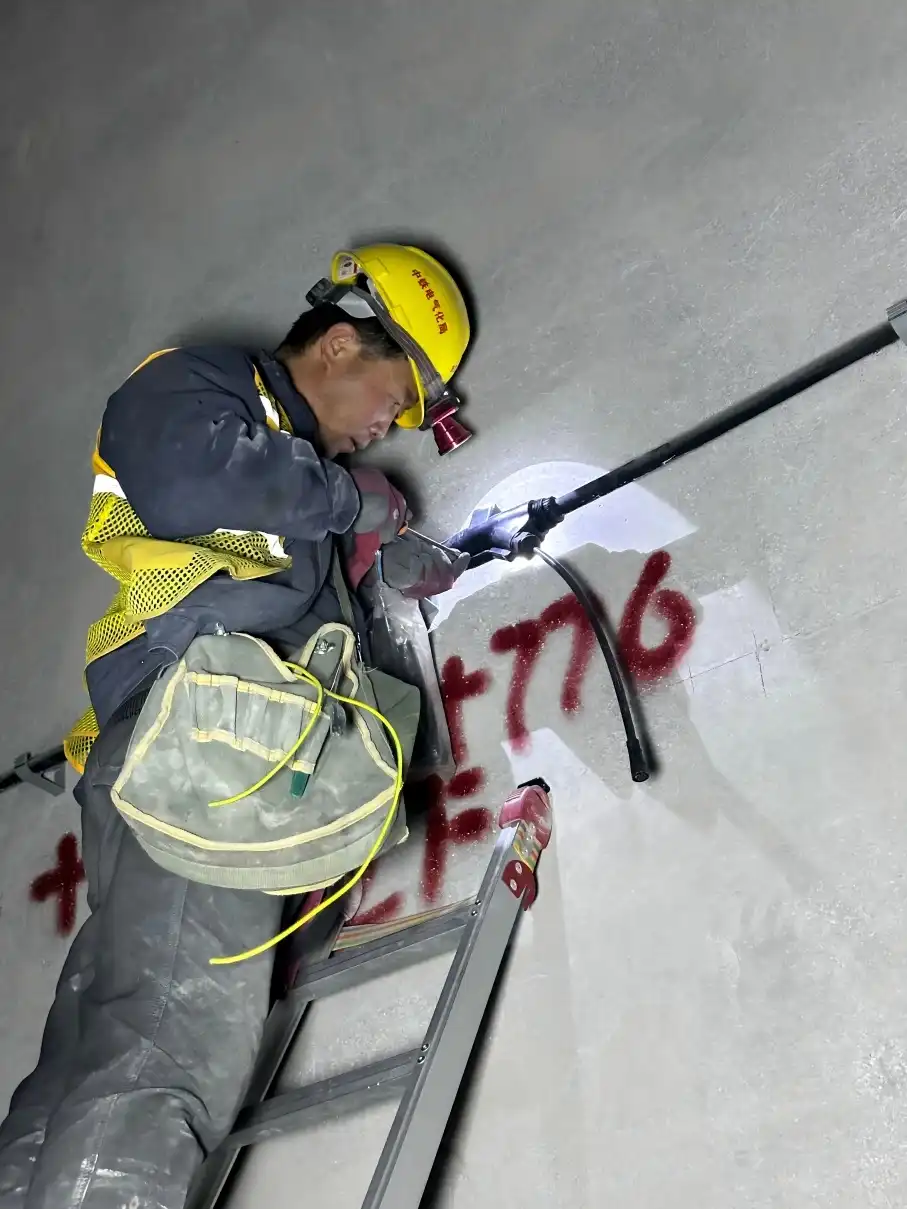

Cost Analysis Beyond Purchase Price
When comparing joint types, procurement teams often forget to look at the total cost of ownership. Branch joints let you position the cables on-site without having to measure them first, so you don't waste two to three meters of cable at each connection point. This could save between 400 and 600 meters of cable on a hospital project with 200 distribution points, which could save between $15,000 and $25,000 in material costs alone.
The cost of labour varies a lot. For straight joints, cables need to be cut, which adds risk to the job if the measures are wrong. Branch joints let changes be made until the last minute, which saves money on costly rework. Differences in installation times directly affect labour costs. For example, if a branch joint takes 15 minutes to install instead of 45 minutes for a straight joint, big projects will save a lot of money. The total cost of using branch joint technology can be 30–50% less than using traditional methods that require cutting cables and reconnecting them again.
How to Choose the Right Cable Joint for Your Project
More than anything else, project specifications determine which joints are used. To start the load capacity analysis, the highest current draw for each circuit is found. Next, joints ranked 125 to 150% above the loads found are chosen to provide a safety margin. Exposure to water, chemicals, extreme temperatures, or mechanical stress is identified by environmental assessments. Each of these conditions calls for different material properties and levels of protection.
It is imperative that the cables work with each other. The joint has to be able to handle the size, shape, and type of cable insulation (PVC, XLPE, or EPR), as well as the copper or aluminium conductor material. Mismatched parts make fitting harder and increase the chance of long-term failure. The ZR-JFZ-70/35 standard makes it clear what cable types are compatible, which keeps expensive mistakes from happening during buying.
Technology Selection Criteria
For most indoor uses, heat shrink joints are easy to use and reliable. Installers use torches or heat guns to apply heat, which makes pre-loaded glue flow and insulation mould tightly around wires. This method works best in places where technicians have enough space to work and are protected from the weather.
Using pre-expanded rubber tubes kept open by removable cores, cold shrink technology doesn't need heat. Installers put the sleeve in place and then take out the core, which lets the elastic recover and make tight seals. This method works well in small areas, places where explosions could happen and open flames could be dangerous, and quick installs where setup time is important.
Complete encapsulation makes resin-filled joints the best way to protect against the environment. Joint holes are filled with liquid cement, which then hardens to form a solid shield that keeps water out. This strong covering is good for underground systems, especially in areas with high water tables or that are prone to flooding. In exchange, plastic joints take longer to install and can only be used once; they can't be taken apart for repairs or changes.
Supplier Capability Assessment
Beyond product specifications, the success of a project depends on the qualifications of the supplier. Quality approvals from national testing centers are proof that safety standards are being met. Xi'an Oukamu Electric has been specialising in wire connection technology for 20 years. This shows that they have the deep knowledge needed to make reliable goods for tough uses. Their experience with more than 10,000 projects, including subways, tunnels, and industrial buildings, gives you proof of performance data that lowers the risk of buying from them.
Professional suppliers are different from vendors because they offer technical support. Consultation before the sale helps choose the right goods for each job. Installation training makes sure that workers in the field know how to do things right. Support after installation quickly fixes problems that come up after installation, avoiding costly project delays. When looking at suppliers, make sure they can provide technical advice on-site, especially for large installations where quality control across hundreds of Branch Cable Joints is very important.
Procurement Best Practices for Branch and Straight Cable Joints
Having good ties with suppliers is the key to effective procurement. Manufacturers that have been in business for decades show that they are stable and dedicated to always getting better. A brand's reputation is based on the experiences of many customers. A good track record means consistent quality, while a lot of complaints mean problems could be happening. International certificates from groups like UL, CE, or CSA show that strict standards are met during the making process.
Quality evidence backs up more than just marketing promises. Ask for test results from approved labs that show they meet the standards that apply. The GB/T 14048.7-2016 certification shows that the products meet Chinese national standards for low-voltage switchgear, and the IEC certification shows that the products are compatible with systems in other countries. Instead of just depending on type testing, inspection papers for each production batch make sure that quality control is always going on.
Strategic Procurement Approaches
When you buy in bulk, you save money, but you need to be able to accurately predict demand. Volume discounts, which are usually 10–20% off for orders over 500 units, are good for projects with clear goals and quantities. Talk about payment terms that work with the project's cash flow. For example, you could agree to pay a deposit when you place the order and the full amount when you confirm delivery.
Custom specs take into account the individual needs of a project that can't be met by standard goods. Custom engineering is necessary when cable sizes vary, weather grades are different, or features are built in. But customisation makes lead times longer and costs more, so think carefully about whether the changes are worth the extra time and money. It can be cheaper to choose the next size up in a regular product line than to have something made just for you.
The table below shows what to think about when buying things for different sizes of projects:
| Project Scale | Recommended Approach | Lead Time | Key Considerations |
|---|---|---|---|
| Small (<50 units) | Stock items, local distributor | 1-2 weeks | Immediate availability, higher unit cost |
| Medium (50-500 units) | Direct manufacturer order | 3-6 weeks | Balance cost with delivery timing |
| Large (>500 units) | Bulk contract with staging | 8-12 weeks | Volume pricing, phased delivery matching installation schedule |
After-Sales Support Requirements
Technical reliability is more than just the quality of the product; it also includes how quickly the supplier responds. Set up clear ways for people to talk about technology issues, insurance claims, and emergencies. Reliable suppliers have technical hotlines handled by experts who know what's going on in the field and can fix problems from afar.
The warranty should cover both problems with the material and problems with how it works under certain conditions. Most warranties cover you for 12 to 24 months, but some companies offer longer warranties for higher-end products. Make sure you understand what the warranty doesn't cover. Usually, damage caused by improper installation, modifications, or use beyond the rated limits is not covered. It should be easy to understand what paperwork is needed for insurance claims so that problems don't get slowed down by red tape.
Application Scenarios and Case Studies
It's easy to see how Branch Cable Joints benefits work in industrial power distribution networks. As production needs change, manufacturing facilities need layouts that are flexible enough to allow equipment to be moved around. Adding branch joints to trunk lines lets you connect new machines without having to turn off the whole circuit. This flexibility cuts down on the costs of downtime and helps with efforts to keep getting better.
When it comes to underground infrastructure, branch joints really shine. This is shown in a tube station project where trunk wires run through service shafts and connect to different platforms and equipment rooms. In the past, exact branch places had to be figured out during the planning phase, and then cables that were already branching had to be made.
Unexpected changes in the field from what was expected in the design caused expensive problems. When electricians switched to on-site branch joints, they could put connections exactly where they were needed, taking into account the way things were built without having to wait for change orders or delays.
Comparative Performance Analysis
A project to light a tunnel compared old-fashioned cut-and-splice methods to newer branch joint technology. For the 8-kilometer tube, LED lights had to be fed by 180 distribution points. In the old way of installing lights, the main cable was cut at each location and then straight joints were used to connect the sections again. This used 540 meters of cable in splice gaps and 90 hours of installation labour.
With the branch joint method, no cables had to be cut because the original trunk run was used and joints were placed exactly where the fixtures were. The time it took to install went down to 45 hours, and there was almost no loss. In addition to saving money at first, the unbroken trunk line made it easier to figure out what was wrong. Problems with certain lighting zones could be easily separated without having to deal with multiple splice points that could fail.
The costs of maintenance over five years showed that there were more benefits. Seven connections failed in the straight joint installation, which needed to be fixed. Each repair cost around $1,200 for labour and materials, plus $3,000 for traffic management while the work was being done. During the same time period, the branch joint system had no failures, showing that it was more reliable over the long term. This made up for the higher initial unit costs because maintenance costs were no longer needed.
Emerging Technology Trends
As materials science makes progress, joint performance keeps getting better. Newer insulation compounds stay flexible at temperatures ranging from -40°C to +90°C, which means they can be installed in more places than before. Materials that are being worked on to heal themselves can easily fix small damage, which could make them last longer in harsh settings.
The integration of smart monitoring is another new area of research. Embedded sensors send information to repair systems about temperature, power, and insulation resistance. Predictive algorithms find patterns of wear and tear before they happen, so parts can be replaced before they break during regular maintenance instead of having to be fixed in an emergency. Even though these features cost more up front, they save money over the course of the product's life by preventing breakdowns and scheduling upkeep more efficiently.
Conclusion
Before you can choose between branch and straight cable joints, you need to know what each type of joint does in an electrical distribution system. When cables need to be connected, straight joints bring back continuity, and branch joints make distribution points without cutting main conductors. Modern branch joint technology has big benefits when it comes to installation freedom, material economy, and total cost of ownership.
This is especially true for big building projects where old methods are wasteful and hard to change. To be successful at procurement, you need to compare technical specs to project needs, check the qualifications of suppliers, and figure out all the costs that go beyond the initial purchase price. The move toward Branch Cable Joints on-site is part of a larger trend in the industry toward flexible systems that can handle the complexities of real life better than rigid planning methods.
FAQ
Can branch joints and straight joints be used interchangeably in electrical installations?
These types of joints are used for very different things and can't be switched out for each other. Branch joints make distribution points by taking power from main cables that run continuously without cutting them. Straight joints put back together broken wire ends to restore continuity. If you need to make a branch link with a straight joint, you have to cut the main cable, which takes away the major benefit of branch technology. On the other hand, branch joints can't fix broken wires because they keep the original conductor whole instead of changing broken parts.
What safety protocols must installers follow when working with cable joints?
For installation safety to start, the whole circuit must be turned off and checked with testing tools, not just the switch settings. Lock-out/tag-out processes keep workers from accidentally turning the power back on during work. Wearing insulated gloves, safety glasses, and clothing that is rated for arcs protects you from residual charges or accidental contact. When using heat shrink methods, make sure there is enough air flow to keep fumes from building up. Installers must carefully follow the manufacturer's torque recommendations. Tightening too much can damage the conductors, and loosening too little can make high-resistance connections that can get too hot.
What service life can be expected from branch cable joints in industrial environments?
If you install quality branch joints correctly, they should last as long as or longer than the parent wire, which is usually 20 to 30 years in normal industry conditions. Extreme temperatures, chemical contact, vibration, and wetness are just some of the external factors that can shorten the service life of something. The ZR-JFZ-70/35 is made of flame-resistant and waterproof materials that are made to work in rough circumstances. Regular inspections that look for corrosion, loose connections, or damaged insulation allow for preventative maintenance that makes the service last longer than the design rating.
Partner with Oukamu for Reliable Branch Cable Joint Solutions
Xi'an Oukamu Electric has been a specialist engineer for 20 years and can help current building projects with their wire connection problems. Our most popular ZR-JFZ-70/35 branch cable joint has been used in subways, mines, factories, and business buildings, and it has been shown to work well in tough situations. The built-in flame-retardant, fire-resistant, and waterproof design meets GB/T 14048.7-2016 standards and gets rid of the need to cut main cables, which saves 2-3 meters per connection point and 30–50% on the total project cost.
As a company that only makes Branch Cable Joints, we offer full technical support, from helping you figure out the specs to teaching you how to install them and providing service after the sale. Email our engineering team at info@okmbranchcable.com to talk about your project needs and get custom solutions that meet your performance and cost goals. You can look at our full line of products and find technical information to help you install them correctly by going to okmbranchcable.com.
References
1. International Electrotechnical Commission. (2014). IEC 60502: Power cables with extruded insulation and their accessories for rated voltages from 1 kV up to 30 kV.
2. National Electrical Manufacturers Association. (2021). Industrial Cable Cost Analysis Report. NEMA Standards Publication.
3. American Society of Civil Engineers. (2019). Underground Infrastructure Installation Best Practices. ASCE Journal of Construction Engineering and Management, 145(8).
4. Institute of Electrical and Electronics Engineers. (2018). IEEE 404: Standard for Cable Joints for Use with Extruded Dielectric Cable Rated 2500 to 500000 Volts.
5. China National Institute of Standardization. (2016). GB/T 14048.7: Low-voltage switchgear and controlgear assemblies.
6. Electrical Safety Foundation International. (2022). Workplace Electrical Safety Guidelines. ESFI Technical Report Series.