
Are Cable Waterproof Joints Suitable for Underground Installations?






 2026-10-21 14:12:26
View:389
Yes — cable waterproof joints are well-suited for underground installations when selected and installed correctly. These sealed connectors protect electrical cables from moisture intrusion, soil chemical exposure, and mechanical pressure that are common in below-grade environments. A properly rated cable waterproof joint maintains insulation integrity and electrical continuity even when submerged or buried in direct soil contact. For procurement managers sourcing materials for basement distribution systems, outdoor switchgear, or buried branch circuits, choosing the right joint type and IP rating is the single most important decision affecting long-term system reliability.
Understanding Cable Waterproof Joints and Their Role in Underground Installations
There are risks with underground cable connections that aren't present with above-ground installations. Over time, groundwater, acidic soil, plant growth, and changes in temperature can all damage a normal cable link. A waterproof wire joint is designed to stand up to these forces.
What Materials Are Typically Used?
As sealants, silicone rubber, epoxy resin, or thermoplastic compounds are used in most waterproof cable joints. These materials don't absorb water and stay flexible over a wide range of temperatures. Gel-filled designs, which cover the whole connection area in dielectric gel, work best for direct-buried uses because the gel seals itself around any wire irregularities.
What Types Are Available?
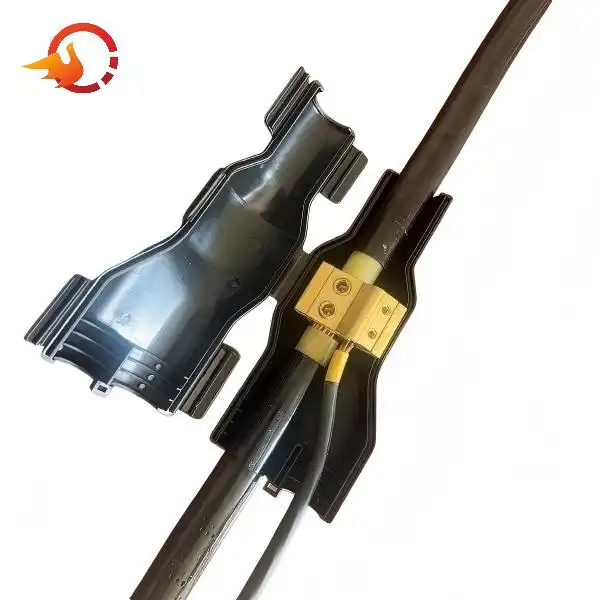
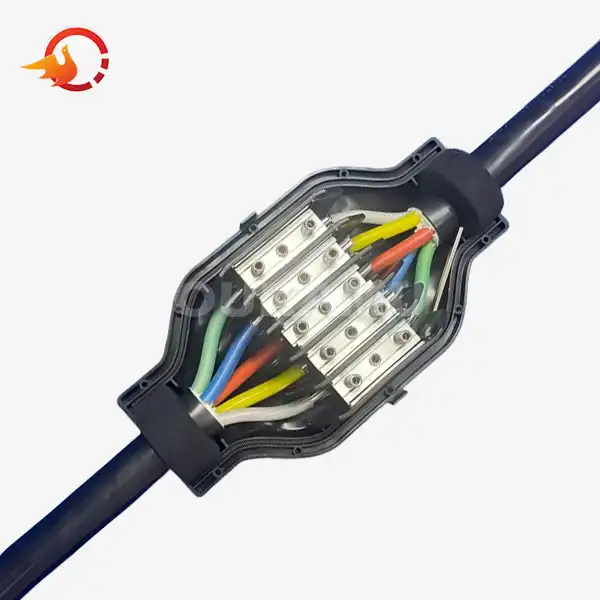
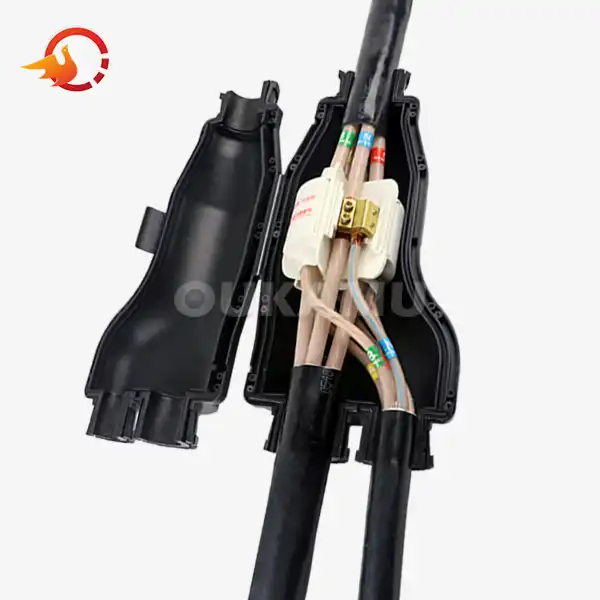
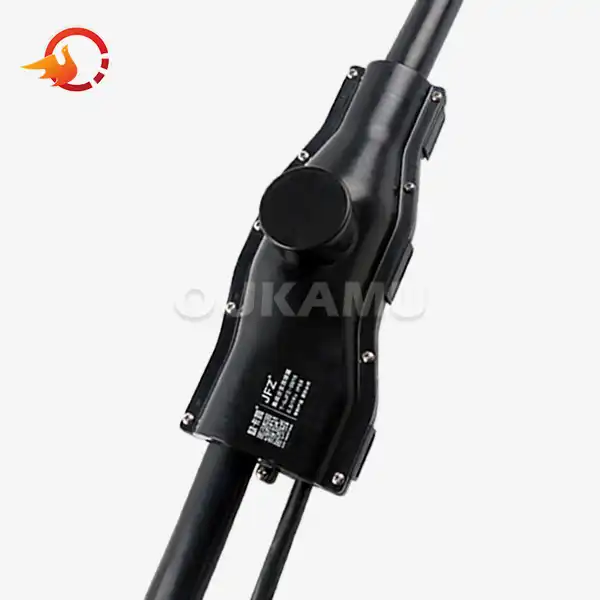
In the ground, heat shrink joints, resin-cast joints, pre-molded push-on joints, and gel-filled branch joints are the four most common types. Each type works best with a different voltage level, depth of burial, and time frame for installation. Gel-filled branch connectors, like the Oukamu T-GJFZ-16/10, are made to make low-voltage branch connections in underground or well-like areas without having to cut the main wire.
How Do IP Ratings Apply?
IP grades show how well something is protected against solid objects and water. For systems that will be buried or immersed, IP67 (temporary immersion up to 1 meter) is the lowest level that can be used. Most business and public electricity projects need direct-buried cable joints to meet the IP68 standard, which means they can be submerged continuously for more than 1 meter.
Why Cable Waterproof Joints Are Crucial for Underground Installations
Putting water and power together is not a good idea. Both the National Electrical Code (NEC) and IEC 60529 have strict rules about how electrical connections must be sealed when they are wet or buried. Ignoring these requirements leads to liability issues, safety risks, and expensive rework.
Water Ingress Destroys Insulation
Electrochemical corrosion speeds up the breakdown of insulation when water gets into a cable waterproof joint. A 2019 study in the journal IEEE Transactions on Dielectrics and Electrical Insulation confirmed that partial discharge activity in cable joints that are breaking down gets much worse when water bridges across the conductor interface. If you seal properly, this failure pathway is completely blocked.
Soil Chemistry Accelerates Corrosion
Acidic soils, clay-rich ground, and wet fill materials all contain harsh chemicals that damage bare metal conductors and insulation that isn't protected. A joint designed for underground use has housing materials that don't rust and sealants that don't react with the soil around it.
System Downtime Carries Real Financial Cost
For a 200-person MEP contractor working on several projects at once, one failed underground joint can slow down the commissioning of an entire floor. For rework to be done in underground or in-slab areas, the ground has to be dug up or concrete has to be cut, which increases the cost of labor by a lot. It is much cheaper to buy verified, IP68-rated connections during the original installation than to fix problems after they happen.
Comparing Cable Waterproof Joints with Alternative Solutions for Underground Use
Not every waterproof joint works the same way when it comes to being underground. The table below shows how the three most common types of low-voltage buried branch connections are compared. It lists the joint type, its IP rating, how it is installed, whether it can be used again, and its best use.
The heat shrink type has an IP67 rating, which means a heat gun is not needed for straight-through splices. The resin cast type has an IP68 rating, which means no mixing or curing time for the resin, and it works best in high-moisture environments. The gel-filled branch (T-GJFZ-16/10) type has an IP68 rating, which means it can be installed without tools and involves direct burial.
| Joint Type | IP Rating | Installation Method | Reusability | Best For |
|---|---|---|---|---|
| Heat Shrink | IP67 | Heat gun required | No | Straight-through splices |
| Resin Cast | IP68 | Resin mixing + curing time | No | High-moisture environments |
| Gel-Filled Branch (T-GJFZ-16/10) | IP68 | Tool-free, no cable cutting | Yes | Branch circuits, direct burial |
In underground electricity work, each type makes sense in its own way. For simple two-cable splices, heat shrink joints are easy to find and don't cost much, but they need a full cable end, which means cutting the main line. Resin-cast solutions close well, but they need to be put together in several steps and take time to cure, which makes installation take longer on busy job sites.
Gel-filled branch joints, namely cable waterproof joint, are a completely different way of designing things. They don't connect the ends of the cables; instead, they pierce the insulation of the main cable at any point to make a sealed branch that doesn't cut the main circuit. This method directly deals with the two main costs that affect the site: time spent on work and wasted cables.
IP Ratings as a Procurement Filter
When looking at paperwork from a supplier, IP68 is the minimum level for direct buried cable connections. Make sure that the IP68 grade applies to the whole joint, not just the housing body. Some manufacturers only rate the case and not the cable-gland link that is put together.
Total Cost of Ownership Perspective
The unit price is only one factor that can change. A gel-filled branch joint that doesn't need any tools for installation often has a lower total project cost than cheaper options that need more labor and more cable. This is because the installation labor, cable reservation length, post-installation inspection, and possible repairs are all taken into account.
How to Select and Install Cable Waterproof Joints for Underground Applications
The Oukamu T-GJFZ-16/10 is a gel-filled branch cable connection made for low-voltage uses in wells and underground. Here are some of its most important specs: | Model | T-GJFZ-16/10
| Parameter | Specification |
|---|---|
| Model | T-GJFZ-16/10 |
| Waterproof Rating | IP68 |
| Main Cable Range | 4–16 mm² |
| Branch Cable Range | 1.5–10 mm² |
| Rated Voltage | 0.6/1 kV |
| Sealing Method | Gel-filled, double-layer protection |
| Installation | No cable cutting, no reserved length |
| Installation Environment | Direct burial, in-well, concealed |
| Certifications | GB/T compliant |
Because these steps get rid of the need for cable reservation lengths or junction boxes at branch points, procurement teams say that lower material costs per floor are the main reason they buy things.
- Surface preparation: Clean the main cable jacket at the branch point. Remove contamination, moisture, or loose insulation fragments from a 10 cm zone around the connection area.
- Positioning the joint: Place the T-GJFZ-16/10 body at the intended branch location along the main cable. No cutting is required — the integrated piercing contacts penetrate the insulation during closure.
- Inserting the branch cable: Insert the pre-stripped branch cable end into the designated branch port. Confirm correct seating before applying closure force.
- Closing and sealing: Tighten the joint housing to the specified torque. The internal gel compound flows into all voids, forming a continuous IP68 seal around both the main cable and branch conductor.
- Verification: Check the joint for complete closure, then test circuit continuity and insulation resistance before backfilling or covering.
As an example: All six levels of an office building project in Chengdu that used T-GJFZ-16/10 connectors for the basement lighting branch circuits were commercial. The project team said that installing branch circuits took 35% less time than the old way of using junction boxes. The project also passed the city's electrical review on the first try, with no changes needed.
Case in point: A commercial office building project in Chengdu used cable waterproof joint, the T-GJFZ-16/10 connectors, for all basement lighting branch circuits across six underground parking levels. The project team reported a 35% reduction in branch circuit installation time compared to the previous method using junction boxes, and passed the municipal electrical inspection on the first submission — with no rework required.
Future Trends and Innovations in Cable Waterproof Joints for Underground Use
The market for cable connections is changing toward goods that are smarter and last longer. Newer polymer compounds last longer than older silicone seals when they are submerged in water all the time. Manufacturers are also using less solvent-based adhesives and more water-based ones to meet new environmental rules in California and the EU.
Smart Monitoring Integration
Some next-generation joint designs have thermal monitors built in that send information about the temperature to systems that control the building. This is a big step toward predictive maintenance in electrical infrastructure: early problem recognition at the joint level, before insulation failure happens.
Sustainability and Eco-Friendly Materials
RoHS and REACH guidelines are putting pressure on the industry to move toward flame retardant materials without halogens and house parts that can be recycled. As part of the supplier qualification process, procurement teams looking for supplies for healthcare or government projects should check that the paperwork they send is complete and up to date.
Supply Chain Efficiency Through Direct Sourcing
More and more, B2B procurement teams are buying straight from makers to cut down on lead times and get better prices on large orders. Because Oukamu has been focusing on branch cable connectors for 20 years and has OEM capabilities and GB/T compliance documentation, it is a good choice for contractors who are in charge of multi-site, multi-specification procurement programs.
Conclusion
For systems that go underground, the wire links must be sealed, certified, and checked. For the whole life of the electrical system, the right cable waterproof joint will keep it safe from water, soil chemistry, and mechanical stress. Procurement managers need gel-filled branch connectors that are easy to install, safe, and effective at closing for a long time.
Those that are rated IP68 and made for straight burial work best for this. Choosing compliant products from seasoned manufacturers lowers both the risk of the project and the total cost of installation. This directly helps the goal of passing inspections on the first try.
FAQ
Can a gel-filled cable waterproof joint be used in permanently submerged conditions?
Yes, as long as the joint has a verified IP68 rating for the whole unit when it's put together. IP68 certifies protection against being submerged in water for more than one meter for a long time. Before allowing a product to be permanently submerged in drainage wells or underground utility vaults, you should always ask for the full test report and not just the housing rating.
What is the minimum IP rating required for direct-buried cable connections?
IP67 is good for short-term or accidental water exposure. IP68 is the minimum standard that should be used for direct buried applications or installations inside underground structures that collect water. For below-grade branch connections, most commercial project inspection bodies in the US and China need IP68 documentation.
Does the T-GJFZ-16/10 require special tools for installation?
No, the T-GJFZ-16/10 doesn't need any tools to close. The gel-filled body seals itself when the housing is tightened to the required pressure. This means that electricians can install it on-site without needing any special tools.
What certifications should I request from a supplier?
Ask for the product test report that confirms the IP68 grade, the GB/T compliance certificate, and any CCC paperwork that applies to the type of project you have. Ask for IEC 60529 test reports for projects that will be exported or done in other countries.
Does the joint work with fire-resistant cables?
Yes. The T-GJFZ-16/10 can connect to flame-retardant, fire-resistant, and mineral-insulated fire-resistant cables at 0.6/1 kV. This means it can be used for fire circuit branch connections in hospitals, schools, and businesses.
Partner With Oukamu for Your Next Underground Cable Project
Oukamu has worked for 20 years to create branch cable connector technology that meets the real cost and safety needs of electrical work in building. We offer T-GJFZ-16/10 cable waterproof joints at manufacturer-direct prices, with IP68 certification and gel-filled sealing technology that make them a reliable choice for underground branch circuits in public, commercial, and residential building projects. You can email us at info@okmbranchcable.com or go to okmbranchcable.com to get samples or a quote that is tailored to your project.
References
1. IEEE Transactions on Dielectrics and Electrical Insulation — Volume 26, Issue 4, 2019
2. IEC 60529: Degrees of Protection Provided by Enclosures (IP Code) — International Electrotechnical Commission, 2013
3. National Electrical Code (NFPA 70) — National Fire Protection Association, 2023
4. GB/T 14048.7-2016: Low-Voltage Switchgear and Controlgear — Connectors for Copper Conductors — Standardization Administration of China, 2016
5. Underground Cable Systems: Installation and Maintenance Practices — Electric Power Research Institute (EPRI), 2020
6. Cable Jointing Technology and Materials — ERA Technology Report, 2018