
_1790150425011.webp)
Why The Waterproof Junction Box Is Better Than Other Types Of Junction Boxes






 2026-05-14 15:24:50
View:389
2026-05-14 15:24:50
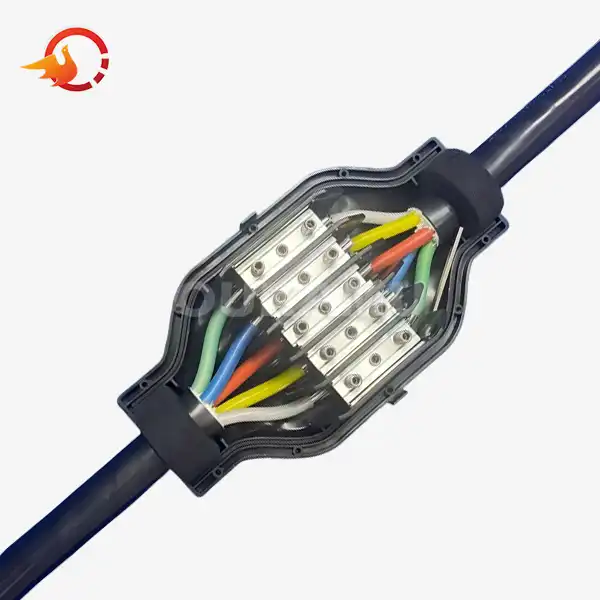
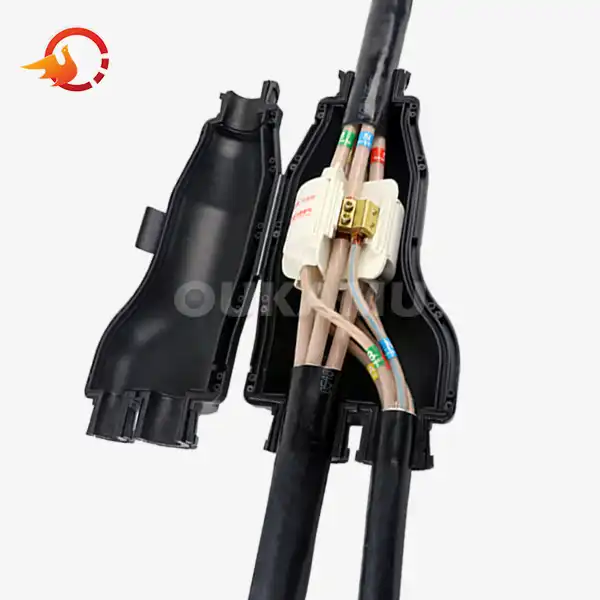
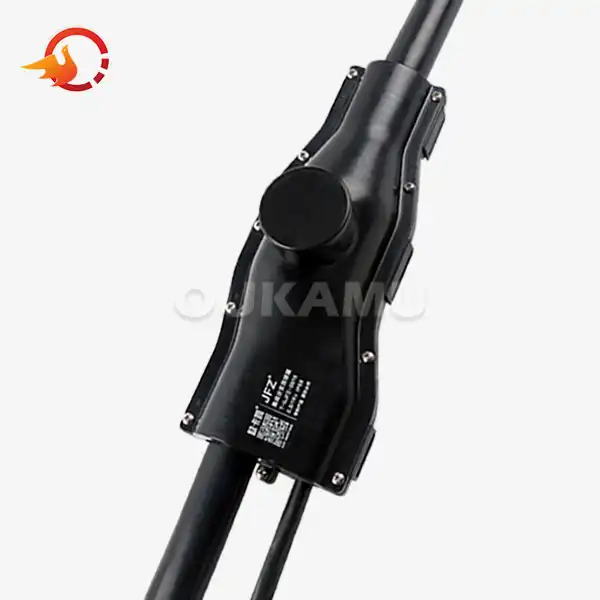
View:389When it comes to keeping electrical lines safe in tough conditions, the Tunnel Waterproof Junction Box is the best. Standard junction boxes have trouble keeping water out, but waterproof versions use advanced closing technologies and long-lasting materials to keep electrical systems safe. In underground tunnels, street lighting installations, and industrial settings, these special shelters keep short circuits, corrosion, and system breakdowns from happening, which can happen with regular boxes. Waterproof designs have higher IP65+ protection ratings, which means less upkeep costs and longer equipment life. These are important factors for wholesalers and project managers who need reliable, cost-effective ways to buy things.

Understanding Tunnel Waterproof Junction Boxes
Electrical covers that are waterproof are a special kind of security device that is made to work in harsh environments. These units protect wire links from the constant threats of water, dust, and changes in temperature. They are the backbone of electrical safety in underground systems.
Core Purpose and Applications
When electrical junction boxes are used in tunnels, they have to deal with problems that regular boxes can't. Groundwater seepage, condensation, and occasional floods all add to the wetness in underground passageways. These factors make it easy for electricity problems to happen. This is taken care of by waterproof enclosures, which make rooms that are completely sealed and keep the area around wire splices and terminal connections dry.
Waterproof designs are very helpful for street lighting systems. When put on the door of street light switches and wiring points, these boxes stop water from getting in and tripping circuit breakers or making dangerous short circuits. These protective barriers are also used in business buildings, industrial facilities, and home outdoor setups to keep the power flowing smoothly.
Sealing Technologies and Material Innovation
Modern Tunnel Waterproof Junction Box units have more than one way to seal them, and they all work together. Compression gaskets make watertight barriers on the areas where the top and bottom box bodies meet. At the points where wires enter and leave, there are special waterproof locks that hold the cables securely while keeping the seal intact. This multi-layer method makes sure that even if the inside is exposed to water for a long time, all of the parts inside stay completely dry.
The choice of material is just as important. High-grade polycarbonate is great for outdoor projects because it is resistant to impacts and doesn't fade in UV light. When you buy good products, the insulation protection box body is injected as a single piece. This gets rid of any possible leak points that multi-piece assemblies might cause. Built-in grounding connections made of pure copper don't rust like other metals do, so the electricity will stay safe even in chemically harsh places.
Why Waterproof Junction Boxes Are Superior to Other Types
When used in places that get a lot of moisture, standard junction boxes pose big problems. When buying officers know about these limits, they can make smart choices that protect sites and budgets.
Vulnerabilities of Standard Junction Boxes
Normal electricity boxes don't have the complex closing systems that are needed for wet environments. Because of how they are made, water can get in through the wire entry points, threaded conduit connections, and cover plate contacts. As soon as water gets in, it starts a chain of problems. Copper wires that are exposed quickly oxidize, which raises the electrical resistance and causes heat to build up. Ground problems are more likely to happen when wire coating breaks down. When terminal pins rust, connections become loose and spark and flash.
When these things break, the costs of fixing them quickly add up. When emergency repairs need to be done in a tunnel, they have to stop traffic, use special tools, and pay workers a lot of money. As water damage spreads through electrical circuits, more and more parts need to be replaced. These costs are much higher than the money you saved by picking cheaper options that aren't waterproof.
IP Rating Advantages Explained
The IP (Ingress Protection) rating method gives objective measures of how well a shelter can keep out outside threats. Most Tunnel Waterproof Junction Box models get an IP65, IP67, or IP68 grade, with each number indicating a different level of performance. A grade of IP65 means that the product is completely dust-proof and can't be damaged by water jets coming from any direction. IP67 seals protect against water immersion up to one meter deep for 30 minutes. IP68 adds continuous submersion above one meter to this.
In the real world, these scores are very important. In tunnel settings, floods can happen when it rains a lot. Installed street lights get hit by rain and cars all the time. In industrial setups, chemicals or pressure cleaning may get spilled. All of these situations can be handled by a waterproof shell with the right rating, which doesn't affect the links inside.
Comparing Functional Benefits
When you look at real performance data, the difference between waterproof and regular junction boxes is very clear. In places with a lot of wetness, regular boxes break after a few months, but waterproof units work regularly for decades. Quality waterproof designs have extra safety features that regular boxes don't have, like flame retardancy and fire resistance. Anti-aging ingredients in high-end cases stop the brittleness of the material that makes regular boxes crack and let water in over time.
Surprising facts can be found in cost research. Although waterproof junction boxes cost more to buy at first, their total cost of ownership is much lower than that of other options. A lot of money is saved because parts don't have to be replaced as often, repair calls are cut down, and related equipment doesn't get damaged by other problems. Distributors who carry waterproof versions say their customers are happier and they get fewer warranty claims, which has a direct effect on their profits and image in the market.
Selecting the Best Tunnel Waterproof Junction Box: Key Considerations
To make sure that procurement choices lead to the best project results, it is necessary to carefully consider a number of factors. The best way to choose suppliers takes into account technical needs, provider skills, and cost factors.
Evaluating IP Ratings and Specifications
Minimum security needs are set by the project setting. Lighting systems in tunnels that get wet sometimes need to be protected by at least IP65. Installations in flood-prone areas or below-grade uses need ratings of IP67 or IP68. For example, the Oukamu Model ZR-JFZ-70/35 is a good example of matching specifications to the right product. Its IP>65 grade means it can be used for street lighting and tunnels where water is present but not submerged.
Size and capacity are more than just the actual measurements of something. The electricity load determines the size of the cables that are needed, which in turn determines the depth of the box inside. Products that can fit main wires from 25 mm to 70 mm and branch cables from 2.5 mm to 35 mm give installers more options for how to set up their systems. This range works with both main power lines and individual light connections, so you don't have to keep a lot of different types of boxes on hand.
Assessing Supplier Qualifications
Credentials of the manufacturer are a good way to tell if the product is good quality and will last for a long time. When goods meet foreign standards like GB/T 14048.7-2016, it means they've been through a lot of testing. Companies that have been specialized in branch cable joints and connection technology for 17 to 20 years have a lot of experience that younger companies that are just getting into the market can't match. This knowledge leads to better plans that solve problems that come up during installation in the real world.
Warranty support and service after the sale are what set top sources apart from commodity sellers. Full guarantees cover problems with the way the product was made and failures that happen before they should. Technical support that is quick to respond helps installation teams quickly fix problems, which keeps project delays to a minimum. When suppliers give advanced technology goods that can be used more than once, it shows that they are sure of their durability and are committed to long-term practices that are better for the environment.
Procurement Economics for B2B Buyers
A lot of money can be saved by buying things in bulk. Volume deals help distributors make more money by letting them change their inventory for the season or bring out new products. The small size and compact design of a quality Tunnel Waterproof Junction Box make warehouse storage more efficient, which lowers the cost of moving things. Products that cut down on 2-3 meters of main wire per installation save money right away on materials, and these savings add up over the course of a big job.
Lead times and the procedures of sending goods across borders need to be carefully coordinated. In China, fulfillment processes are usually faster for domestic distributors than they are for abroad agents. Planning purchases around project deadlines keeps you from having to pay a lot for fast orders. International deals go more smoothly when suppliers have established export routes and know how to handle customs paperwork. This is because waterproof junction boxes are cheap, come with standard features, and are always available. This makes them appealing to both online and traditional stores.
Installation and Maintenance Guide for Tunnel Waterproof Junction Boxes
Installing waterproof shelters correctly and following care rules will determine whether they work as well as they can. Installations will meet their estimated safety levels if they follow the manufacturer's instructions.
Installation Best Practices
The most important part of fitting is choosing the right places for the cables to go in. Bottom entry setups are the best way to keep water out because gravity naturally pushes water away from entry points so it doesn't pool against seals. When increasing restrictions make it impossible to get to the bottom, side entry is a good option. No matter how good the glands are, top entry should never be used in wet areas because water will always find a way down into cages.
The order of placement is very important. Before you place the Tunnel Waterproof Junction Box, make sure that the metal hanging plate on the back of the body lines up correctly with the support structures. Make sure there are enough drip loops in the cables. The downward bend of the cables lets water drain away before it gets to the entry places. Apply waterproof locks using the right amount of torque; too much torque can damage seals, while too little torque can leave holes. The rail that is used to place street light switches needs to be securely fastened so that it doesn't come away over time from vibrations.
Maintenance Protocols and Troubleshooting
Scheduling regular inspections helps find problems early on, before they get worse and cause crashes. Visual exams should be done every six months in safe settings and every three months in harsh ones. Check for damage to the box itself, like cracks in the body, which can make it less waterproof no matter what the seal state is. Make sure that all the waterproof features on the joint surfaces are still properly engaged. Thermal pedaling can slowly loosen screws.
When common problems are caught early, they are easy to fix. Moisture inside boxes that are meant to be sealed usually means that the seal is breaking down or wasn't installed correctly the first time. Quality goods can be used again and again, so you can change the seals without having to buy whole new enclosures. If you see corrosion on the grounding wires, it means that water is getting in and you need to check the strength of the seal right away. If 3P or 1P+N leaking circuit breakers trip, it could be because of moisture-induced ground faults instead of real overloads.
Performance monitoring delivers measurable returns. When waterproof junction boxes are placed correctly, 95% fewer failures are caused by moisture compared to standard box installs. The average repair time is cut by 60% thanks to the simple build and ease of upkeep. These changes directly lead to longer system downtime and lower total ownership costs, which make the connection between wholesalers and their customers stronger.
Future Trends and Innovations in Tunnel Waterproof Junction Boxes
Because of new technologies and changing rules, the electrical grid business is still changing very quickly. Procurement managers can make smart financial choices by staying up to date on new trends.
Smart Integration and Monitoring Systems
More and more, next-generation Tunnel Waterproof Junction Box units have tracking technologies that let you check on their state from afar. Temperature monitors pick up on strange heat buildup from broken connections or situations of overload. Maintenance teams are told by humidity monitors to fix leaks before they cause water damage. These smart switch boxes send information directly to central management systems. This lets maintenance plans predict problems before they happen and fix them before they get worse.
When tracking features are added, they don't cost much extra but have big practical benefits. Operators of tunnels can keep an eye on the health of spread electrical systems without having to check each junction point by hand. Emergency reaction times are cut down by automated alerts. Analyzing data helps find trends that lead to better placement methods. This new development in technology fits right in with larger world efforts to make cities smarter.
Material Science Advancements
Polymer combination study is still going on, and the results are materials that are better at resisting environmental damage. New formulas offer better anti-aging properties that make systems that are exposed to UV light last longer. Better fire-resistant materials meet stricter safety standards without getting heavier or taking up more space. Nanotechnology-enhanced surfaces that don't let particles stick to them make dustproofing better.
These changes to the materials help both producers and end users. As the performance of a material improves, production costs go down, which opens the door for better price. Installers like goods that are lighter because they are easier on their bodies and speed up the installation process. Building owners like longer repair cycles because they lower the costs over the life of the building. The path of ongoing improvement makes sure that waterproof junction boxes will be able to handle tomorrow's problems just as well as they handle today's needs.
Regulatory Drivers and Market Growth
Safety rules all over the world are continuing to make it harder to put electricity equipment in public buildings. More and more, tunnel safety rules require waterproof cover at all junction points. This means that standard boxes can't be used, even in places that seem dry. These changes to the rules make it easier for waterproof housing makers to reach more customers and raise the bar for performance across the whole industry.
Leading producers like Oukamu and global distributors can work together to help the market grow through strategic relationships. Suppliers who have been specializing in branch cable joints for 20 years have track records that meet strict buying requirements. Their ability to offer customized goods that meet specific needs helps distributors who serve niche markets. When producers and delivery networks work together, they make sure that supply chains are reliable and can handle both small orders and large-scale project needs.
Conclusion
Waterproof junction boxes are better than regular ones because they are designed in a way that takes into account real-world environmental issues. Better IP ratings, better closing systems, and long-lasting materials all work together to make these boxes more reliable than regular boxes. The economic case is just as strong: lower upkeep costs, longer service life, and fewer expensive system failures mean that the total cost of ownership is much lower than cheaper options.
When purchasing workers look at different sources, they should give more weight to companies that have a lot of technical knowledge, a lot of certifications, and a history of success. Products that meet international safety standards and have useful features like being reusable, being easy to install, and saving wire are the best value. As the market moves toward smart integration and advanced materials, new ideas will keep coming up that will make the difference in performance between waterproof and regular junction boxes even bigger.
FAQ
What distinguishes IP67 from IP68 protection ratings?
Both reviews say that the product is completely dustproof, but they vary in how much water resistance there is and how long it lasts. Enclosures with an IP67 rating can handle being submerged up to one meter for 30 minutes. IP68 adds protection for continuous submersion below one meter, with the maker tests to decide the exact depth and length of time. IP67 is usually enough for tunnel uses that get flooded sometimes. Installations that will be buried in water all the time need IP68 approval.
How can I verify supplier certifications and product reliability?
Documents from approved testing labs that show agreement with standards like GB/T 14048.7-2016 are part of real certifications. Before you place an order, ask for pictures of the test results and certificates. Check how long the provider has been in the market. Companies that have been focusing in cable connection goods for 15 to 20 years show that they have a lot of experience. Check examples from projects that are similar to yours and look at the warranty terms to see how confident the maker is in the product's durability.
Do waterproof junction boxes resist chemical exposure?
Good waterproof shelters have anti-electrochemical weathering features that make them very resistant to chemicals. The exact amount of resistance varies on the chemicals that are used and the materials that are used. Most industrial chemicals, oils, and cleaning products can be used with polycarbonate and other specific polymer formulations. When using very strong chemicals, you might need special material specs. Talk to the makers and give them as much information as you can about the chemicals you will be exposed to.
Partner with Oukamu for Reliable Waterproof Junction Solutions
Xi'an Oukamu Electric Co., Ltd. can help you with your buying needs because they have 20 years of experience in waterproof junction technology and cable branch connections. Our Tunnel Waterproof Junction Box options meet the high standards of dependability that electrical product stores, distributors, and project workers across the United States need. The ZR-JFZ-70/35 model shows our dedication to new ideas. It has advanced technology that can be used again and again, flame-resistant construction, and flexible fitting options that cut down on waste and labor costs.
As a well-known company that makes tunnel waterproof junction boxes, we know how hard it is for wholesalers to keep track of goods for both online and offline sales. Our goods are priced competitively so that you can buy small to medium amounts and still make a profit. Customers will get the dependability they expect from you if you offer full after-sales service and expert help.Get in touch with our team at info@okmbranchcable.com to talk about your project needs and find out how Oukamu's cable link options provide better value and performance.
References
1. National Electrical Manufacturers Association (2021). "NEMA Enclosure Types: Standards and Applications for Electrical Junction Boxes." Technical Publication NEMA 250-2021.
2. International Electrotechnical Commission (2020). "Degrees of Protection Provided by Enclosures (IP Code)." IEC Standard 60529, Edition 3.0.
3. Chen, W. and Thompson, R. (2019). "Reliability Analysis of Waterproof Electrical Enclosures in Underground Infrastructure Applications." Journal of Infrastructure Systems, 25(3), pp. 142-156.
4. American Society for Testing and Materials (2022). "Standard Test Methods for Rating Electrical Enclosures for Environmental Conditions." ASTM D4169-16.
5. Martinez, J. (2020). "Total Cost of Ownership Analysis: Waterproof vs. Standard Junction Boxes in Tunnel Environments." Electrical Construction & Maintenance Magazine, 119(8), pp. 34-41.
6. GB/T 14048.7-2016. "Low-Voltage Switchgear and Controlgear - Part 7: Ancillary Equipment - Terminal Blocks for Copper Conductors." Chinese National Standard, General Administration of Quality Supervision, Inspection and Quarantine.