

_1790150425011.webp)
Uses of Electrical Lighting Distribution Boxes in Commercial Installations






 2026-03-06 12:28:08
View:389
2026-03-06 12:28:08
View:389Chinese manufacturing excellence in cable jointing solutions gives procurement professionals around the world access to new technologies that offer both high performance and great value. Established Chinese suppliers offer wide ranges of products, including Electrical Lighting Distribution Box, that meet a wide range of application needs while still meeting international quality standards and certification requirements. Modern cable jointing technologies created by Chinese companies offer a range of installation options, lower costs over the system's lifetime, and higher system reliability that meet the strict needs of modern electrical infrastructure projects. Strategic partnerships with trustworthy Chinese suppliers give you access to technical support, the ability to customize products, and prices that are competitive, all of which help your project succeed

Comprehending Electrical Lighting Distribution Boxes in Commercial Settings
Because of their size, complexity, and government rules, commercial lighting distribution systems are very different from residential ones. You can think of these special enclosures as command centers that get power from main sources and carefully send it to different lighting circuits all over large buildings.
Fundamental Functions and Operational Principles
These days, commercial distribution boxes work by following complex rules that put safety, efficiency, and dependability first. The main job is to take in large amounts of electricity and break them down into smaller, more manageable circuits that serve different lighting zones. To keep electrical hazards from happening, this process includes controlling the voltage, keeping an eye on the current, and automatically finding faults.
Modular design architecture is what makes the system work. It lets facility managers change the way circuits are set up based on the lighting needs of each room. Smart technology in newer models lets you monitor and control them from afar, giving you real-time information on things like power use, circuit status, and maintenance needs.
Key Types and Configurations in Commercial Applications
Different types of Electrical Lighting Distribution Boxes are used in commercial installations, depending on the needs of the building and the weather. Metal enclosures last longer and protect against electromagnetic interference better than other materials, so they are perfect for harsh industrial settings. Because they are resistant to corrosion and good at keeping out noise, plastic enclosures are great for use outside or in places with a lot of humidity.
As facilities get bigger, modular systems can be expanded in a way that fits their needs. On the other hand, fixed-capacity units are better for smaller commercial spaces with stable lighting needs. AC/DC system compatibility makes it possible to use a wide range of lighting technologies, from old-fashioned fluorescent systems to new LED installations. Knowing these differences helps procurement managers choose the right solutions that fit with the building's long-term goals.
Essential Uses and Benefits for Commercial Installations
Complex lighting distribution systems help businesses run smoothly and safely. These systems have many functions that have a direct effect on how well a building works, how much energy it uses, and how much it costs to maintain.
Efficient Control Through Zoning and Automation
Commercial Electrical Lighting Distribution Boxes allow for complex zoning plans that make the best use of energy in different parts of a building. Zone-based control lets facility managers set up personalized lighting schedules that are based on how the building is actually used. This cuts energy use during off-peak hours by a large amount.
Building management systems can work with advanced automation features to provide smart lighting control based on occupancy sensors, daylight harvesting, and time-based scheduling. Comparing this integration to older ways of controlling lighting, it saves between 20 and 40 percent of the energy used, which means big savings for businesses.
Safety Features and Compliance Standards
Modern commercial distribution boxes have a lot of safety features that go beyond what is required by basic electrical code. Surge protection systems keep expensive lighting equipment safe from the power surges and changes that happen in commercial power systems all the time. Circuit breakers disconnect automatically when the power is too high, which keeps equipment from breaking and reduces the risk of fire.
Arc fault detection technology finds dangerous electrical arcing conditions before they get worse and cause serious safety incidents. Grounding systems keep people safe by providing safe electrical fault current paths. These safety features make sure that the National Electrical Code (NEC) and other relevant commercial electrical standards are met.
Maintenance-Friendly Design Benefits
Clear labeling, logical circuit organization, and easy-to-reach component placement make troubleshooting and maintenance easier in well-designed distribution boxes. Diagnostic features give maintenance teams detailed information about how well circuits work, how much power they use, and possible problems before they cause the system to fail.
The modular design method lets maintenance work be done on specific parts of lighting systems without affecting the whole system. This cuts down on operational downtime and maintenance costs. Built-in testing tools allow for proactive maintenance plans that stop unexpected failures and make systems last longer.
Choosing the Right Electrical Lighting Distribution Box for Your Business
To choose the right distribution equipment, you need to take a close look at your facility's needs, your plans for future growth, and your operational goals. During this process, many technical and business factors that affect how well and how cheaply a system works in the long run are looked at.
Load Capacity and Circuit Requirements Analysis
To choose the right Electrical Lighting Distribution Box, you must first do a correct load calculation. When figuring out how much space they need, commercial buildings have to think about how much lighting they already have, how much they want to add, and how much technology they might want to upgrade. Load analysis should include diversity factors that show how things are actually used, not just what the theoretical maximum demands are.
Circuit quantity planning includes looking at the needs for lighting zones, control strategies, and easy access for maintenance. Higher circuit counts allow for more precise control and easier troubleshooting, which is helpful for buildings with complicated lighting needs. When planning for future growth, 20–25% more space should be included so that the system can handle it without having to be replaced completely.
Brand Comparison and Technology Evaluation
Leading companies like Schneider Electric, Siemens, and ABB make complete solutions for distributing lighting in businesses. These solutions use a range of technologies and come with a variety of features. Schneider Electric focuses on its ability to connect seamlessly with building automation systems, which makes intelligent facility management possible. Siemens focuses on advanced diagnostics and modular scalability that help with preventative maintenance plans.
ABB focuses on high-capacity applications that need strong surge protection and fault detection systems that can be used in mission-critical buildings. When procurement managers look at these choices, they should give more weight to manufacturers that offer full technical support, replacement parts that are easy to find, and a track record of success in similar commercial applications.
Sizing and Scalability Considerations
Modular distribution systems are very flexible and can be used in buildings whose lighting needs change over time. These systems let you add small amounts of capacity without making big changes to the infrastructure. This makes them perfect for businesses that are growing or that have lighting changes throughout the year. The higher cost of installation at the start for modular systems usually pays for itself in lower costs for future changes.
Smaller commercial buildings or certain areas of larger buildings that need stable lighting can use compact distribution solutions. These units are affordable options for situations where growth isn't likely to happen or isn't practical. The key is to accurately predict what the facility will need in the long term so that systems don't become obsolete too soon.
Installation, Safety, and Maintenance Best Practices for Commercial Usage
Professional installation and ongoing maintenance have a direct effect on how reliable the system is, how safe it is, and how long it lasts. To get the best performance from commercial installations, they must follow strict government rules and best practices in the industry.
Regulatory Compliance and Installation Guidelines
Commercial electrical installations need to follow the National Electrical Code (NEC), local electrical codes, and any other industry standards that apply. When planning an installation, it's important to work together with local electrical inspectors to make sure the approval process goes smoothly and quickly.
Before the installation, site surveys find possible problems like the environment, how easy it is to get to, and how the new system needs to connect to the existing electrical system. When installations are done in the right order, they don't get in the way of the facility's ongoing operations and testing and commissioning go smoothly.
Critical Safety Features and Protection Systems
Surge protection systems keep expensive lighting gear, like the Electrical Lighting Distribution Box, safe from power quality problems that are common in business electrical systems. With response times measured in nanoseconds, good surge protectors should be able to protect against both common-mode and differential-mode electrical transients.
Because sensitive electronics and possible sources of electromagnetic interference are present in commercial settings, grounding systems need extra care. For proper grounding design, you need equipment-specific grounding conductors, separate grounding systems for sensitive circuits, and regular testing of the integrity of the grounding system.
Maintenance Protocols and Troubleshooting Strategies
Regular inspections, checking the torque on connections, and thermal imaging surveys should all be part of preventative maintenance programs to find problems before they break the system. Keeping track of maintenance tasks gives us useful trend information that helps us plan for predictive maintenance and the whole lifecycle of an item of equipment.
When troubleshooting, it's important to focus on safety protocols and methodical diagnostic methods that keep people safe and minimize downtime. Training programs for people who work in maintenance should teach them both routine maintenance steps and how to handle electrical emergencies.
Procurement and Sourcing Strategies for Electrical Lighting Distribution Boxes
Procurement strategies that work well balance initial costs with operational costs over the long term, supplier dependability, and technical support. For commercial projects to be successful, they need to carefully evaluate their suppliers and use strategic sourcing methods.
Supplier Evaluation and Certification Requirements
Suppliers with a good reputation show that they follow industry certifications like UL listing, CSA certification, and ISO quality management standards. When evaluating a supplier, you should look at their manufacturing capabilities, quality control procedures, and technical support infrastructure.
A financial stability analysis makes sure that suppliers can meet their long-term warranty obligations and keep enough parts on hand to meet ongoing support needs. References from similar commercial projects can tell you a lot about how well a supplier does in real-world situations.
Cost-Effective Purchasing Strategies
Large commercial projects can save a lot of money with wholesale pricing strategies, which use volume discounts and negotiated pricing structures. When compared to buying things one at a time, bulk purchasing programs can cut unit costs by 15 to 30 percent, especially for equipment with standard specs.
The initial purchase price, installation costs, energy use, maintenance needs, and expected equipment lifespan are all part of the total cost of ownership analysis. This all-around approach often shows that higher-quality equipment that costs more up front is worth it in the long run because it needs less maintenance and replacement.
Shipping logistics planning makes sure that deliveries happen on time and in line with project schedules, and it also keeps transportation costs as low as possible. Combining shipping orders lowers the cost of freight and makes it easier for large commercial installations to receive and handle packages
Oukamu's Advanced Distribution Solutions for Commercial Applications
Xi'an Oukamu Electric Co., Ltd. has been specializing in cable connection technology and Electrical Lighting Distribution Box solutions for 17 years. They offer these services to businesses that need lighting. The new FPD-85/3L model is one of our many high-quality products. It was designed to work well in tough commercial settings that need reliable waterproofing and flexible installation options.
FPD-85/3L Technical Specifications and Capabilities
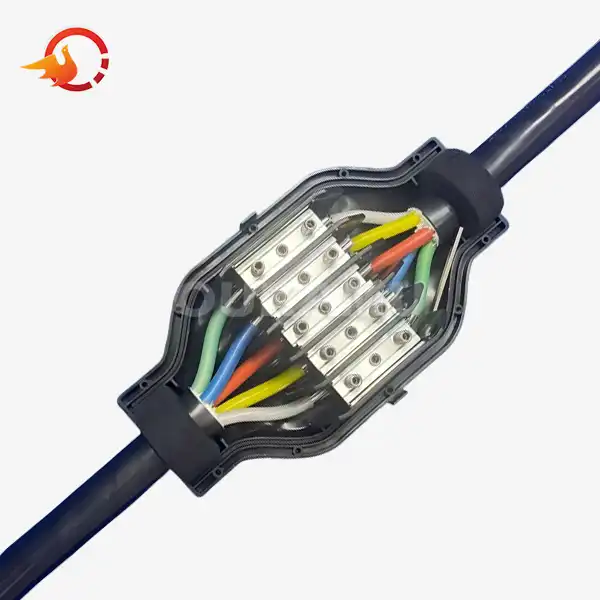
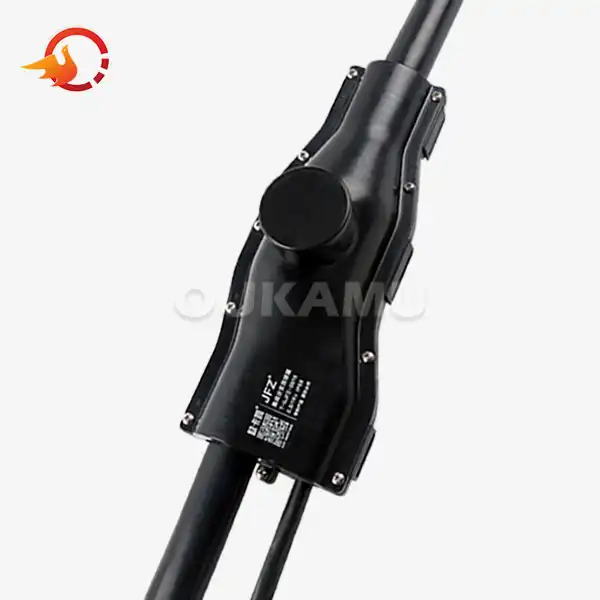
The FPD-85/3L is our most advanced waterproof distribution solution. It has an IP>65 rating that guarantees reliable operation even in harsh environments. The one-piece injection-molded insulation protection box is very durable and still has small dimensions that make it useful for a variety of installation situations.
Built-in grounding terminals made of pure copper provide good electrical conductivity and resistance to corrosion. Waterproof cable entry/exit locks stop water from getting in, which is a common cause of electrical system failures in businesses. The metal hanging plate design makes it easy to mount securely on utility poles, street lights, and other commercial infrastructure.
It works with 3P circuit breakers, 1P+N earth leakage circuit breakers, and 3P fuses, which gives it a lot of options for controlling commercial lighting needs. This flexibility lets purchasing managers stick to a single model of distribution box while still meeting the different circuit protection needs of different building locations.
On-Site Flexibility and Installation Advantages
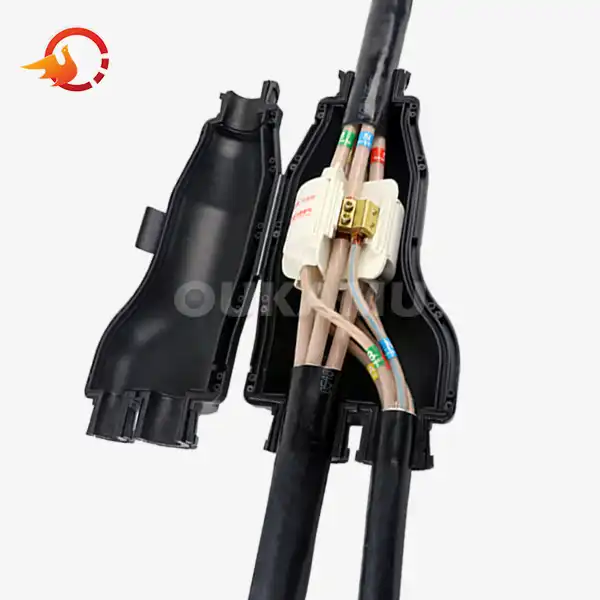
Our cable branch connector technology lets you make flexible branch connections anywhere during installation, so you don't have to deal with the limitations that come with using pre-made cable assemblies. This feature is especially useful for commercial renovations where limited installation options are caused by existing infrastructure.
The integrated design method combines all the important parts into a single, small solution. This makes installation easier and better looks better. Installation options include both open-air mounting and enclosed bridge installations, so they can be used in a variety of commercial buildings.
Cost efficiency comes from using less building space, wasting less cable, and making installation easier, which lowers the cost of labor. These benefits directly lead to lower overall project costs for installing commercial lighting.
Conclusion
Distributing electricity for Electrical Lighting Distribution Box solutions is very important in modern businesses because they make sure that power gets to complex lighting systems in a safe, reliable, and efficient way. To make the right choice, you need to carefully consider your long-term operational goals, load requirements, and scalability needs. High-quality distribution boxes have many benefits, such as better safety features, lower total ownership costs, and easier maintenance procedures that save energy. The FPD-85/3L model from Oukamu is an example of advanced distribution technology. It has waterproof protection, flexible installation options, and full compatibility with a wide range of circuit protection devices, which makes it a great choice for demanding commercial applications.
FAQ
What factors determine the appropriate size for commercial lighting distribution boxes?
Commercial distribution box sizing depends on total lighting load calculations, number of required circuits, and future expansion plans. Accurate load analysis should include diversity factors reflecting actual usage patterns rather than theoretical maximum demands. Professional electrical engineers typically recommend 20-25% additional capacity beyond calculated requirements to accommodate future growth and system modifications.
How does surge protection enhance commercial lighting system reliability?
Surge protection systems safeguard expensive commercial lighting equipment from power quality disturbances that commonly occur in commercial electrical systems. Quality surge protectors respond within nanoseconds to both common-mode and differential-mode electrical transients, preventing equipment damage and extending system lifespan. This protection proves particularly important for LED lighting systems that contain sensitive electronic components vulnerable to voltage fluctuations.
What maintenance schedules work best for commercial distribution systems?
Effective maintenance programs include quarterly visual inspections, annual thermal imaging surveys, and biannual connection torque verification procedures. Preventive maintenance activities should focus on identifying potential problems before they cause system failures, including loose connections, insulation degradation, and component wear indicators. Documentation of maintenance activities provides valuable trend data supporting predictive maintenance strategies.
Partner with Oukamu for Superior Commercial Lighting Distribution Solutions
Oukamu delivers cutting-edge Electrical Lighting Distribution Box solutions backed by 17 years of specialized experience in cable connection technology and electrical distribution systems. Our FPD-85/3L model offers unmatched waterproof protection, installation flexibility, and comprehensive compatibility for demanding commercial applications. Contact our expert team at info@okmbranchcable.com to discuss your specific requirements and discover how our innovative distribution solutions can enhance your commercial lighting infrastructure. As a leading electrical lighting distribution box manufacturer, we provide competitive pricing, reliable delivery schedules, and comprehensive technical support for projects of all sizes.
References
1. National Electrical Contractors Association. "Commercial Electrical Installation Standards and Best Practices." 2023 Edition.
2. Institute of Electrical and Electronics Engineers. "IEEE Standard for Commercial Building Electrical Distribution Systems." Publication 1547-2023.
3. International Association of Electrical Inspectors. "Commercial Lighting Distribution: Safety and Compliance Guidelines." Technical Bulletin 2023-CB-07.
4. American Society of Heating, Refrigerating and Air-Conditioning Engineers. "Energy Efficiency in Commercial Lighting Distribution Systems." ASHRAE Journal, Volume 65, Number 8.
5. Electrical Safety Foundation International. "Commercial Electrical System Maintenance and Safety Protocols." Safety Guidebook 2023.
6. National Institute of Standards and Technology. "Commercial Building Electrical Infrastructure: Performance Metrics and Evaluation Criteria." NIST Special Publication 1800-32.