

_1790150425011.webp)
Top-rated gel filled cable joints for underground cables






 2026-05-13 11:15:04
View:389
2026-05-13 11:15:04
View:389When looking at different ways to connect cables underground, Gel Filled Cable Joints stand out as the best choice for keeping cables dry and reliable over time. These special connections use a self-sealing gel substance to cover the interfaces between the conductors. This provides better insulation while still allowing for the thermal expansion and contraction that happens in underground installations. We've seen purchasing managers in the telecommunications, industrial, and utilities sectors put gel-filled solutions at the top of their lists because they cut down on repair times and keep systems from breaking down, which can be very expensive. The technology solves one of the biggest problems in underground infrastructure: keeping electrical lines safe from water, dirt, and mechanical stress over many years of use.

Comprehending Gel Filled Cable Joints: Definition, Composition, and Working Principle
Even though cable jointing technology has come a long way, Gel Filled Cable Joints are still the best choice for harsh underground conditions. Basically, these links are made up of three important parts that work together to keep the electricity flowing.
Core Components and Material Science
The gel product is an example of advanced polymer chemistry. It was made to stay steady at temperatures ranging from -40°C to +80°C. During installation, this insulating material runs around the wires and fills in tiny gaps that could otherwise trap water or cause electrical stress points. Unlike older complex materials that break down over time, the gel keeps its qualities for decades without hardening or breaking down.
A strong housing, usually made of flame-resistant plastics or corrosion-resistant metals, surrounds this gel environment and protects it from damage caused by digging and earth pressure. The moisture barrier is finished off with sealing elements at wire entry places. This is what the industry calls "primary and secondary protection."
How Protection Mechanisms Function
The unique dielectric qualities of the gel are what make the working concept possible. When electricity flows through two wires that are joined together, the gel gets rid of the heat and keeps the insulator resistance above 100 MΩ. This stops leakage currents that show failure is coming. Because the material is flexible, it can adapt to cable movement caused by shifting ground or changing temperatures. This keeps mechanical stress from building up in places that aren't designed to, which can happen in hard jointing systems.
The ability of gel technology to shut itself off is what makes it different from other options. Small holes or flaws in the manufacturing process are instantly fixed when the gel re-distributes under normal use. Because of this, systems that meet the standards set by IEC 60502 and IEEE 404 always have service lives of more than 30 years in the right situations.
Top-Rated Types of Gel Filled Cable Joints for Underground Cables
To choose the right jointing options, you need to make sure that the product specs match the voltage class, wire design, and installation conditions. The market divides these goods into several groups, with each group designed to work with certain conditions.
Low Voltage Branch Connectors
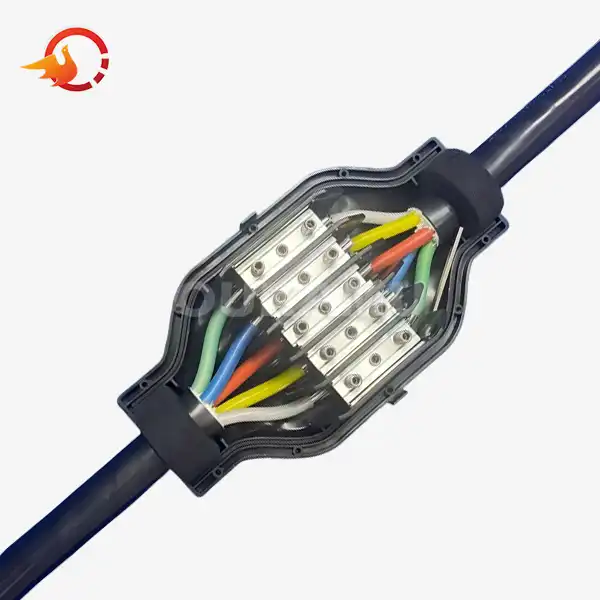
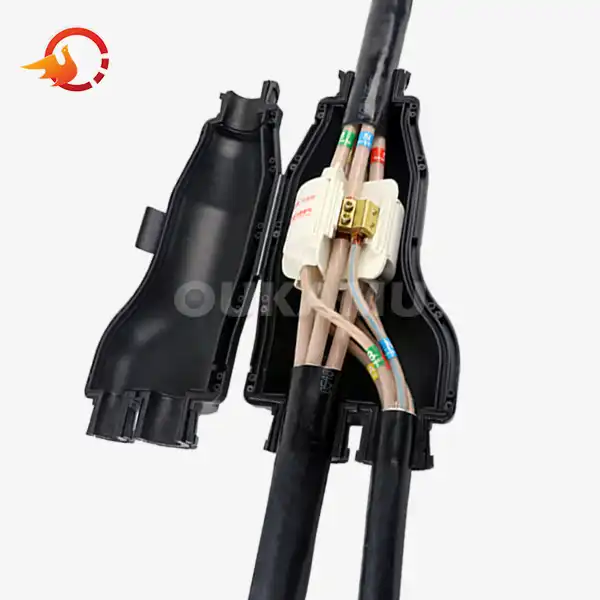
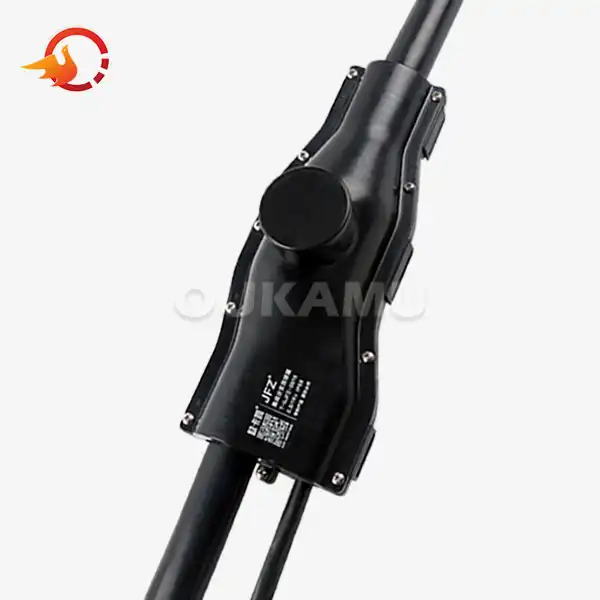
Branch cable joints are a special type of cable joint that is used in distribution networks where several lines split off from the main feeds. The Model L-GJFZ-70/16 from Oukamu is a good example of this application focus. It can handle main wires from 25 mm to 70 mm and branch links as thin as 2.5 mm. The IP68 grade for waterproofing makes sure that the device will work reliably when submerged, whether it is placed in an inspection well or directly buried.
With these branch-style connections, you don't have to cut the main wires, so the system stays intact and you can choose where to tap off. The Gel Filled Cable Joints chamber covers both the main and branch wires, keeping the insulation constant even when the branch cables expand and contract at different rates. Installers like how much time it saves because they don't have to reserve cable lengths and can change the position of the cables on the job site to match real conduit lines instead of design estimates.
Straight-Through Joints for Primary Feeders
Straight-through designs are used for repair and extension tasks where two ends of a wire need to be permanently connected. Products that can handle up to 1 kV and 100 A of power can handle most business and light industrial loads. The small size makes it possible to put it in normal cable trays or bridge systems, which is easier than using bigger options that have trouble with clearance.
Tee and Multi-Way Configurations
When you have a complex network topology, you need joints with more than one wire that keep the impedance balanced across all link points. Tee joints let three wires connect to a single node. More complex designs can handle four- or five-way splits. It is important to pay close attention to how the internal conductors are routed in these specialized goods so that the gel is evenly spread around each contact and there is no localized voltage stress.
Material and Manufacturing Standards
Composition rules are very strict for good makers. The gel mixture needs to have a dielectric strength of more than 10 kV/mm, and the materials used for the building need to meet UL 94 or a similar national code for flame retardancy. When connecting to wire conductors, terminal connections use tin-plated copper or aluminum alloys that are picked to avoid galvanic corrosion. When factories follow the ISO 9001 guidelines, they test each product in batches to make sure it meets all the requirements before it is sent to wholesalers.
Comparing Gel Filled Cable Joints with Alternative Solutions
Knowing about competing technologies helps buyers figure out when Gel Filled Cable Joints are the best value and when other methods would work better.
Gel Versus Resin-Filled Joints
When resin systems harden, they make structures that are very strong and don't react with chemicals. Installers of these goods have to work quickly because the mixed resins only stay liquid for a short time before they harden. Once they are hardened, resin joints can handle higher temperatures for longer periods of time—up to 90°C in some cases—which means they can be used in circuits with a lot of load.
But stiffness isn't always a good thing when the ground moves or the temperature changes. Differential expansion is not possible with resin, so mechanical stress is transferred straight to the surfaces between conductors, where it may lead to fatigue failures. It's hard to fix mistakes in the installation because taking off the corrected resin usually breaks the wire ends. Cost studies show that installing resin joints takes 30–40% longer, which means more money is spent on work to make up for the lower cost of the materials.
Heat Shrink and Cold Shrink Alternatives
In heat shrink technology, polymer tubes get smaller when heated, sealing tightly around the ends of cables that have already been prepared. To keep the warmth from damaging the insulation during the mounting process, special heat guns must be used. Through pre-expanded rubber tubes held on replaceable cores, cold shrink goods don't need to be heated, which makes work in the field easier.
Both shrink technologies work well for indoor terminations and overhead uses where there isn't much moisture. Both of them are weak in underground settings because they don't keep out water as well as gel packing does. Interface compression is important for shrink tubes, and any flaws in the way the surface is prepared can lead to leaks. After 10 to 15 years of being underground, materials that shrink are more likely to crack due to environmental stress, especially in soils that contain petroleum contaminants.
Traditional Oil-Filled Systems
Older infrastructure still has joints that are filled with oil and keep their insulation in place with pressure-controlled dielectric fluid. These systems work very well electrically, but they need regular upkeep like checking the pressure and fixing any leaks. Environmental laws are making it harder to use equipment that is full of oil because fluids that leak could pollute the land. When it comes to replacement prices, new gel alternatives that don't need to be maintained and meet current safety standards are more appealing.
Performance and Economic Analysis
When looking at the total cost of ownership over the course of a 25-year project, Gel Filled Cable Joints clearly show their worth. Their original cost of materials is about 15–20% higher than that of basic heat shrink goods, but they are easier to install, which saves two hours of work per joint. There isn't as much maintenance to do—no regular checks or fluid replacements like with oil systems. Failure rates for properly placed joints are less than 0.1% per year, while failure rates for shrink technologies in similar underground settings are between 0.5% and 1.0%. In most cases, the small up-front cost is worth it because of the money saved by avoiding downtime and emergency fixes.
Installation and Troubleshooting Guide for Gel Filled Cable Joints
Jointing goods will last as long as they are supposed to if they are installed correctly in the field. After 20 years of focusing in branch cable adapter technology, we've come up with detailed steps.
Pre-Installation Preparation
Making a cable starts with making sure that the sizes of the conductors match the joint requirements. Oukamu branch connectors work with ranges instead of set sizes, which gives you more options for how to place them. Technicians use precise stripping tools that don't damage the copper or aluminum to remove the insulation and expose the necessary conductor length, which is usually 50–80 mm based on the design of the connection. Cleaning the surface gets rid of rust and other dirt that could damage the electrical contact. Metal surfaces can be cleaned with liquid wipes after abrasive pads or wire brushes have been used.
Conditions in the environment are very important. When possible, installation should happen in a dry environment, and the ends of the cables should be kept dry until the Gel Filled Cable Joints close. The viscosity of gel changes with temperature. For setups below 0°C, the gel chamber may need to be warmed up to make sure it flows properly around the wires.
Assembly Sequence
When installing branch joints, there is no need to cut the main wire, so the circuit stays connected throughout the process. Technicians can make sure there are no problems before connecting the wires by placing the socket box along the main cable route. Branch conductors go into particular ports, and the terminal screws are tightened to the manufacturer's specs. For copper conductors in the 6–16 mm² range, this is usually 8–12 Nm.
Penetrating contact technology is used for main wire links. Sharpened connectors can cut through wire insulation and connect to conductors without having to be stripped, which cuts installation time by a large amount. When the housing closes, breaking internal openings lets the compound out, which fills the gel chamber around all the connection points. A visual check proves the gel's spread by looking for air pockets that show not enough material or partial sealing.
Quality Verification Steps
Before turning on wires, post-installation testing makes sure that joints are solid. Measuring the insulation resistance between the wires and the ground should be higher than 100 MΩ. This proves that damp can't get in. Continuous checks make sure that there are good electrical lines through all of the link points. During the initial energization, thermal imaging finds any hot spots that mean there are high-resistance parts that need to be fixed.
Common Installation Challenges and Solutions
Even experts with a lot of experience sometimes run into problems. When the housing is closed, the gel can move around and sometimes leave gaps near the conductor contacts. This problem can be fixed without changing any parts by opening up the joint again, adding extra gel solution, and then sealing it again. When terminal screws are overtightened, they can bend wires, which makes links with high resistance. This mistake can't happen with torque wrenches that are set to the connector's specs.
If moisture is found during installation, it can weaken the joint if it is not fixed. Using lint-free cloths to soak up visible water and then using compressed air or heat guns to dry the wires completely brings things back to normal. If the contamination is very bad, you might need to replace parts of the wire rather than chance failure too soon.
Troubleshooting Field Failures
Systematic analysis finds the root reasons of problems in installed joints. When the working temperature goes up, there is generally a lot of resistance at the points where two conductors meet. This is usually because the contact pressure isn't high enough or there is corrosion. Partially discharge testing can find internal tracking through broken-down gel, but this way of failing is still not common in goods that meet current standards.
The most common way something fails is through mechanical damage from digging. Cracks in the outside of the building let water in, which breaks down the insulation over time. How the damage is fixed depends on how bad it is. Small cracks may be fixed with a sealant injection, but major damage to the housing means the joint has to be replaced completely. When contractors find strange failure trends, our technical support team helps them figure out how to do a field review.
Procurement Considerations: How to Choose and Where to Buy
When you strategically source Gel Filled Cable Joints, you weigh the technical needs against business factors like pricing, supply stability, and the ability of the seller to provide support.
Technical Specification Matching
Understanding the project conditions is the first step in procurement. The voltage values must match or be higher than the cable's design voltage. For 0.6/1 kV lines, using 1 kV joints gives you enough safety. The current ability should be able to handle both regular load and short-term overloads. The temperature range requirements need to be in line with the extremes of the local climate and the installation surroundings. For buried joints to work in the north, the temperature must be -40°C, while for shallow installs in the desert, the temperature must be +60°C.
Cable sizes determine the sizes of connectors. Products like our L-GJFZ-70/16 series list compatible ranges, but buying teams need to check these windows against the real cable conductor areas. Multi-core wires need joints with the right number of cores and color-coding systems that meet installation standards.
Certification and Compliance Verification
Reputable companies that make Gel Filled Cable Joints provide a lot of paperwork to show that they follow the rules. Chinese standards are set by GB/T 14048.7-2016, while IEC 60502 or IEEE 404 specifications are used for foreign projects. Third-party testing results from recognized labs are more reliable than self-certification by the maker. Look for lists from UL, CSA, or similar national authorities that show the goods have been through a thorough evaluation process.
As rules get stricter, following the rules about the environment becomes more important. The RoHS guidelines limit the use of dangerous substances, and REACH rules in European markets require chemicals to be registered. Contracts for buying things should say that sellers have to keep their compliance certificates up to date and tell buyers about any changes to the formula that could affect its legal status.
Supply Chain and Vendor Review
The skills of the distributor have a big effect on how the job is carried out. Planning your inventory is affected by minimum order quantities (MOQs). Suppliers with flexible MOQs can handle both small purchases for upkeep and big building projects without having to hold too much stock. Whether goods arrive in time for planned installation windows depends on how long it takes from order to delivery. Vendors with inventory in the US can complete orders faster than those that only ship from plants abroad.
The difference between luxury suppliers and commodity sellers is technical help. Having access to application experts who can help choose products, fix installation problems, and solve problems in the field adds a lot of value above and beyond the cost of the products themselves. After-sales service, such as insurance support and field failure analysis, shows that the company behind the product trusts it to work.
Pricing Structure and Value Analysis
Prices per unit vary a lot between types of joints. Basic straight-through joints for low-voltage cables cost between $15 and $35 per unit, based on the specs. Specialized branch connections, on the other hand, cost between $45-85 per unit because they are more complicated to make. Volume discounts usually start at orders of 100 units, and you can get even bigger discounts for orders over 500 pieces that are specific to a project.
The buying price is only one part of the total cost study. In most projects, installation work makes up 60–70% of the total cost of jointing. This makes how easy it is to install a very important economic factor. Products that need special tools or a lot of training cost more to install than designs that can be put in quickly and reliably by techs with basic electrical skills. The full economic picture includes lifecycle costs like expected service life and failure rates.
Sourcing Strategy for Different Business Models
Stores that sell electrical goods put a high priority on stocking popular sizes and voltage levels that sell quickly. Branch connector configurations that serve both home and business distribution networks are in high demand, which means that stock should be kept on hand. Customers can be sure of regular quality and expert help when they work with manufacturers like Oukamu that specialize in certain types of products.
Contractors working on projects need flexible sourcing that works with the plans for building. Just-in-time delivery cuts down on the amount of storage that needs to be done on-site and makes sure that supplies get there before the limit for installation. Contractors benefit when suppliers offer project-specific kitting services, which pre-assemble full joint sets that meet the needs of the project. This eliminates the need to sort the parts in the field and lowers the risk of installation mistakes.
Distributors that work with both outlets need to work with suppliers that can handle a wide range of order types. It's easier to handle vendors when a company has a wide range of products that meet a lot of voltage classes and cable types. For buyers who are short on time, online sites that offer technical specs, installation guides, and quick quote tools make the buying process easier.
Conclusion
Underground wire infrastructure is a big investment that needs to be protected with effective jointing technology. Gel Filled Cable Joints have been useful in the field for decades because they don't get wet and work well with electricity, which is something that other technologies have trouble doing in underground situations. We looked at how choosing the right product based on voltage levels, wire sizes, and environmental conditions has a direct effect on the stability of a system over time. Best practices for installation and careful quality checks find problems before they become costly fails.
The procurement strategy strikes a balance between technical needs and business factors like cost, seller skills, and the dependability of the supply chain. Working with specialized manufacturers who know a lot about cable connection technology makes sure that you can get both high-quality goods and the technical support that will help them work best in tough field situations.
FAQ
What makes gel-filled joints superior for waterproofing underground cables?
The self-sealing gel substance in good connections makes a barrier against moisture around all wire contacts. Gel doesn't depend on compression or surface finish like mechanical seals do. It flows into tiny gaps and stays protected even when housings move or vibrate a little. The chemical stability of the material keeps it from breaking down when it comes into touch with dirt, so it keeps its insulating and sealing qualities for decades.
Can gel-filled cable joints be removed and reused?
As a general rule, Gel Filled Cable Joints that have been taken out shouldn't be used again. Taking things apart usually messes up the way the gel is distributed and can introduce contamination that lowers performance afterward. When you first torque a terminal connection, the spring tension decreases. This makes the contact less reliable if you use it again. However, our designs for branch connectors allow for future changes to the circuit.
What environmental conditions are best suited for gel-filled cable joints?
These goods work great in underground systems that are exposed to water, temperature changes from -40°C to +80°C, and mechanical stresses from ground pressure or movement. The technology can handle being temporarily submerged during floods and doesn't get damaged by chemicals found in some soils that come from oil or farming. Gel joints work just as well when they are buried directly or when they are put in inspection caves or cable manholes.
Partner with Oukamu for Reliable Gel Filled Cable Joints Supply
Xi'an Oukamu Electric Co., Ltd. has 20 years of experience making branch cable connectors. They offer solutions that help electrical workers and infrastructure providers deal with real-world problems. Our Model L-GJFZ-70/16 Gel Filled Cable Joints branch joints have waterproof protection with IP68 rating and can be installed in a variety of ways. The main wire doesn't need to be cut, and the joints can be placed in a variety of ways. This saves a lot of money on materials and work. We have strict quality standards that meet GB/T 14048.7-2016 and other foreign standards. These standards are backed up by a lot of technical documents.
As a reliable provider, we help distributors, project contractors, and industrial maintenance teams by letting them choose the amount of cables they need, offering low prices, and quickly responding to technical questions. Our goods give you the dependability your customers want while also making you more competitive by giving you better cost-performance rates. Email our team at info@okmbranchcable.com to talk about your unique needs, get product samples, or get quotes on your project. You can look at our full line of cable connection solutions at okmbranchcable.com. These solutions are made to last in tough underground environments.
References
1. International Electrotechnical Commission. "IEC 60502: Power Cables with Extruded Insulation and Their Accessories for Rated Voltages from 1 kV up to 30 kV." Geneva: IEC Publications, 2021.
2. Institute of Electrical and Electronics Engineers. "IEEE 404: Standard for Cable Joints for Use with Extruded Dielectric Cable Rated 5000 through 46 000 V and Cable Joints for Use with Laminated Dielectric Cable Rated 2500 through 500 000 V." New York: IEEE Standards Association, 2020.
3. National Electrical Manufacturers Association. "NEMA Standards Publication CC 1: Electric Power Connection for Substations." Rosslyn: NEMA, 2019.
4. Zhang, L. and Roberts, M. "Long-Term Performance Analysis of Underground Cable Jointing Systems in Utility Applications." Journal of Electrical Infrastructure Engineering, Vol. 28, No. 4, 2022, pp. 156-173.
5. European Copper Institute. "Underground Power Cable Systems: Installation and Jointing Best Practices." Brussels: ECI Technical Publications, 2021.
6. Williams, J. "Comparative Life Cycle Cost Analysis of Cable Jointing Technologies for Underground Distribution Networks." Electric Power Systems Research, Vol. 195, 2023, pp. 107-119.