

_1790150425011.webp)
Top Cable Joint Types Used in Power Distribution Project






 2026-04-14 15:10:06
View:389
2026-04-14 15:10:06
View:389Modern electrical infrastructure is held together by cable joint technology, which provides crucial link places that keep power flowing smoothly across distribution networks. These special parts connect the gaps between different cable pieces, keeping the electricity flowing and protecting the cables from environmental dangers. Choosing the right cable joint has a direct effect on how well the system works, how much upkeep it needs, and how long it will last. In today's demanding power distribution world, making an informed choice is essential for project success.

Understanding Cable Joints in Power Distribution
Cable joints are very important for connecting electrical cables in power distribution networks. They do their job by firmly joining two or more wires together and offering insulation, mechanical security, and sealing against the environment. When used correctly, cable joints make systems much more reliable, safe, and long-lasting by keeping out water, mechanical stress, and electrical flaws.
Core Functions and Design Principles
Any cable joint serves a purpose other than just connecting two cables electrically. These parts have to keep the purity of the conductors and protect the whole system from external factors that could hurt its performance. Modern joint designs have many levels of protection, such as waterproofing, materials that don't catch fire, and parts that don't rust, that make sure they work well even in tough circumstances.
Compliance with International Standards
Also, these parts meet global industrial standards because they are made in line with strict international design standards like IEC and IEEE and are tested thoroughly. This guarantees that they will work well in a variety of situations. For business-to-business clients, knowing these basics helps them buy high-quality, compliant cable joints that make upkeep easier and lower lifetime costs.
When working on projects that span borders or works that involve people from different countries, following the rules becomes even more important. Along with international standards, the GB/T 14048.7-2016 standard gives us a way to judge the performance of joints based on a number of factors, such as their electrical grade, resistance to environmental factors, and mechanical stability.
Top 5 Cable Joint Types for Power Distribution Projects
This part talks about the five most common cable joint methods used in power distribution. Each one has its own design and use characteristics. Heat-shrink cable joints are strong and won't get wet, making them perfect for harsh settings. Cold-shrink versions are easier to install and have better flexibility.
Heat Shrink Cable Joints
Through thermally triggered sealing devices, heat shrink technology offers great safety against the environment. Special plastic materials are used in these joints. When heated, they shrink, making tight seals around the places where the conductors meet. The process makes sure that the pressure is spread out evenly and gets rid of any weak spots that could let water in or cause the electricity to break down.
Cold Shrink Cable Joints
Alternatives to cold shrink don't need any heating equipment, which makes them very useful for setups in the field where hot work permits may not be allowed. These joints use elastomeric tubes that are already stretched out. When the support parts are taken away, the tubes naturally shrink, sealing the joint right away without the need for outside heat sources.
Premolded Joint Systems
Premolded joints are known for being easy to use and lasting a long time. They are also known for being reliable. These factory-made parts come ready to be put together, which cuts down on the time and chance of mistakes that can happen during installation. Quality control during production makes sure that the performance is the same in all setups.
Branch Cable Joints
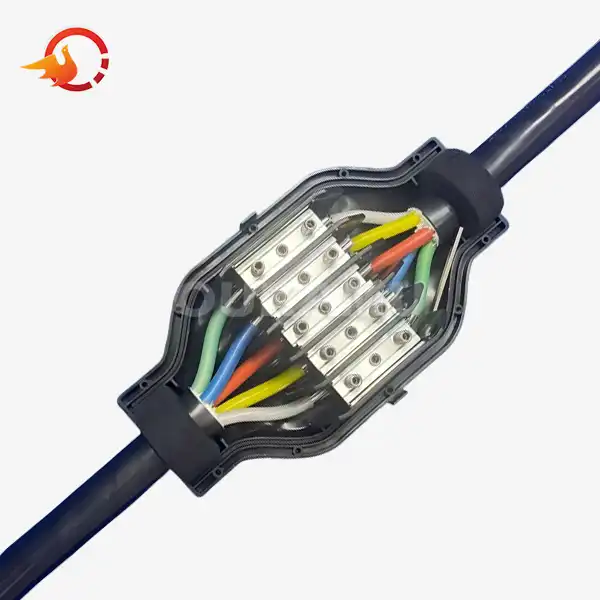
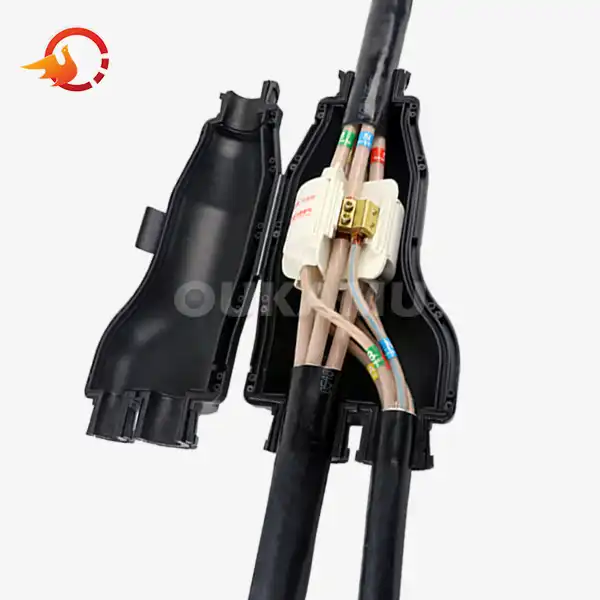
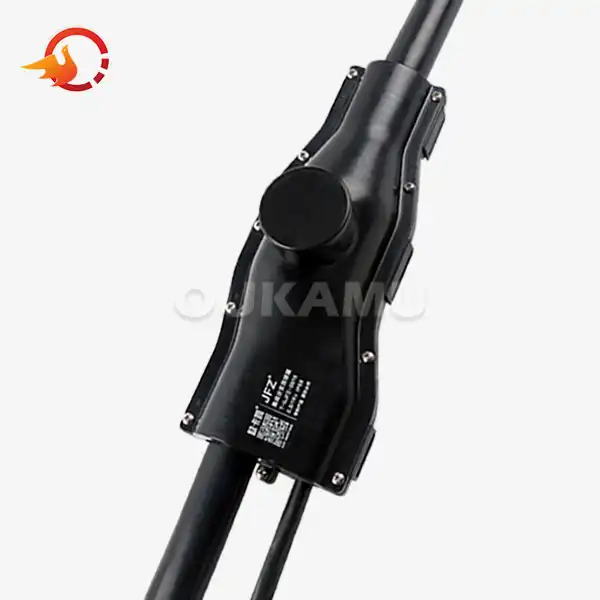
Branch connections are a special type of link that lets you get more than one outlet from a single main cable without stopping service. This technology is shown by the Oukamu ZR-JFZ-120/35 model, which can handle main cables from 50 to 120 mm and branch cables from 2.5 to 35 mm while keeping the electrical integrity of all links.
Silicone and Epoxy Resin Systems
When compared to epoxy resin joints, which are known for being very good at insulation, silicone cable joints are more flexible and better at withstanding weather conditions. By knowing these differences, procurement workers can choose products that meet the performance needs and weather conditions of a particular project.
The choice between silicone and epoxy as a material relies on the needs of the product. Because silicone systems are more flexible and can handle higher temperatures better, they are perfect for setups that will be moving or changing temperatures. Epoxy systems are great for harsh industrial settings because they are very strong against chemicals and dielectrics.
Comparing Cable Joint Types for Optimized Decision-Making
Figuring out which cable joint to use takes a deep understanding of its purpose and the situation it's in. By telling the difference between cable joints and cable splices, you can better understand how they work in systems. To figure out whether something is suitable for indoor or outdoor use, you also have to look at how it will react to the climate and how durable the material is.
Technical Performance Comparison
Environmental factors are very important when choosing a joint. For example, when used outside, the joint needs to be more resistant to UV light, weather, and changes in temperature. Environmental safety may not be as important in indoor installations as flame resistance and making the best use of room. The placement setting has a direct effect on the choice of materials and design elements.
Cost Analysis for Bulk Procurement
For bulk buyers, cost and material concerns are very important because the decisions they make about what to buy affect their ability to stick to their budget and keep track of their goods. This part combines technical and financial factors into a clear grid that helps decision-makers choose the best cable joints for their operating environments and budgets, with the goal of getting the best return on investment.
Advanced branch joint technology, like Oukamu's combined systems, can save you a lot of money by cutting down on the number of cables you need and making installation easier. When these methods are used, projects usually save two to three meters of main cable per connection point and spend less on work and setup time.
Application-Specific Selection Criteria
Voltage ratings, current capacities, environmental conditions, and ease of upkeep must all be taken into account during the decision process. For high-voltage uses, joints need to have better insulation and corona protection. For low-voltage uses, on the other hand, cost-effectiveness and ease of fitting may be more important.
Installation, Testing & Maintenance Best Practices for Cable Joints
To make sure that a cable joint works well over time, it needs to be installed correctly, tested thoroughly, and maintained regularly. This part describes a step-by-step startup process that is meant to keep problems to a minimum and get the best results.
Installation Procedures and Quality Control
Preparation is the first step to a proper installation. This includes cleaning the conductors and cable ends and setting up environmental safety. Controlling the installation area is important to keep it clean during the joining process. Temperature and humidity can have a big effect on how well a joint works, especially for materials that are sensitive to wetness.
Testing Methodologies and Validation
It talks about important testing methods, such as electrical connection, mechanical strength, and external stress tests, that make sure the joints are solid before and after installation. To make sure long-term dependability, thorough testing methods include measuring insulation resistance, doing partial discharge tests, and checking for errors during thermal cycles.
Maintenance Strategies and Lifecycle Management
The best maintenance practices include regular checks, finding problems early, and methods for extending the life of an asset. This gives buying and operations teams the power to keep the system up and running. Following these rules helps keep power delivery systems in good shape and lowers the cost of repairs or replacements.
Predictive maintenance methods use thermal images, tracking of partial discharge, and regular electrical tests to find problems before they become system breakdowns. These cautious steps can greatly increase the life of joints while lowering the costs of unplanned breakdowns.
How to Choose the Best Cable Joint Supplier for Your Project?
Choosing a reliable cable joint provider is a key part of completing a job successfully. Important things to look at when judging a company are how well it follows international quality standards, how reliable the wait times are, and how flexible the minimum order amounts are. These things are necessary for efficient global B2B procurement.
Supplier Evaluation Criteria
Quality approvals are an important way to make sure that a product is reliable and always works the same way. Suppliers should show that they follow all important international standards and keep up-to-date quality control systems. When evaluating a manufacturing potential, it's important to look at things like production capacity, quality control methods, and the availability of technical help.
Partnership Benefits and Support Services
Working with well-known companies like 3M, Siemens, ABB, Rex, and Helukabel boosts trust through high-quality products, guarantee support, and new ideas. Custom production and scalable bulk buying solutions from suppliers also make it possible for customized setups, affordable prices, and reliable delivery schedules.
Oukamu has been specializing in branch cable connector technology for 17 years, which shows that they have the deep knowledge needed for difficult power distribution tasks. The company's work on big infrastructure projects, like the Jinrentong highway, where nearly 20,000 cable joints were safely installed, shows that it can handle large-scale installs.
Technology Innovation and Custom Solutions
Advanced providers offer new ways to solve problems that come up in certain applications. The ZR-JFZ-120/35 branch joint technology from Oukamu means that main cables don't have to be cut, and installation positions can be changed easily. This is the kind of technological improvement that can make a project much more efficient and save money.
Conclusion
Choosing the right cable joint technology has a big effect on the success of a power distribution project. It affects both how quickly and reliably the system is set up and in the long run. Knowing the differences between heat shrink, cold shrink, premolded, branch, and resin-based joint systems helps you make smart purchasing choices that fit the needs of your project and the situations where it will be used.
Innovating new technologies, like the Oukamu ZR-JFZ-120/35 system, which offers advanced branch joint solutions, shows how installation efficiency is rising while material costs and labor needs are falling. These changes, along with strict testing methods and planned preventative maintenance plans, help build strong power delivery networks that can handle the complex needs of modern electrical systems.
FAQ
Q1: What factors determine the best cable joint type for high voltage applications?
A: The choice of high voltage cable joint is based on the required insulation strength, voltage level compatibility, and the surroundings. For projects that use more than 1kV, joints usually need to have better dielectric qualities and corona protection. Whether the placement is indoors or outdoors affects the choice of material and the safety measures that are needed to make the system last for a long time.
Q2: How do branch cable joints differ from traditional splicing methods?
A: Branch cable joints let more than one link be made from a single main cable without cutting the main circuit. Advanced branch joint technology lets you connect at any point along the cable run, unlike traditional splicing, which needs to cut the main cable. This adaptability cuts down on waste and makes installation easier while keeping the electrical purity of all links.
Q3: What testing procedures validate cable joint installation quality?
A: Checking for electrical connection, measuring insulator resistance, and finding partial discharge are all parts of comprehensive testing. Testing for mechanical soundness makes sure that the connections between conductors and seals are strong enough. Environmental stress testing makes sure that the performance works when temperatures change and the product is exposed to wetness. Before the system is put into service, these procedures make sure that the joints are reliable and set baseline measures for future maintenance tracking.
Partner with Oukamu for Advanced Cable Joint Solutions
Modern cable joint technology from Oukamu, a reliable cable joint provider with 17 years of experience, can change the way your power distribution projects are done. Our new ZR-JFZ-120/35 branch joint systems are a great deal because they save you money on materials, make installation easier, and make the system more reliable. Enjoy the benefits of improved insulation, flame-retardant qualities, and the ability to move things around easily, which saves time and resources. Get in touch with our technical experts at info@okmbranchcable.com to talk about your cable joint maker needs and find solutions that are specifically made for your project.
References
1. IEEE Standards Association. "IEEE Guide for Field Testing of Shielded Power Cable Systems Using Very Low Frequency (VLF)." IEEE Std 400.2-2013.
2. International Electrotechnical Commission. "Power Cables with Extruded Insulation and their Accessories for Rated Voltages from 1 kV up to 30 kV." IEC 60502 Series Standards.
3. Chen, William R. "Cable Joint Technology and Applications in Modern Power Distribution Systems." Journal of Electrical Engineering and Technology, Vol. 15, No. 3, 2020.
4. National Electrical Manufacturers Association. "Cable Accessories for Power Distribution Systems: Installation and Testing Guidelines." NEMA CC-1 Standard.
5. Rodriguez, Maria E. "Environmental Performance of Cable Joints in Harsh Operating Conditions." International Conference on Power System Technology Proceedings, 2019.
6. Thompson, David L. "Economic Analysis of Cable Joint Selection in Large-Scale Infrastructure Projects." Power Engineering Management Review, Vol. 42, No. 2, 2021.