

_1790150425011.webp)
The difference between cable joints and cable connectors






 2026-05-13 11:12:21
View:389
2026-05-13 11:12:21
View:389It's important to know the difference between cable joints and cable links if you work with systems that move power. The ends of two cables are joined together by a Cable Jointing Cable Joint Connector. This restores electrical connection along a cable run. Other than that, cable connectors link wires to tools or connect cables to each other. Connectors make it quick and easy to end cables, but closing and recovering insulation at cable joints can be more difficult. Both are very important for making sure that power is sent to businesses, factories, and equipment in a safe and reliable way. Your choice of the right component will depend on where it will go, how much power it needs, and how it will be used.

Understanding Cable Joints and Cable Connectors
In electrical networks, connectors and wire joints do different things that work together. When buying teams, project managers, and building workers know about these differences, they can make smart decisions that save money and make the system more reliable.
What Are Cable Joints?
Cable joints put wires back together when they need to be stretched or fixed. They're often used in workshops, underground systems, and overhead lines where the wire runs need to be longer than what's built in. Damage to the link can't happen because of mechanical stress or external closing. These joints keep water, chemicals, and physical stress away. To keep things warm and safe, you can use heat-shrink plastics, epoxy glue, and silicone rubber, among other things. Cable joints are made to be forever connected so they will last for decades if they are put together right.
What Are Cable Connectors?
But cable connections make it simple to link cables to other cables, switches, transformers, or junction boxes. There are two kinds: mechanical and heat-shrink. Each is better for fitting than the other. Wired connections use tension or fixed clamps to keep the wires in place. On the other hand, heat-shrink joints use glues and insulation layers that melt when heated. The main goals of both types are to be simple to set up, sometimes reusable, and flexible enough to work with different wire sizes and power levels. A lot of the time, connectors are used when freedom is important, like in distribution panels, short-term installations, and repairs.
Understanding these technical distinctions allows you to pick the right product for your project based on how it will be used, the power it needs, and the weather. Less mistakes are made during installation, downtime is cut down, and your electrical infrastructure lasts longer because of this consistency.
Key Differences Between Cable Joints and Cable Connectors
You can tell the difference between cable joints and connectors by what they're used for, how hard they are to put together, how well they work, and whether they get certain marks. These things have a direct effect on things like reliability, labor costs, and deadlines.
Functional Purpose
To connect two pieces of wire together, wire joints are most often used. They keep the electrical and mechanical stability of the link. These fixes are made to last a long time and work well in rough circumstances. Cable Jointing Cable Joint Connector, on the other hand, make it easy to disconnect and reconnect cables, and you can often split and reconnect cables when you need to. How they are made, how they are put together, and how they can be used are all changed by this change in function.
Installation Complexity and Time
Of course, you have to do more work when you connect wires. They have to take off the insulation, prepare the wires, put it back on, and check that the seals are tight enough to keep the weather out. When fixing heat-shrink joints, you need tools that can control the heat, but cold-shrink joints use tubes that have already been stretched. With wire ties, you can finish this process faster with mechanical fasteners or simple heat-shrink steps. Less time spent on workers and a faster project finish mean less money spent on workers. This is especially helpful for large-scale building projects.
Performance and Durability
Both cable joints and ends have to meet strict requirements for power, protection, and strength. Cable joints are made to work in tough conditions, like getting wet, being around chemicals, or being in hot weather. Their strong seals keep water out and the insulation's ability to stop heat loss for many years. Cable connections are designed to be simple to set up and useful in a variety of ways. More expensive types also protect the environment in the same way. You can choose things that work well in your space and last as long as you expect them to if you know these performance traits.
Compliance and Certifications
Safety standards like GB/T 14048.7-2016, IEC, and UL certifications make sure that wire joints and links are safe for electricity, won't catch fire, and will last for a long time in the environment. These certificates make it easier for officials to accept products. They also lower the risk of being sued and make sure that the products are of good quality. As you look for things to connect cables, you should always make sure to read the safety papers.
Comparison of Popular Cable Jointing and Connector Solutions
The best way to join or connect cables depends on how they are going to be set up, what kind of cables they are, and how often they need to be serviced. When purchasing managers compare the different choices, they can find the one that gives them the best performance, cost, and source trust.
Heat Shrink vs. Cold Shrink Cable Joints
In heat shrink cable joints, materials that react with heat are used to make a tight, waterproof seal around the cable link. They keep heat in very well and are made to fit the shape of wires perfectly, which makes them ideal for tricky shapes and situations. Putting things together takes longer and needs trained workers with lights or heat guns. Cold shrink cable joints, on the other hand, use rubber covers that are already stretched out. When the core is taken out, the covers shrink back down over the cable. They get rid of the need for heat sources, which speeds up the building process and makes places that are dangerous safer. That being said, cold shrink choices work best in places that can't have open fires or other heat sources.
Mechanical vs. Heat Shrink Connectors
Metal links use tension clips, bolts, or spring-loaded parts to hold the wires in place. They're easy to check and can be used again and again for short-term installations or maintenance. As you control the heat, heat shrink links form a single piece that covers and insulates. They're better for long-term projects that won't be changed and are better for the earth than anything else. Your choice will depend on whether you value long-lasting protection and resistance to the environment more than being able to use it more than once and being easy to clean.
Leading Global Brands
Big names in business like 3M, TE Connectivity, and Prysmian are known for coming up with new ideas, making good products, and giving great customer service. There are a lot of tests that their things go through to make sure they meet foreign standards. When picking a seller, you should look at the products they offer, the information they give you, the help they give you after the sale, and their global marketing networks. These things have a direct effect on how well the job gets done, how well material is handled, and how well buying works.
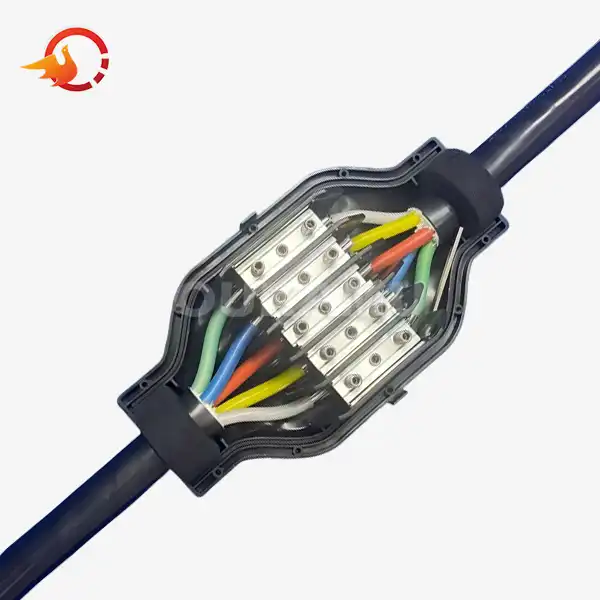
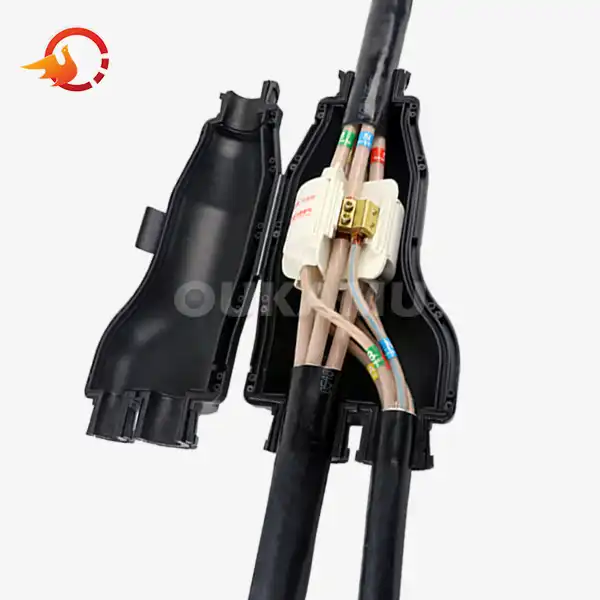
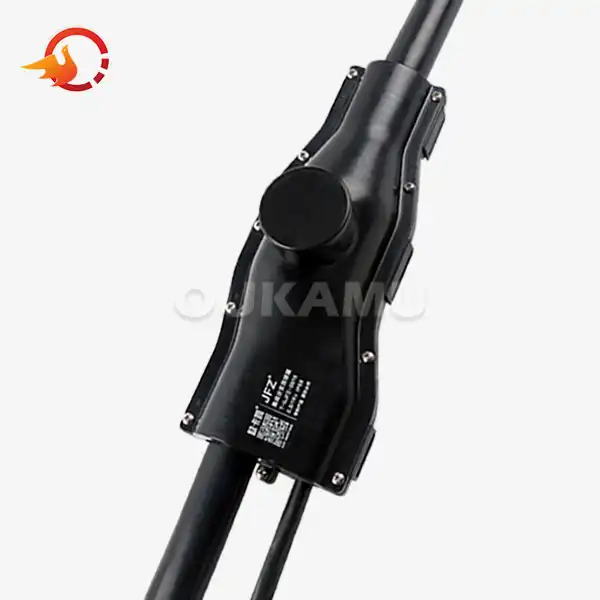
We've been Xi'an Oukamu Electric Co., Ltd. for more than 20 years, so we know a lot about how to connect and join cable branches. Our Cable Jointing Cable Joint Connector, like the Model ZR-JFZ-70/35, is an example of high-tech engineering that works with the grid we have now. This item doesn't catch fire, is waterproof, can be used more than once, and works with main lines 25–70mm and branch cables 2.5–35mm. There's no need to cut the main lines. It meets the standards of GB/T 14048.7-2016 and cuts down on the need for two to three meters of main wire per installation. This saves money on both materials and work.
Step-by-Step Cable Jointing and Connector Installation Process
Putting together cable joints and connections will last a long time if you do it the right way. Sticking to a set of rules cuts down on mistakes, makes things safer, and is the law.
Preparing the Cable and Work Environment
Check the lines for damage and make sure they have the right voltage ratings. Also, get the tools you'll need, such as heat guns, cable cleaners, soldering tools, and insulation testers. Make sure there is nothing on the work area that could damage the insulation or covering and that it is dry and clean. It takes less time to put something and costs less to fix if you do it right the first time.
Executing Cable Jointing
The wire sheath and padding need to be taken off to get to the conductors. As you work, be careful not to cut or nick the metal. To get rid of any rust or dirt, clean the sides of the wires very well. For heat-shrink joints, slide the heat-shrink tube over the connection point and onto the wire before connecting the two of them. Then, heat the sleeve evenly until it shrinks and seals. For cold shrink joints, slide the cover that has already been stretched over the link and remove the core that holds it in place. In this way, the flexible material can close and shrink. Make sure everything is lined up right and that there are no gaps in the air that could let water in or shut off the power.
Installing Cable Connectors
Put wires that have been pulled into the body of the mechanical connector, tighten the compression screws or bolts to the manufacturer's recommended strength, and make sure the connection is safe. It's important to make sure the heat shrink connector unit is in the right place on the wire before applying controlled heat to it. This will make the insulation and glue layers start to stick. When something is made, you should always follow what the maker says.
Post-Installation Testing
Once everything is in place, use a megohmmeter to test the insulation resistance and make sure the electricity is stable. In order to make sure the joint is waterproof, check the seals and, if possible, put the joint in water. It's important to make sure that the power and strength are right for the job. These tests make sure the job was done right and make it less likely that something will go wrong again.
Procurement Considerations and How to Choose the Right Solution
A good procurement process fits the goals of the project with the skills of the supplier and the available funds. When you make decisions based on good information, you can be sure of steady performance, on-time delivery, and fair prices.
Key Specifications to Evaluate
When picking a product, you should check its power levels, the sizes of cables that it works with, how well it protects against water, fire, and flame, and its safety certifications. Check to see if the cable jointing or connection choice will work where you want to put it, whether it's inside, outside, or underground. Think about the temperature range, chemical interactions, and mechanical stress as some of the things that can change how the machine works.
Supplier Selection Criteria
Good companies offer many items, give clear science details, offer fast customer service, and have short wait times. With global reach and local help, things run more smoothly and there are fewer risks when getting things. Service after the sale, like warranties and professional support, has a direct effect on how the project goes forward. It's important to know how well a source has done with big projects in the past and how well they follow approval rules.
Oukamu's Tailored Solutions
When it comes to building, city, train, and highway projects, the Xi'an Oukamu Electric Co., Ltd. knows how to connect wires in a way that is safe, reliable, cost-effective, and up-to-date with the latest technology. One of the Cable Jointing Cable Joint Connectors in our line is the ZR-JFZ-70/35. It is meant to be easy to set up on-site, so you won't have to cut the main wire or any spare parts. With this new idea, two to three meters of main wire are saved per link. This saves money on work and speeds up project times. Our products are in line with GB/T 14048.7-2016 norms and offer great value for money. They won't catch fire, are flame-safe, waterproof, and won't rust.
It's easy for us to join branches from anywhere, even in places with complicated systems or where changes are being made to the project at the same time. Installs are safe, reliable, and nice to look at thanks to integrated design, and small structures let you put them in either an open or closed area. Because they are easy to keep up, our solutions are great for dealers, project workers, and industry repair teams because they can be used over and over again.
We used almost 20,000 cable joints on the JinRentong Highway project in China's Chengdu-Chongqing Economic Zone, which links Zunyi and Bijie. This shows how good we are at what we do. Rolling out this much technology shows how stable our products are and how well they work when things go wrong.
Conclusion
Construction teams, project managers, and people who buy things can choose the best choices for their needs if they know the difference between cable joints and cable connections. For stable installations, cable joints bring back continuity and protect against the surroundings well. Cord connections, on the other hand, let you quickly terminate cables and connect devices in a number of different ways. Both technologies are reliable as long as they are used with the right programs and are set up correctly. If you look at functional needs, installation trouble, performance traits, and supplier skills, you can get electrical infrastructure that is cost-effective, lasts a long time, and meets code. Xi'an Oukamu Electric Co., Ltd. has been in business for 20 years and is ready to help you with your projects by giving you new, high-quality ways to connect your cables.
FAQ
Can cable joints and cable connectors be used interchangeably?
Connections and joints are two different things that you can't use together. The job of cable joints is to connect two pieces of cable together so that power flows freely along a cable run. They make links that last a long time and keep out the outside world well. On the other hand, cable plugs link wires to tools or to other cables. The wires can often be taken apart and put back together again. It could be unsafe, inefficient, or against the rules if you use the wrong part.
Should I choose heat shrink or cold shrink cable joints for my project?
Heat shrink cable joints keep cables warm and make sure they fit properly, so they can be used in rough places and on difficult shapes. To use heat, they need the right tools and skilled workers. You don't need any heat sources to make cold shrink wire joints, which speeds up the fitting process and keeps dangerous areas safer. Choose heat shrink if you want the best closure. If you want to put it faster and in risky places, choose cold shrink.
What is the expected lifespan of cable joints and connectors under standard operating conditions?
If you put them in the right way and take good care of them, good wire joints and connections can last 20 to 30 years or more. Things like being wet, being hot, being exposed to chemicals, and being stressed out physically can shorten or lengthen a life. Tests and checks done on a regular basis help find problems early, which keeps the system working longer and avoids costly breakdowns.
Partner with Oukamu for Superior Cable Connection Solutions
Xi'an Oukamu Electric Co., Ltd. has new, reliable, and cheap ways to join and connect wires that are great for your building needs. We have been making reliable Cable Jointing Cable Joint Connectors for more than 20 years. We have a lot of goods, a lot of different ways for you to buy them, and quick expert help. Modern engineering can be seen in our Model ZR-JFZ-70/35, which shortens the main wire, lowers the cost of work, and meets GB/T 14048.7-2016 standards.
Whether you're in charge of a large infrastructure project or just need parts for a distribution stock, our team can help you set up things in a way that works better for you and lasts longer. Email Oukamu right now at info@okmbranchcable.com to get a full list of products, talk about your project needs, or get a price quote that fits your needs. Find out how our years of experience and high-quality products can help your cable connection projects go further and make the buying process easy.
References
1. Smith, J. R. (2021). Cable Jointing and Termination: Principles and Practices. Electrical Engineering Press.
2. Thompson, L. M., & Wu, H. (2020). Advanced Materials for Electrical Insulation and Cable Protection. Journal of Applied Electrical Technology, 45(3), 112-128.
3. International Electrotechnical Commission (2019). IEC Standards for Cable Accessories and Installation Procedures. Geneva: IEC Publications.
4. Zhang, Y., & Patel, R. (2022). Procurement Strategies for Electrical Distribution Components in Infrastructure Projects. Industrial Supply Chain Quarterly, 18(2), 67-84.
5. Williams, D. A. (2020). Heat Shrink vs. Cold Shrink Technology: Comparative Analysis for Cable Jointing Applications. Power Systems Review, 34(4), 201-217.
6. National Standards Administration of China (2016). GB/T 14048.7-2016: Low-voltage Switchgear and Controlgear – Part 7: Ancillary Equipment. Beijing: Standards Press of China.