

_1790150425011.webp)
Resin Cable Joints vs. Mechanical Joints: Key Differences






 2026-04-23 10:31:16
View:389
2026-04-23 10:31:16
View:389When choosing between resin cable joints and mechanical joints for electrical infrastructure projects, understanding their fundamental differences becomes crucial for procurement success. Resin Cable Joints offer superior moisture resistance and long-term durability through polymer-based insulation compounds, while mechanical joints rely on metallic compression for connectivity. These distinct approaches to cable connection technology directly impact installation methods, maintenance requirements, and overall project costs, making the selection process a critical factor in ensuring reliable power transmission systems.

Understanding Resin Cable Joints and Mechanical Joints
There are two main types of cable joint technology: systems that use glue to connect wires and methods that use mechanical tension. Each technology has its own benefits that make it better for certain situations and uses.
Material Composition and Design Philosophy
When resin cable joints harden, they create a barrier of protection around the cable links that is completely seamless. Multiple types of protection are built into a single part of these systems. These include mechanical protection, electrical insulation, and moisture barriers. The sealing process makes a uniform seal that gets rid of the weak spots that often happen in systems with more than one part.
Metal connections and different insulation and sealing materials are used in mechanical parts. These systems depend on exact compression to connect the electrical parts, and they also use other parts to protect the surroundings. The flexible design lets you change parts, but it needs to be carefully put together to make sure it works right.
Functioning Principles and Application Environments
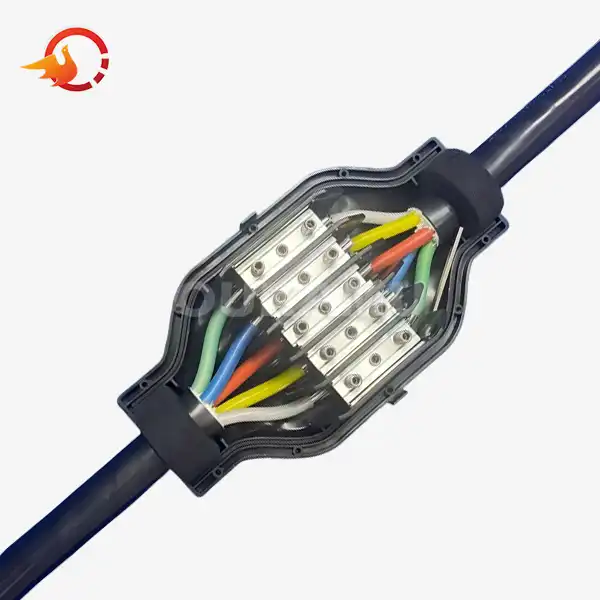
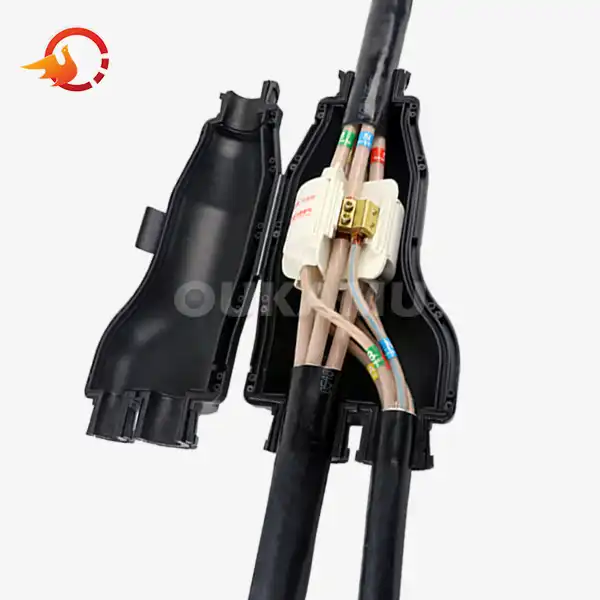
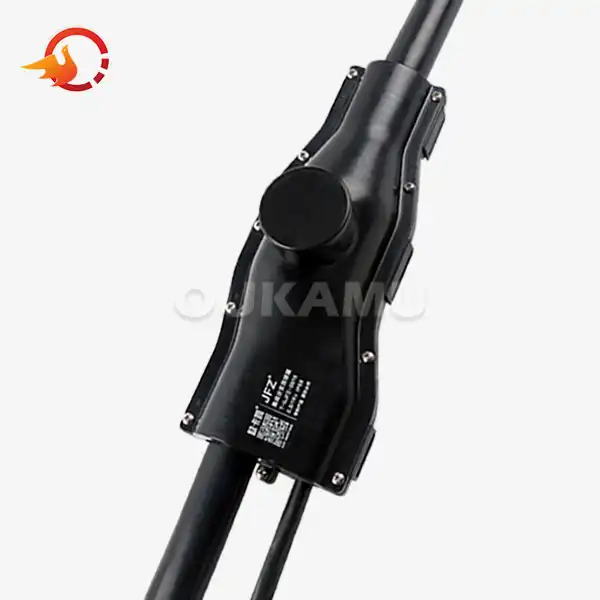
The ZR-JFZ-35/16 model from Xi'an Oukamu is an example of modern resin joint technology. It can handle main cables from 10 to 35 mm and branch cables from 2.5 to 16 mm, and it has a rated voltage of 0.6/1kV. This system can be used more than once, so you don't have to cut the main cables. It also meets GB/T 14048.7-2016 standards for flame-retardant and fire-resistant safety.
The idea behind resin joints is that they should work together as a whole to protect against many environmental problems at the same time. Even though mechanical joints can be put together quickly, they need a lot of careful coordination between different parts to provide the same amount of safety. Knowing these basic differences helps people who work in buying choose the technology that best fits the needs of their project, the conditions of the work site, and their long-term working goals.
Key Performance Differences: Resin vs Mechanical Cable Joints
There are big differences in how well plastic and mechanical cable joints work in a number of important areas that have a direct effect on the success of the project and its dependability over time.
Insulation Quality and Environmental Protection
The cured polymer material in resin cable joints makes an impenetrable shield against water entry, making them very resistant to wetness. This feature is especially useful for systems that are buried or in damp places, where regular covering methods may wear down over time. The combined insulation method gets rid of places where different parts could fail.
To get the same level of moisture protection, mechanical parts need extra closing steps. Some of these systems work well when they are set up correctly, but they rely on a lot of different contact points that could become weak over time. Because mechanical parts are flexible, it can be hard to make sure that they protect the environment consistently.
Installation Complexity and Skill Requirements
The ways these technologies are installed are very different, which affects both the cost of work and the time it takes to finish a job. Most resin joints need time to cure, but they don't need as many skilled mechanical building skills. The combined design makes it less likely that mistakes will happen during installation and gives clear proof that the job is done right.
When put by skilled professionals, mechanical joints make building go quickly. To fix something correctly, though, you need to know exactly how much force to use and pay close attention to how the parts line up. There are several steps in the building process that must be done properly for it to work at its best.
Reliability and Maintenance Considerations
Patterns of long-term dependability show clear differences between these two systems. Because they are fire-resistant and flame-retardant, Oukamu's resin joints last a very long time. This means that they don't need to be maintained as often, which means less downtime for operations. The unified structure gets rid of problems with component degradation that happen a lot in systems with multiple parts.
Because they are made up of more than one part, mechanical joints may need to be inspected and maintained more often. Different parts can be affected by environmental stresses in different ways, which may mean that some parts need to be replaced or adjusted over time. But this modular method lets fixes be made only where they're needed without having to replace the whole joint.
Comparative Cost Analysis and Procurement Considerations
When choosing a cable joint, it's important to think about more than just the original buy price. You should also think about the costs of installation labor, maintenance, and any possible downtime that could happen during the system's lifetime.
Initial Investment and Installation Costs
Because they are made of more complicated polymers and have more parts, resin cable joints usually have higher initial material costs. But these systems can lower the cost of installation work because they make things easier and require less skill. As shown by Oukamu's ZR-JFZ-35/16 model, not having to cut the main cable saves two to three meters of cable per installation and makes the job easier and faster.
When it comes to the initial cost of materials, mechanical joints tend to be cheaper, but fitting work may be more expensive if specific skills are needed. The modular design lets you choose which costs to cut, but it takes careful planning between many parts to get solid performance.
Long-term Operational Economics
Lifecycle cost study shows that these technologies have very different long-term operating economics. Because they have built-in safety systems and are more resistant to the environment, resin joints require less upkeep. Not having multiple component connections gets rid of common failure modes that cause repair calls and stoppages in operations.
Because they are made up of many parts and are exposed to external stresses, mechanical joints may need more upkeep over time. However, being able to replace only certain parts can save money when certain problems can be fixed without having to replace the whole joint.
Procurement Strategy Considerations
Procurement strategies that work must find a balance between short-term budget limits and long-term operating needs. Improving the effectiveness of the supply chain depends a lot on the name of the supplier, the certifications of the products they sell, and their expert support services. When you're dealing with foreign transportation or large sales, lead times and availability become very important.
Quality certifications and following foreign standards help the project review process and make sure that work is done reliably. Following the rules set by GB/T 14048.7-2016 shows that Oukamu cares about quality and following the rules, which lowers the risk of buying and helps the project succeed.
Decision-Making Criteria for Selecting Resin or Mechanical Joints
To choose the best cable joint, you need to carefully consider technical, practical, and financial factors that are in line with the needs of the project and the resources of the company.
Technical Requirements Assessment
Ratings for voltage are basic selection factors that show whether a joint is right for a certain job. Resin joints, such as Oukamu's ZR-JFZ-35/16 type, can handle 0.6/1kV uses and have all the safety features you need built into a single part. Knowing the voltage needs helps narrow down the technology options while making sure that electricity rules and standards are followed.
Conditions of environmental contact have a big effect on how well joints work and how long they last. Different joint technologies work best in different types of situations, such as underground placements, industrial settings, and outdoor uses. Resin joints work best in places that get a lot of moisture, while mechanical joints may be better in places that need to be accessed or changed often.
Operational Considerations
The skills and abilities of the available workers have a direct effect on the success of the project and the time it takes to finish. Resin joint technologies that make installation easier while requiring less skill may help organizations that don't have a lot of expert installation skills. On the other hand, teams with a lot of experience with mechanical joints may be able to finish projects faster using tools they are already familiar with.
Maintenance skills and tastes also play a role in choosing the best technology. Organizations that want to do as little maintenance as possible might like resin cable joints, while organizations that already have maintenance plans in place might find that mechanical joints are easier to service.
Financial Optimization Strategies
When figuring out the total cost of ownership, you shouldn't just look at the original buy price. You should include all costs over the product's life. In these figures, you need to include the cost of labor for installation, the cost of repairs and upkeep, the cost of downtime, and the cost of replacing the system over its expected lifetime.
Due to limited funds, there needs to be a careful mix between short-term financial needs and long-term working needs. Total cost of ownership-optimized procurement strategies are often more valuable than strategies that only focus on reducing beginning costs.
Future Trends and Innovations in Cable Joint Technology
The cable joint business is always changing because new technologies make it more reliable, cheaper, and easier to put in a wide range of situations.
Advanced Material Development
The main goals of improving resin makeup are to make it last longer, cure faster, and be more resistant to external factors. These new developments get around some of the problems that have been around for a while, but they keep the better safety features that make resin joint technology unique. Smart material integration lets things keep an eye on themselves, which gives us information about how to do preventative maintenance.
New developments in mechanical joints focus on better closing technologies and easier fitting methods. Modern compression mechanisms make installation easier for people who aren't very skilled, but they still keep the fast-assembly benefits of mechanical joint systems.
Integration Technologies and Smart Monitoring
New technologies are adding tracking features directly to joint systems. This lets you check on performance in real time and plan maintenance ahead of time. These changes make it easier to keep things running while also making sure that support resources are used most efficiently based on how the system is actually working instead of set plans.
With wireless tracking systems, inspectors don't have to physically get to the system to do their jobs. This saves money on labor and makes installation settings safer. Data analytics tools use monitoring data to find patterns in performance and spot possible problems before they affect how the system works.
Sustainability and Environmental Considerations
Environmental sustainability is becoming more important in purchasing choices as companies focus on reducing their impact on the environment along with standard performance factors. Resin joint technologies focus on using recyclable materials and reducing trash during installation, which helps organizations meet their environmental goals while still providing excellent performance.
The business-to-business buying sector shows a rising need for long-lasting solutions backed by full repair services. In procurement settings that focus on sustainability, suppliers that offer take-back programs, recycling services, and environmental effect studies have an edge over others.
Conclusion
When choosing between resin cable joints and mechanical joints, you need to think carefully about the technical needs, the ability to do the job, and the long-term costs. When the job needs to protect the environment well and require little upkeep, resin joints work best. On the other hand, mechanical joints are easy to install and can be serviced at the component level. To get the best results and value for money, procurement pros must compare these traits to the needs of each project. Knowing these basic differences helps you make decisions that are good for both the short-term success of a project and the long-term ease of operations.
FAQ
Q1: What voltage ranges are suitable for resin cable joints?
A: Resin cable joints can work with a range of voltages, from low voltage to medium voltage systems. The ZR-JFZ-35/16 type from Oukamu is designed to work with 0.6/1kV uses and comes with a lot of safety features. Voltage compatibility varies on the type of resin used and how the joint is designed, so it's important to check with the maker for each application.
Q2: How do resin joints provide superior moisture protection compared to mechanical joints?
A: The hardened polymer substance in resin joints makes a barrier that can't be broken through, so water can't get in. In contrast to mechanical joints, which rely on multiple sealing surfaces, resin systems create a single structure that protects against moisture, with no component borders where it could get in. This design benefit is especially useful in sites that are underground or have a lot of damp.
Q3: What international safety standards apply to cable joints?
A: Cable joints have to meet a number of international standards, such as IEC 60502 for power cables, as well as area standards. The goods made by Oukamu have been certified to meet GB/T 14048.7-2016 standards and other foreign standards. These standards cover things like electricity performance, resistance to the environment, and safety rules that make sure the devices work reliably in a wide range of situations.
Partner with Oukamu for Superior Cable Joint Solutions
Xi'an Oukamu Electric Co., Ltd. has been a leader in branch cable connector technology for 17 years and now offers new resin cable joints that change the way electrical connections are made. With flame-retardant, fire-resistant, and waterproof features, our ZR-JFZ-35/16 model is a masterpiece of modern engineering. You don't even have to cut the main cables to use it. As a reliable company that makes resin cable joints, we offer low-cost options that save money on materials and labor while still meeting international safety standards. Get in touch with our expert team at info@okmbranchcable.com to talk about your specific needs and find out how our cutting-edge T-connection technology can help your electricity infrastructure projects by providing reliable, efficient, and cost-effective cable joint solutions.
References
1. International Electrotechnical Commission. "Power Cables with Extruded Insulation and Their Accessories for Rated Voltages from 1 kV to 30 kV - Part 1: Cables for Rated Voltages of 1 kV and 3 kV." IEC 60502-1 Standard, 2021.
2. Institute of Electrical and Electronics Engineers. "IEEE Guide for Field Testing of Shielded Power Cable Systems Using Very Low Frequency (VLF)." IEEE Standard 400.2, 2019.
3. British Standards Institution. "Low-voltage Switchgear and Controlgear - Part 7: Ancillary Equipment - Terminal Blocks for Copper Conductors." BS EN 60947-7-1, 2020.
4. National Electrical Contractors Association. "Cable Joint Installation Best Practices for Underground Power Distribution Systems." NECA Technical Manual, 2022.
5. Cable Technology Research Institute. "Comparative Analysis of Resin versus Mechanical Cable Joint Performance in Harsh Environments." Journal of Electrical Infrastructure, Vol. 45, 2023.
6. European Committee for Electrotechnical Standardization. "Power Installation Exceeding 1 kV - Cable Joints and Cable Terminations for Power Cables with Rated Voltages from 3.6/6 kV to 20.8/36 kV." EN 50393 Standard, 2021.