

Low Voltage Cable Joint vs High Voltage Joint: Key Differences






 2026-03-18 11:08:45
View:389
2026-03-18 11:08:45
View:389What makes a Low Voltage Cable Joint different from a high voltage one is the voltage rating, the safety requirements, and how complicated the application is. This type of cable joint can handle voltages up to 1kV and is commonly found in business buildings, data centers, and light industrial settings. High voltage joints, on the other hand, are used in heavy industrial settings and for distributing power on a large scale. They can handle voltages above 1kV. When procurement professionals have to pick the best cable connection options for their electrical infrastructure, they have to think about safety rules, how hard it will be to install, and how much it will cost to run in the long run. That's why they need to know these differences.
Cable joints make sure that everything works together safely and smoothly in a lot of different situations. They are an important part of both industrial and power systems. Picking the correct cable joint technology plays a big role in how well the system works, helps it last longer, and makes sure it meets strict safety requirements in both industrial and commercial settings. Whether you're in charge of buying things for a manufacturing plant or a data center expansion, it's important to know the basics of the differences between low voltage and high voltage cable joints. This will help you make decisions that meet both technical needs and budgetary constraints.

Understanding Low Voltage and High Voltage Cable Joints
Cable joint classification starts with voltage ratings that tell you how to use them safely and what applications are right for them. Low voltage cable joints usually work in the 0.6/1kV range. This means they can be used in commercial buildings, apartment complexes, and light industrial facilities with moderate electrical loads and safety rules that focus on standard electrical practices. Insulation materials like cross-linked polyethylene (XLPE) or ethylene propylene rubber (EPR) are often used in these joints because they are cost-effective and offer enough protection.
High voltage cable joints work with voltages higher than 1kV. Depending on the application, they usually work with voltages between 3.3kV and 138kV or higher. Because of the extra electrical stress and possible safety risks that come with higher voltage levels, these systems need much more complex insulation designs, stricter safety rules, and special ways to install them. The difficult working conditions of high voltage joints are reflected in how complicated they are built. They have many layers of insulation, stress control parts, and environmental sealing mechanisms.
Voltage Rating Classifications and Standards
Standards in the industry, like IEC 60502, IEEE 404, and UL 1072, make it clear how to classify voltages and what performance levels are needed. Applications up to 1000V AC or 1500V DC are usually considered low voltage. Applications above these levels are considered high voltage, which includes transmission-level voltages. These standards make sure that products from different manufacturers work together and give procurement teams reliable criteria for judging and choosing products.
Construction and Material Differences
Because of the need to handle electrical stress, the material make-up of cable joints varies a lot between voltage classes. When it comes to low voltage joints, single-layer XLPE or EPR insulation systems are usually enough. But when it comes to high voltage applications, multi-layer insulation designs with stress control elements are needed. Copper or aluminum are common conductor materials for both low and high voltages. However, for high voltage applications, special treatments may be needed to make sure the electrical field is spread out properly.
Application Environments and Use Cases
Many commercial buildings, data centers, industrial control systems, and building automation networks use low voltage cable joints because they don't need a lot of power and follow standard safety rules. Less training is needed for maintenance staff and installation procedures are easier for these applications. Utility-scale power distribution, heavy industrial facilities, mining operations, and large-scale infrastructure projects are all examples of high voltage applications. To make these work, you need specialized knowledge and stricter safety measures.
Comparative Analysis: Low Voltage Cable Joint vs High Voltage Cable Joint
One of the main differences between low voltage and high voltage cable joint applications is the safety standards and certification requirements. In the US, standard electrical codes like the National Electrical Code (NEC) must be followed for low voltage systems. However, for high voltage installations, extra certifications are needed, such as IEEE standards for high voltage equipment and specific safety protocols for arc flash protection. Different rules have a direct effect on purchasing decisions, as high voltage joints usually cost more because they need to be tested more thoroughly and are made in a special way.
Installing different voltage classes requires very different steps. For example, to install a low voltage joint correctly, you usually need basic electrical knowledge and common hand tools. To make sure that high voltage installations are done correctly and safely, they need certified technicians with special training, as well as high-tech testing equipment. When figuring out how much a project will cost overall, procurement teams must take into account the fact that high voltage installations are more difficult, which means that labor costs are higher and project timelines are longer.
Environmental Resistance and Durability Factors
Long-term operational costs and maintenance needs are affected by performance factors like resistance to the environment, temperature tolerance, and mechanical durability. For indoor and moderate outdoor uses, low voltage joints usually provide enough environmental protection. However, for high voltage systems to work in utility-grade environments, they need better sealing, UV resistance, and extreme temperature performance. Because of these differences in performance, lifecycle costs and replacement intervals are affected. This means that high voltage joints may be more expensive at first but could be cheaper in the long run.
Maintenance Requirements and Lifecycle Considerations
Maintenance procedures are very different for each voltage class. For example, low voltage systems usually need regular visual checks and basic electrical tests. Specialized diagnostic tools, thermal imaging surveys, and regular high-voltage testing procedures that need trained technicians and planned power outages are all part of high voltage maintenance. The difficulty of maintenance impacts operational budgets and forces procurement teams to think about service costs over the long term when choosing cable joint solutions.
Choosing the Right Cable Joint for Your Application
Technical requirements are the basis for choosing the right cable joint. These include accurately determining the voltage level, making sure the cable type is compatible, and checking the environmental conditions. Before looking at possible solutions, people who work in procurement should set clear requirements for the ranges of conductor sizes, insulation materials, and operational temperature limits. Environmental factors like how much moisture is present, how well it resists chemicals, and how much UV protection is needed help narrow down the selection criteria and make sure that the product will work reliably for a long time.
The F-1 criteria screening method gives you a structured way to compare different cable joint options based on important performance indicators. This method uses electrical performance parameters like voltage drop, insulation resistance, and the ability to withstand short-circuits as the main selection criteria. Mechanical robustness factors, like tensile strength, vibration resistance, and thermal cycling performance, are used as secondary evaluation points that affect how reliable something is in the long term and how much maintenance it needs.
Electrical Performance Evaluation Metrics
Some important electrical performance indicators are voltage drop, insulation resistance, and the ability to withstand voltage. These have a direct effect on how well the system works and how safe it is. The FH-JFZ-70/16 model has better electrical performance, with voltage drop values below 3.2mV and insulation resistance above 500MΩ. This means that it loses very little power and is very well isolated electrically. Because of these specs, it works especially well in situations where electrical safety and efficiency are very important.
Mechanical Robustness and Installation Considerations
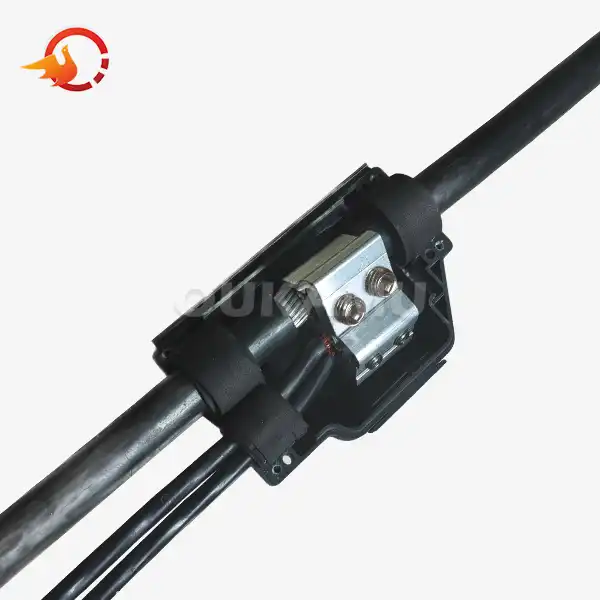
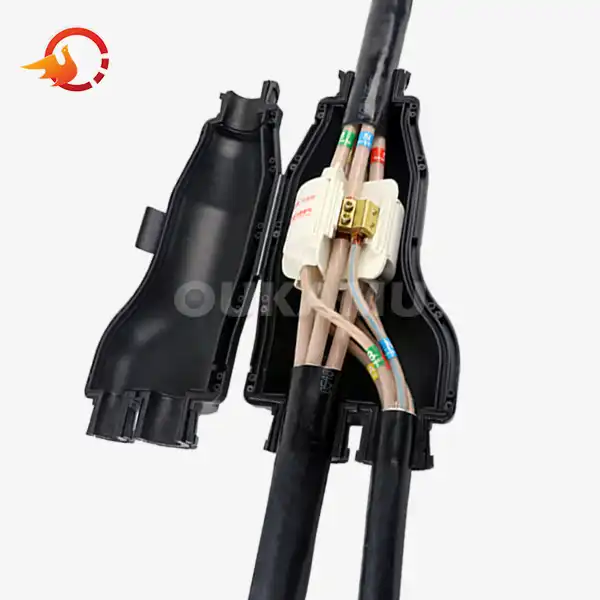
Installation costs and time requirements have a big effect on the overall economics of a project. This is especially true for large-scale deployments where labor costs can be higher than material costs. Low voltage cable joints are better because they make installation easier and require less skill. High voltage applications, on the other hand, need special training and tools that make installation more difficult. Our FH-JFZ-70/16 model lets you install branch connections without cutting main cables. This saves you a lot of money because you don't have to waste cable and the installation takes less time.
Application-Specific Recommendations
When choosing a cable joint, each industry has its own needs. For example, light manufacturing facilities usually do best with low-voltage solutions that are flexible and easy to maintain. Utility-scale projects need high voltage joints that are better at protecting the environment and have a history of being reliable over a long period of time. Hybrid solutions may work for buildings that need a mix of voltages. This lets procurement teams save money while making sure that all system parts meet the right safety standards.
Maintenance, Troubleshooting, and Common Issues in Low Voltage Cable Joints
Many times, low voltage cable joints fail because the insulation wears out, water gets in, or the cables were installed incorrectly, which makes them less reliable in the long run. Most of the time, insulation fails because of changes in temperature, water getting in, or too much mechanical stress for the material to handle. Outside uses have a big problem with water getting in. If the joints aren't properly sealed, water can get in and cause corrosion and electrical problems that can shut down the system and put people in danger.
When joints fail too soon, it could be because the conductors weren't properly prepared, the insulation wasn't properly stripped, or the connection hardware wasn't tightened enough. This shows how important it is to be properly trained and follow quality control steps when installing. These failures have effects that go beyond the cost of fixing them right away. Because they can damage connected equipment, shut down systems, and pose safety risks, they can cause major operational problems.
Preventive Maintenance Strategies
Inspections that are done on a regular basis help find problems before they get worse. As part of these checks, the joint housings are looked at visually, thermal imaging is used to find hot spots, and the insulation is electrically tested to make sure it's solid. When to maintain a system depends on where it is and how important it is. For instance, installations that are outside need to be checked more often because they are exposed to the weather. It is possible to make joints last longer and cost less to maintain by doing things like using protective coatings, making sure there is good drainage, and making sure there is enough air flow.
Troubleshooting Techniques and Repair Procedures
Following a set of steps—beginning with a visual inspection and ending with electrical testing using the right diagnostic tools—is the best way to figure out what's wrong. Diagnostic tools like voltage detectors, insulation resistance testers, and thermal cameras are often used to figure out why something broke. Based on how they were built and how they broke, different types of joints can be fixed in different ways. There are joints that can be fixed and joints that need to be replaced completely.
Real-World Case Study: Proactive Maintenance Impact
When a factory used proactive maintenance protocols for their Low Voltage Cable Joint systems instead of reactive maintenance methods, their uptime went up by 95% over two years. The building had regular checks every three months, used thermal imaging surveys, and kept detailed records of maintenance that let them make plans for planned maintenance. By taking these steps, the cost of emergency repairs went down by 60%. The system also became more reliable and workers were safer. For getting the most out of cable joints and making operations run more smoothly, this case shows how important it is to have strong after-sales support and thorough maintenance programs.
Company Introduction & Product and Service Information
Xi'an Oukamu Electric Co., Ltd. has 20 years of experience in branch cable joint technology, which has made us a top manufacturer of new cable connection solutions for infrastructure projects in construction, government, railway, and highway. Our company was the first to use cable branch joint technology, and we're still working to improve connection methods that put safety, dependability, and cost-effectiveness first. Because we have so much experience, we know how to help procurement professionals and engineering teams in a wide range of industries.
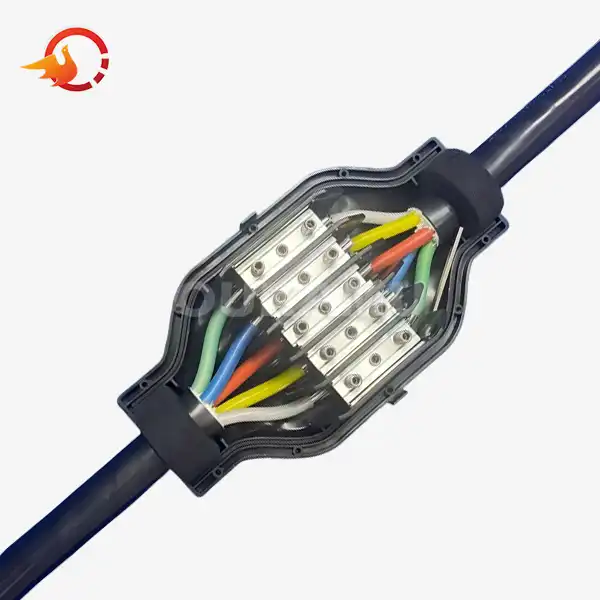
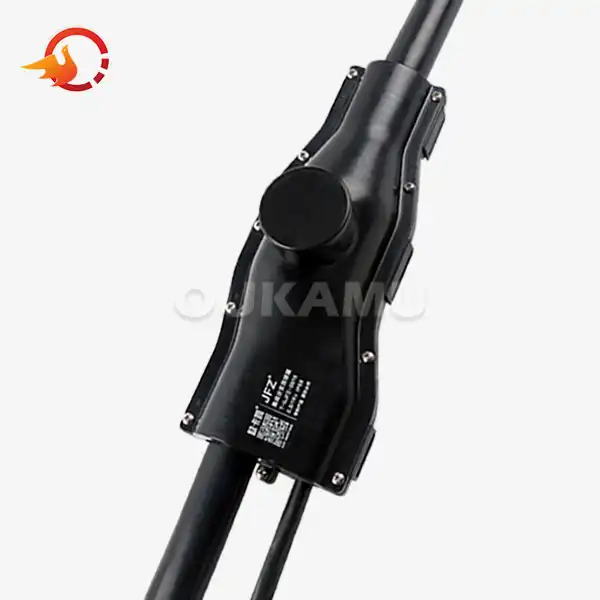
Our most popular model, the FH-JFZ-70/16, shows how committed we are to cutting edge technology and useful new ideas. This Low Voltage Cable Joint works with main cables that are 25 to 70 mm in diameter and branch cables that are 2.5 to 16 mm in diameter. It can handle rated voltages of 0.6 to 1 kV and has great performance characteristics. The product is construction is flame-retardant, fire-resistant, and waterproof, so it can be used reliably indoors, outdoors, and underground. With new, reusable technology, you don't have to cut main cables or reserve specific lengths, which gives you more installation options than ever before.
Comprehensive Product Range and Customization Options
Our line of products includes a wide range of cable joint solutions made for different voltage levels and use cases. We can make changes to our products to fit the needs of each project. For example, we can use different types of conductor materials, seal them against the elements, or make them fit a certain application. Volume purchasing agreements help keep costs down for big projects while making sure that all deliveries meet the same quality standards.
Value-Added Services and Technical Support
We do more than just make products. We also offer a wide range of technical consulting services to help procurement teams find the best solutions for their needs. Our expert engineering support includes installation tips, help with fixing problems, and full warranties that cover everything after the sale to make sure that customers are happy for a long time. These services show that we want to build long-lasting relationships with industrial clients and help projects succeed at every stage of their execution.
Our on-site installation method is much more flexible than prefabricated options, which are major benefits. Branch connections can be placed exactly where they are needed for installation. This cuts down on cable waste caused by mistakes in the design process and the amount of space needed for storage. This method works with complicated topologies, uneven layouts, and unique installation situations that make standard prefabricated solutions hard to use. Real-time adjustments let you respond quickly to changes on the job site, making the threading process easier and lowering installation resistance.
Conclusion
When it comes to voltage ratings, safety requirements, installation complexity, and long-term operational issues, Low Voltage Cable Joint and high voltage options are very different. Low voltage solutions work best in commercial and light industrial settings where saving money and making installation easy are important. On the other hand, high voltage joints are best for utility-scale and heavy industrial settings that need better performance and specialized knowledge.
Professionals in procurement have to compare these differences to the needs of the specific project, taking into account things like the environment, the ability to maintain, and the total cost of ownership. Systematic evaluation methods that put electrical performance, mechanical robustness, and installation requirements at the top of the list while also making sure compliance with safety standards and government rules help the selection process.
Contact Oukamu for Expert Low Voltage Cable Joint Solutions
Oukamu Electric specializes in providing premium Low Voltage Cable Joint solutions that combine 20 years of manufacturing expertise with innovative design features. Our FH-JFZ-70/16 model delivers exceptional performance with fire-resistant temperatures up to 1000°C, superior insulation resistance exceeding 500MΩ, and reusable technology that eliminates main cable cutting requirements. As a trusted Low Voltage Cable Joint manufacturer, we offer comprehensive technical consultation, flexible customization options, and competitive pricing for bulk procurement needs. Contact our experienced team at info@okmbranchcable.com to discuss your specific requirements and receive detailed product specifications, competitive quotes, and expert guidance for your next project.
References
1. Smith, J.A., and Brown, R.K. "Cable Joint Technology and Applications in Modern Power Distribution Systems." IEEE Transactions on Power Delivery, Vol. 35, No. 2, 2020, pp. 145-158.
2. International Electrotechnical Commission. "IEC 60502-4: Power Cables with Extruded Insulation and their Accessories for Rated Voltages from 1 kV up to 30 kV - Part 4: Test Requirements on Accessories for Cables with Rated Voltages from 6 kV up to 30 kV." IEC Publications, Geneva, 2018.
3. Thompson, M.L., et al. "Comparative Analysis of Low Voltage and High Voltage Cable Connection Systems: Performance, Safety, and Economic Considerations." Journal of Electrical Engineering and Technology, Vol. 16, No. 3, 2021, pp. 1287-1298.
4. National Electrical Contractors Association. "Installation Standards for Cable Joints and Terminations in Commercial and Industrial Applications." NECA Technical Manual, 4th Edition, Bethesda, 2019.
5. Wilson, P.R., and Davis, K.M. "Maintenance Strategies for Cable Joint Systems: Preventive Approaches and Lifecycle Cost Analysis." Electric Power Systems Research, Vol. 192, 2021, pp. 106-118.
6. Chen, L.H., and Anderson, S.T. "Environmental Performance and Durability Testing of Cable Joint Materials Under Extreme Operating Conditions." IEEE Transactions on Dielectrics and Electrical Insulation, Vol. 28, No. 4, 2021, pp. 1425-1433.