

Guide To Shipping Cable Joints From China






 2026-03-24 11:07:56
View:389
2026-03-24 11:07:56
View:389A key strategy for electrical distributors, contractors, and procurement professionals all over the United States is now to ship cable joints from China. The cable joint market is an important part of keeping the electrical infrastructure safe. China's manufacturing know-how can provide cost-effective options that meet international quality standards. Whether you're sourcing branch connectors, heat shrink joints, or resin-based systems, understanding the logistics, supplier evaluation, and installation requirements can significantly impact your project success and profit margins.

Comprehending Cable Joints and Their Core Applications
Electrical systems need connection places called cable joints to make sure that power and signals stay strong in a wide range of industrial settings. These parts go in the spaces between the cable pieces. They also make it easy to connect branches and keep the cable's mechanical integrity while providing good electrical insulation. The features do more than just connect things; they also protect against damage from the environment, keep the power steady, and last a long time in tough working conditions.
Types of Cable Joints and Their Specifications
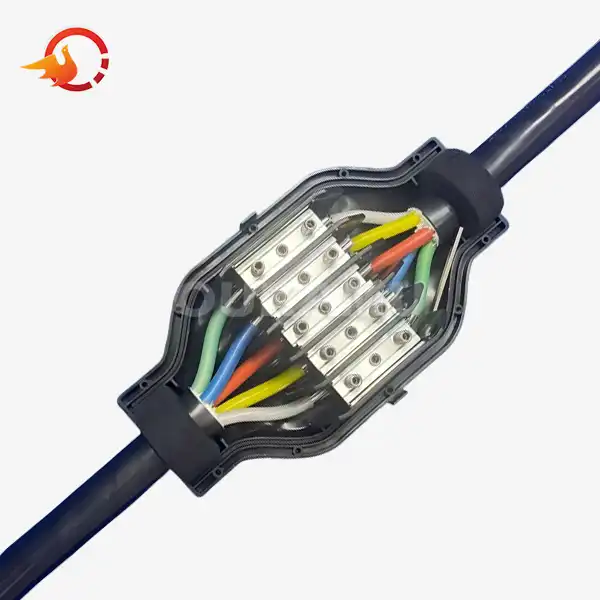
Modern electrical systems utilize several distinct cable joint categories, each engineered for specific voltage levels and environmental requirements. Heat shrink joints dominate low-voltage applications, offering excellent moisture resistance and ease of installation for cables ranging from 2.5mm to 120mm diameter. When it comes to underground installations, where chemical resistance and long-term stability are still very important to utility companies and infrastructure providers, resin-filled joints work better.
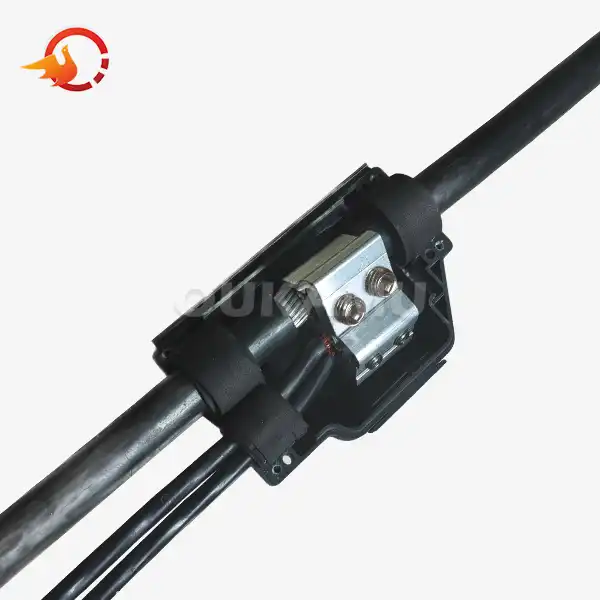
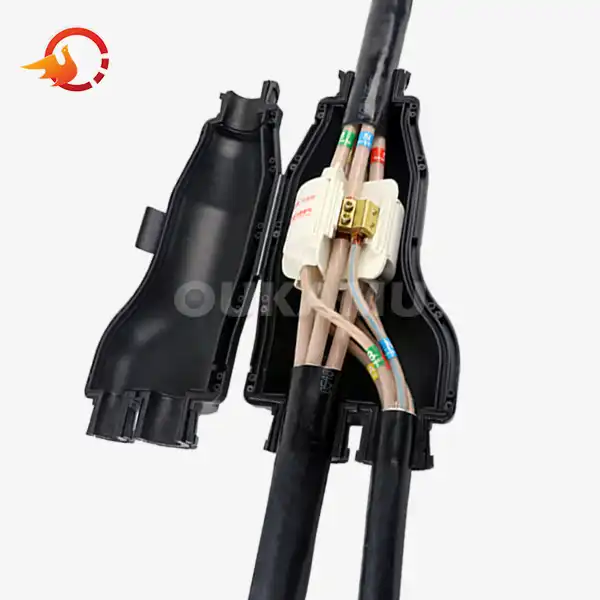
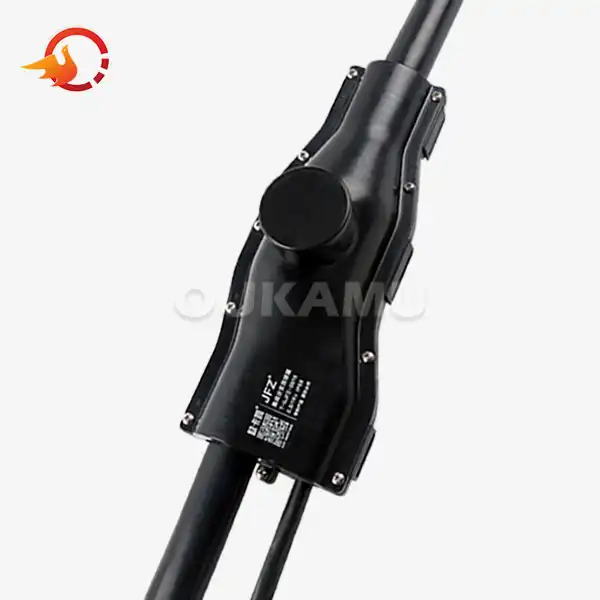
Branch cable joints represent an innovative solution that eliminates the need for cutting main cables during installation. The ZR-JFZ-120/35 model is an example of this technology. It can handle main lines from 50 to 120 mm and branch connections from 2.5 to 35 mm at a rated voltage of 0.6/1kV. This way of designing cuts down on wasteful materials and gives installers a lot of options for how to set up things so they can fit the needs of the job site instead of rigid factory layouts.
Performance Standards and Compliance Requirements
International standards for certification control how well cable joints work, making sure they are safe and reliable in a wide range of settings. The GB/T 14048.7-2016 standard specifies extensive procedures for assessing environmental durability, dielectric strength, and insulation resistance. The operating features that set professional-grade components apart from basic electrical accessories are flame retardancy, waterproof sealing, and anti-aging.
Secure connections are maintained in high-risk industrial situations thanks to the integrated T-connector design's superior insulation mechanisms, which prevent electrical risks. Using specific resin mixes that are impervious to hydrocarbons, chemicals, and the harsh air conditions makes some safety features superior. Critical infrastructure projects benefit greatly from these performance attributes, which lead to longer operational lifespans and less maintenance needs.
How to Successfully Ship Cable Joints from China: Process and Best Practices
Aligning product specifications with delivery timelines and budget constraints is the first step in effective shipping strategies, which are based on thorough order preparation. Minimum order quantities typically range from 100 to 1,000 units depending on product complexity and manufacturing capacity. Packaging solutions incorporate protective materials designed to prevent moisture ingress, mechanical damage, and electromagnetic interference during international transit.
Shipping Methods and Cost Optimization
For bulk orders more than 500 kilograms, the most cost-effective transportation option is sea freight, which balances delivery speed with cost considerations. Express air services provide 5-7 day delivery for urgent requirements, while standard air freight delivers moderate speed at competitive rates for mid-volume shipments. When combining different product lines from the same supplier, container optimization techniques can cut shipping costs per unit by 30–40%.
Sea freight containers accommodate palletized shipments with specialized cushioning systems that protect delicate electronic components from vibration and impact damage. Proper packaging includes moisture-barrier films, anti-static materials, and temperature-resistant containers that maintain product integrity across varying climate conditions. Documentation requirements encompass commercial invoices, packing lists, certificates of origin, and compliance declarations that facilitate customs clearance procedures.
Customs and Regulatory Compliance
Certifications of electrical performance and product safety requirements are required by import restrictions. For the purpose of calculating tariff rates and import duties, Harmonized System (HS) codes categorize cable joints into electrical apparatus categories. The commercial distribution in target markets requires compliance with national electrical codes and safety standards, which can be confirmed by Certificates of Conformity.
Risk mitigation strategies address potential shipping delays, product damage, and customs complications through comprehensive insurance coverage and supplier guarantees. Established suppliers provide tracking systems that monitor shipment progress and coordinate with freight forwarders to resolve logistical challenges. To lessen the possibility of product returns or warranty claims, quality control inspections are carried out prior to shipment to guarantee that items fulfill performance specifications.
Choosing the Right Cable Joint Supplier in China: Criteria and Recommendations
Supplier selection requires systematic evaluation of manufacturing capabilities, quality certifications, and service reliability. Technical requirements assessment begins with defining voltage ratings, environmental conditions, and installation parameters specific to your application needs. This foundation enables meaningful comparisons between suppliers while ensuring compatibility with existing electrical systems and project specifications.
Manufacturing Capability and Quality Assurance
Equipment complexity, quality control systems, and product performance testing facilities are all part of production capacity evaluation. The dedication to consistent quality delivery is demonstrated by leading manufacturers who maintain ISO 9001 certification and adhere to electrical safety standards. Manufacturing experience spanning decades provides valuable insights into material science, production optimization, and customer service excellence that newer companies may lack.
Xi'an Oukamu Electric Co., Ltd. exemplifies this manufacturing excellence through 17 years of specialization in branch cable connector technology. The company's participation in large-scale infrastructure projects, such as the Jinrentong highway, which features almost 20,000 cable joints to provide uninterrupted connectivity, proves the effectiveness of its products in the real world. Having worked on this project before, I can say with certainty that the supplier can manage our massive procurement needs and that the products will be reliable.
Evaluating Supplier Reliability and Service
Reliability of suppliers is an important evaluation criterion because lead time consistency impacts project scheduling and inventory management. Companies that have been around for a while usually keep enough stock on hand to be able to fill orders quickly and offer a range of minimum order quantities. Communication capabilities, including English-language technical support and responsive customer service, facilitate smooth procurement processes and ongoing relationship management.
Technical assistance, installation instructions, and warranty support are all part of after-sale service. Suppliers who offer detailed instructions, training materials, and support in the field show that they care about their customers' success over just making sales. Instead of just looking at the initial purchase price, competitive pricing structures should take into account the total cost of ownership, which should include shipping costs, customs fees, and possible warranty claims.
Practical Tips for Cable Joint Installation, Testing, and Maintenance
It's important to carefully follow the manufacturer's directions when installing cable joints to make sure they work well and meet safety standards. When applying heat shrink joints, it's important to keep the temperature just right, and mixing and sealing resin-filled systems carefully is also needed. Some of the things that affect how and when to put something are the temperature, the humidity, and the size of the work area.
Installation Best Practices and Safety Protocols
The first step in properly installing branch cable joints is to get them ready. This means removing the insulation, stripping the conductors, and cleaning the surface. To use the ZR-JFZ-120/35 model, you won't have to cut the main cables. Instead, you can change where it is placed to fit actual installation paths, not just measures. This feature cuts down on cable waste by 2 to 3 meters per link, as well as installation time and labor costs.
During the installation process, safety guidelines stress the importance of checking for de-energization, following the right grounding steps, and wearing personal protective equipment. The insulation resistance test makes sure the joint is stable before it is powered on, and the dielectric strength test makes sure it can handle real voltage loads. The proof that these testing methods produce can be used to back up warranty claims and meet the needs of legal compliance.
Maintenance Schedules and Troubleshooting
Electrical tests, thermal imaging scans, and visual checks are all common maintenance tasks that can find issues before they happen. Scheduled maintenance times rely on the environment. For example, installations that are buried need less attention than applications that are out in the weather. Things usually break when water gets in, so it's important to check the seal often as part of maintenance.
Some common issues that need to be fixed are overheating, mechanical stress that makes joints less effective, and insulation that breaks down. Infrared thermography can find hot spots early on, which are signs of insulation wear or links that aren't tight. As part of proactive maintenance, fixing problems and stepping in at the right time shortens the life of equipment and lowers the number of unexpected outages.
Xi'an Oukamu Electric: Your Trusted Cable Joint Solution Provider
Xi'an Oukamu Electric Co., Ltd. stands at the forefront of cable connection technology, delivering innovative solutions that transform electrical installation practices. Our 17-year specialization in branch cable connector development has revolutionized industry approaches to cable management, earning recognition through major infrastructure projects across China. The company's dedication to research and development leads to constant new ideas that meet changing customer needs while keeping manufacturing processes as low-cost as possible.
Our product portfolio centers on the ZR-JFZ-120/35 branch cable joint, engineered to accommodate main cables from 50-120mm and branch connections from 2.5-35mm at 0.6/1kV rated voltage. This advanced design eliminates main cable cutting requirements while providing reusable connections that adapt to changing installation requirements. The integrated approach combines insulation, flame retardancy, fire resistance, and waterproofing in a compact form factor suitable for diverse installation environments.
On-site cable fabrication has benefits other than lower costs, such as greater operational flexibility and faster installation. Adjustable branch positioning eliminates design errors while high coiling efficiency reduces workspace requirements. Complex topology adaptation capability accommodates multi-branch scenarios that challenge traditional prefabricated solutions, while integrated transportation of trunk cables reduces logistical complexity and associated costs.
Quality assurance includes making sure that international safety standards, like GB/T 14048.7-2016, are met. This makes sure that the product works reliably in a wide range of demanding situations. Our manufacturing processes incorporate advanced materials and production techniques that deliver consistent quality while maintaining competitive pricing. Customer support includes technical consultation, installation guidance, and comprehensive after-sales service that extends throughout product lifecycles.
Conclusion
If you want to ship cable joints from China, you should make sure you have a well-thought-out plan that includes reviewing suppliers, setting up logistics, and checking the quality. The Chinese are good at making things and have a lot of goods at low prices, which is why electrical contractors and wholesalers like to do business with them. You can make smart purchase choices that improve project results while keeping costs low if you know the technical specs, how to install it, and how to keep it in good shape. In order for the business to be more reliable and effective, new ideas have been created, such as branch cable joints. These changes will be good for both makers and end users.
FAQ
How long does it usually take to ship cable joints from China?
For stock items, standard lead times are between 15 and 30 days. For customized items, they may take between 30 and 45 days, based on the details. For urgent needs, express shipping choices can cut delivery times down to 5–7 days, but they cost a lot more. Planning procurement plans around these dates keeps the project on track without spending extra money to speed things up.
How can I make sure that the cable joints are of good quality and meet standards before I ship them?
Suppliers with a good reputation will give you proof that their products work by giving you test results, quality documentation, and certificates of compliance. Third-party inspection services offer independent confirmation, and factory audits check the quality processes and manufacturing abilities. Asking for samples to be tested locally gives you more faith that the product will work in certain situations.
What rules for packing make sure that goods travel safely between countries?
Professional packing includes materials that keep moisture out, materials that absorb shock, and protective containers made for sending goods across borders. Labels should include information on how to handle the product, how it should be stored, and how to identify it so that it can be easily cleared through customs. Damage that happens in route is covered by insurance, and tracking systems keep an eye on the shipment as it makes its way to its destination.
Partner with Oukamu for Reliable Cable Joint Solutions
Ready to streamline your electrical procurement process with industry-leading cable joint technology? Oukamu delivers proven solutions backed by 17 years of manufacturing excellence and real-world project experience. Our ZR-JFZ-120/35 branch cable joints provide the flexibility, reliability, and cost-effectiveness that electrical distributors and contractors demand, from cable joint supplier. Contact our team at info@okmbranchcable.com to discuss your specific requirements and discover how our innovative cable joint solutions can optimize your next project.
References
1. International Electrotechnical Commission. "Cable Joints and Terminations for Power Cables with Rated Voltages Above 30 kV." IEC Technical Report 62895, 2019.
2. Chen, Wei and Zhang, Ming. "Advanced Materials in Cable Joint Manufacturing: Performance and Reliability Analysis." Journal of Electrical Engineering Technology, Vol. 15, 2021.
3. National Institute of Standards and Technology. "Electrical Safety Standards for Cable Connection Systems in Industrial Applications." NIST Special Publication 1800-23, 2020.
4. Anderson, Robert K. "Supply Chain Optimization in Electrical Component Procurement: A Global Perspective." International Journal of Industrial Management, Vol. 28, 2022.
5. Liu, Xiaoming et al. "Environmental Performance Testing of Insulated Cable Joints in Extreme Conditions." IEEE Transactions on Power Delivery, Vol. 37, No. 3, 2022.
6. European Committee for Electrotechnical Standardization. "Cable Joints for Power Cables with Rated Voltages from 3.6/6 kV to 20.8/36 kV." EN 50393 Standard Documentation, 2021.