

_1790150425011.webp)
Cast Resin vs Heat Shrink Cable Joints: Which Is Better?






 2026-04-08 15:40:14
View:389
2026-04-08 15:40:14
View:389When choosing between Cast Resin Cable Joint and Heat Shrink Cable Joints, the best option relies on the needs of your application. Cast Resin Cable Joint solutions work great in harsh conditions that need high-level mechanical safety and long-term dependability, especially for setups that are buried or underground. Heat shrink options are easier to use, take less time to install, and can be used for emergency fixes or short-term needs. Both technologies provide secure electrical links, but they work very differently, require different installation methods, and have very different lifetime costs. Procurement pros and engineering teams can choose the most cost-effective option that meets project requirements and operational goals when they understand these differences.

Understanding Cast Resin and Heat Shrink Cable Joints
In the last few decades, cable joint technology has changed a lot. Cast resin and heat shrink options are two different ways to make electrical links that work well. Knowing how they are built at its core helps you figure out which technology is best for a given situation.
Cast Resin Cable Joint Construction and Operation
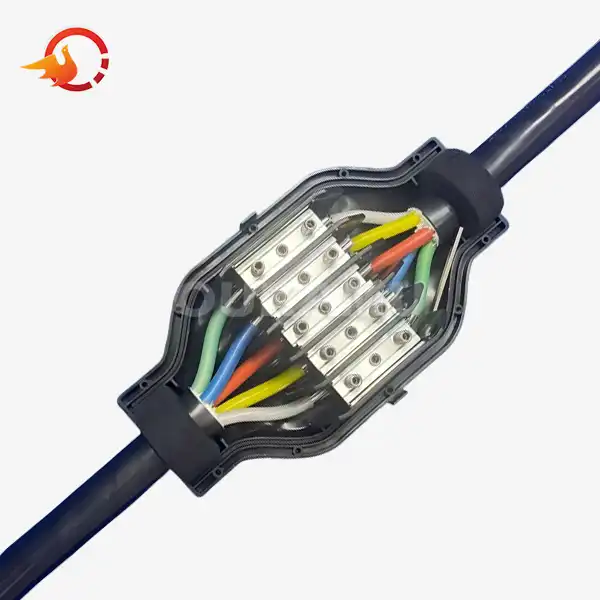
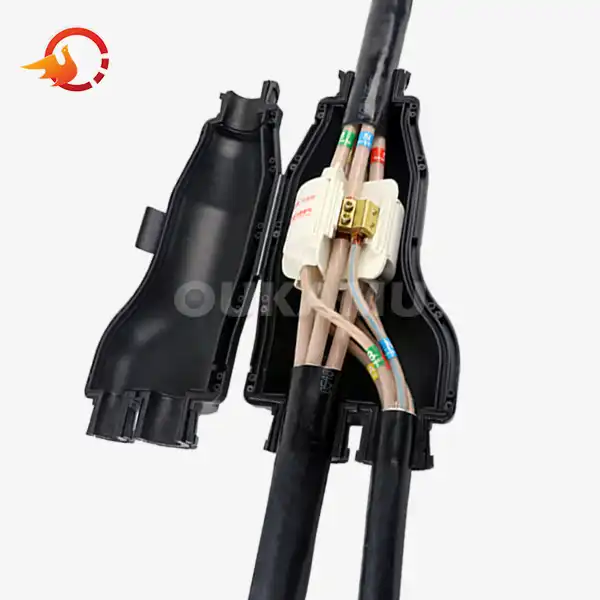
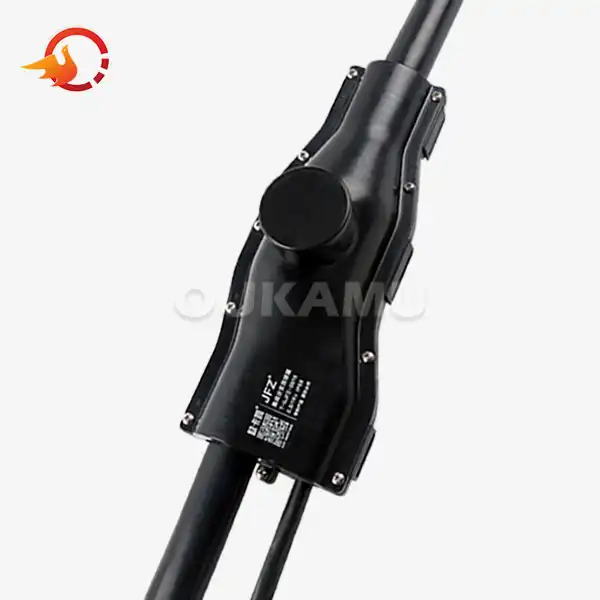
Cast Resin Cable Joint units use high-quality epoxy resins that harden into a solid shell that protects the wire connections. The joint combines the main and branch wires into a body that is protected, waterproof, and resistant to fire. Molded insulation like this makes a strong wall against water, dust, and chemicals. The production process makes sure that the main cable stays whole, so it doesn't need to be cut when it's installed. This keeps the cable's structure and makes work easier in the field.
Modern cast plastic designs have gel-filled insulation for extra safety, and they have IP68 waterproof ratings, so they can be installed in wells or buried directly in the ground. These joints can fit main lines from 4 mm to 16 mm and branch cables from 1.5 mm to 10 mm, so they can be used in a wide range of power distribution situations. The small size makes it possible to place in limited areas without affecting performance. This is especially helpful for urban infrastructure projects where installation teams often face space issues.
Heat Shrink Cable Joint Technology
Special polymer tube is used in heat shrink joints. When heated, it contracts, making a tight seal around the wire connections. This technology uses heat to make a shield that doesn't let water in and keeps electrical links safe from the outside world. To place the cable, controlled heat must be applied with flames or heat guns. This makes the polymer material shrink and fit tightly around the cable.
It became popular with heat shrink options because they were easy to install and could be changed to fit different situations. Contractors like how flexible the technology is for emergency fixes and scenarios where service needs to be restored quickly. The properties of the material give it enough electrical insulation and mechanical safety for many medium-voltage uses, but the way it works depends on the surroundings and the amount of stress it is under.
Application Sectors and Typical Use Cases
Both systems fill different roles in the world of electricity infrastructure. Cast Resin Cable Joint solutions are most common in places where stability and resistance to the environment are important, like buried power lines, direct burial installations, and places where chemicals are used a lot. Cast resin solutions are often chosen by healthcare facilities, data centers, and other important structures because they are more reliable and last longer.
Heat shrink joints are often used for temporary installations, overhead lines, and repair work where speed of installation is more important than long-term reliability. Heat shrink technology is often used in telecommunications networks and rural electricity projects because it is easy to use in the field and doesn't require a big starting investment.
Key Factors in Choosing Between Cast Resin and Heat Shrink Cable Joints
A lot of technical and practical factors need to be carefully looked at in order to choose the right cable joint technology. The following things have a big effect on the total cost of ownership and long-term success.
Technical Performance Comparison
How well the insulation works has a direct effect on how safe and reliable the system is. Cast Resin Cable Joint materials have great insulating strength and keep their shielding qualities over a wide range of temperatures. The solid resin structure keeps out water better than heat shrink options, especially in places with a lot of humidity or projects that will be submerged in water. After decades of use, tests show that cast resin joints that were put correctly keep insulation resistance values that are higher than industry norms.
Heat shrink joints work well as protection in many situations, but they are more likely to break down over time if they are exposed to the environment. Changing temperatures, UV light, and mechanical stress can all damage the polymer structure, which could make shielding less effective. Different technologies have very different thermal properties. Cast resin joints are very good at transferring heat, so they can handle high current loads without causing the temperature to rise too much. When heat shrink materials are exposed to high temperatures or overload situations for a long time, they may age faster.
When using something underground or directly buried, moisture resistance is very important. Advanced cast resin designs with gel-filled insulation and an IP68 waterproof grade offer the best security against water getting in. This double safety protection makes sure that the system will work reliably even in areas with wet dirt or that are likely to flood. To get the same level of moisture protection, heat shrink joints need to be installed with great care, and sometimes situations in the field make it impossible to get the best seal.
Installation Considerations and Labor Requirements
Installation difficulty has a big effect on project timelines and worker costs. Cast Resin Cable Joint units usually need more time to be prepared and specific steps to be taken when installing them, but new designs have made the process a lot easier. Not having to cut the main wire cuts down on installation time and gets rid of possible failure spots. Flexibility on-site lets you connect branches in any place, following the real installation lines without needing to plan ahead or set branch spacing.
Technicians like how the combined design brings together all the important parts into a safe, reliable, and small unit. Because units can be installed both directly and within cable bridges, they can be used in a wide range of installation settings. Specialized training improves the quality of installation, but the design makes it easier for anyone to use than older cast plastic technologies.
For heat shrink installation to go smoothly, the heating steps must be carefully followed by skilled workers who know how to use the right temperature and check for shrinking. Not enough heat creates holes that make closing harder, and too much heat hurts insulation materials. The quality of the installation is affected by the weather. For example, rain, wind, or high temperatures can make the heating process harder and possibly lower the quality of the results.
Maintenance and Performance Over the Lifecycle
How often something is maintained and how long it is supposed to last affect how much it costs all together. Cast Resin Cable Joint parts are very long-lasting, and units that are put correctly can work for decades without any upkeep. The sealed construction stops wetness and pollution from building up, which gets rid of common failure mechanisms that affect less advanced technologies. From working in the field, we know that cast resin systems stay electrically sound even in tough conditions like high humidity, chemical exposure, or big changes in temperature.
Heat shrink joints may need to be checked on a regular basis and eventually replaced, especially in harsh environments. In ceiling uses, ultraviolet light slowly breaks down the properties of polymers, and temperature cycling and mechanical stress can damage the integrity of seals. Maintenance teams have to keep a closer eye on heat shrink systems, which could cause service interruptions and raise the cost of inspections.
Failure modes are very different between systems. When put and described correctly, cast resin joints don't fail in terrible ways very often. Gradual decline gives you early warnings that let you change things before they break down. When environmental pressures are higher than what the material can handle, heat shrink breakdowns can happen quickly. This can lead to unexpected outages that stop activities and cost a lot of money to fix.
Advantages and Disadvantages: Cast Resin vs Heat Shrink Cable Joints
By looking at the pros and cons of each technology fairly, buying professionals can choose products that meet the needs and restrictions of a given project.
Cast Resin Cable Joint Strengths
Cast Resin Cable Joint parts are better than other options because they are more mechanically resilient. The strong epoxy construction can handle impacts, ground movement, and fitting stress that would weaken less durable designs. This longevity is very important for direct burying uses, where joints may be damaged by frost heaving, earth pressure, or digging. This mechanical protection is very helpful for projects that use heavy building tools or setups in places with a lot of foot traffic.
Another big benefit is that it can seal against environmental damage. When you put together cast resin insulation and gel-filled protection, you get a shield that keeps out water, dust, chemicals, and biological contaminants. For long-term dependability, installations in corrosive places like chemical processing plants, wastewater treatment plants, and seaside areas with salt air need this level of safety.
Cast resin technology can handle difficult installation situations because it can be used with complex wire systems. Keeping the integrity of the main wire while making branch links makes network structure easier and cuts down on cable waste. Real-time adjustment lets techs change branch places on the fly to meet the needs of the job site, which isn't possible with prefabricated assemblies that have fixed branch locations.
When you look at the total costs over the whole lifecycle instead of just the original buy price, you can see if something is cost-effective. Over the course of their long service life, cast resin joints save a lot of money because they require less building room, fewer cables, and no periodic upkeep. The long-lasting design with qualities like fire protection, dustproofing, anti-aging, and anti-electrochemical corrosion guarantees years of reliable use without having to buy new ones.
Cast Resin Cable Joint Limitations
Higher up-front costs are a beginning problem for projects that are limited by money. The more complex materials and production methods needed to make high-quality cast resin parts mean that they cost more than easier options. If procurement teams only look at bids based on the original investment, they might miss the lifetime value proposition that makes the extra cost worth it.
Lead times for special orders or large quantities can be longer than those for standard heat shrink goods. It can be hard to secure cast resin joints within tight purchase windows for projects with tight schedules, especially for custom designs or voltage rates that aren't standard.
Heat Shrink Cable Joint Advantages
The main appeal of heat shrink technology is still how easy it is to install. Contractors who know the basics of installation can do it pretty quickly, which cuts down on labor costs and project time. The simple process works well for emergency repairs where speedy service return is more important than long-term durability.
Heat shrink joints can be changed to fit new site conditions or last-minute design changes because they are flexible enough to be changed in the field. The materials can react to small changes in the thickness and shape of the cables, which makes it possible to use less rigid technologies even when installation goes wrong.
Lower initial investment makes heat shrink joints attractive for temporary installations, pilot projects, or applications where budget constraints dominate procurement decisions. However, the technology works well enough in situations with low environmental stress and shorter expected service life needs.
Heat Shrink Cable Joint Disadvantages
Because heat shrink doesn't last as long in tough situations, it can't be used in demanding settings. Polymers lose their qualities over time when they are exposed to UV light, harsh chemicals, high or low temperatures, or constant moisture. Installations in difficult places may need to be replaced before they're supposed to, which raises the lifetime costs even though the initial investment was smaller.
Different levels of performance depending on the quality of the work create risk for projects that don't have skilled techs or good quality control processes. Heating that isn't even, surfaces that are dirty, or choosing the wrong materials can all weaken joints, causing them to fail early and cause problems that cost a lot to fix.
Making the Final Decision: Which Cable Joint Is Better for Your Needs?
To make sure that technical factors and market factors are taken into account when making buying decisions, it is necessary to carefully look at the needs and goals of each project.
Matching Technology to Application Scenarios
Voltage level is one of the most important criteria for choosing. Either technology can be used for medium-voltage uses up to 36kV, based on the environment and the need for durability. Cast Resin Cable Joint options are usually used for high-voltage systems above 36kV because they are better at insulating and being strong.
Environmental pressures, such as exposure to wetness, extreme temperatures, chemical touch, and direct impact, help choose the right technology. Cast resin joints are strong enough to block out water and protect against damage in places that are prone to floods, underground installations, and direct burial uses. Heat shrink technology can be used successfully in controlled indoor settings with little physical stress when saving money is more important than reliability.
Operational needs, such as ease of repair access, expected service life, and criticality, guide the choice of technology. Premium cast resin options that reduce the chance of failure and increase uptime are needed for equipment that supports hospitals, data centers, or emergency services. Less important uses that can be installed easily and have shorter planning horizons may be able to use cheaper options to heat shrink.
Balancing Investment Against Lifecycle Value
When figuring out the total cost of ownership, you should include the initial purchase price, the cost of labor for installation, the cost of inspections and upkeep, the expected number of replacements, and the cost of downtime due to possible failures. Even though cast resin joints cost more up front, they often have lower lifetime costs because they last longer and don't need as much upkeep. This is because heat shrink joints need to be replaced more often.
A risk assessment figures out how much the possible effects of a joint failure could be, such as lost service, expensive repairs, safety issues, and damage to the company's image. When failure has big effects, it's worth spending more on more stable cast plastic technology, even if it costs more at first.
Practical Integration and Performance Validation
New cable joint setups should work with the equipment that is already there without any problems. Verifying compatibility makes sure that the voltage levels, current capacities, and physical sizes are all correct for the system. Technical specs need to include information about the types of insulation, circuit materials, and weather conditions so that parts don't get mixed up and damage the system.
Before agreeing to a large-scale purchase, performance expectations are checked by trial or pilot testing. By installing sample joints in typical situations, you can get real-world information about how well they work, how efficiently they are installed, and whether they are suitable for use. This method, which is based on proof, lowers the risk of procurement and boosts trust in the choice of technology.
Conclusion
Cast Resin Cable Joint and heat shrink cable joints both make solid electrical connections, but they work very differently, require different installation methods, and have very different lifecycle costs. Cast resin joints work great in tough situations where long-term dependability, longevity, and resistance to the environment are important. Heat shrink alternatives work best in less difficult situations where ease of fitting and low starting cost are important. When purchasing things, people need to compare technical specs to what the application needs, taking into account both the initial prices and the overall value over the product's lifetime. By choosing technologies that are in line with the goals of the project and operational responsibilities, engineering teams are able to get the best system performance while staying within their budgets.
FAQ
Can cast resin cable joints be repaired after installation?
Once the resin has hardened, Cast Resin Cable Joint parts can't be fixed in the field because they are enclosed. The solid epoxy material makes a product that can't be taken apart without damaging it. This feature of the design makes it more reliable over time by getting rid of any places where water or dirt could get in. Projects that need to be able to make changes in the future should carefully plan where the branches will go during the initial installation so that they don't need to be redone later.
Are heat shrink joints suitable for outdoor substation applications?
Heat shrink joints can work in outdoor substations as long as they are made with UV-resistant materials and have enough overvoltage safety. However, long-term contact to weather factors weakens polymer properties, which could mean that it needs to be replaced every ten to fifteen years. Alternatives made of cast plastic last longer outside, which makes up for their higher starting cost by providing longer service life.
What safety standards must be verified before cable joint procurement?
IEC 60502 should be required for power lines and IEEE 404 should be required for cable joints in the procurement requirements. Other standards, like IEC 60228 for conductor specs and IEC 60811 for insulation tests, make sure that the quality is checked completely. In the supplier's paperwork, there should be test papers that show the product meets the standards and shows good dielectric strength, insulation resistance, and environmental closing performance.
Partner with Oukamu for Superior Cast Resin Cable Joint Solutions
Xi'an Oukamu Electric Co., Ltd. has 20 years of experience in branch cable connection technology and can offer new Cast Resin Cable Joint options that improve the dependability and lifecycle value of electrical systems. Our high-tech cast resin cable joint products are waterproof up to IP68, have gel-filled insulation, and are built to resist flames, making them perfect for the toughest installation conditions.
As a top provider of Cast Resin Cable Joint units, we make it easy to buy in small or medium amounts, offer reasonable pricing, and provide full technical support. This makes the buying process easier while still ensuring the quality of the products. You can reach our team at info@okmbranchcable.com to see all of our products and talk about how our tech solutions can help your next project run better and make you more money.
References
1. International Electrotechnical Commission. (2021). Power cables with extruded insulation and their accessories for rated voltages from 1 kV up to 30 kV - Part 1: Cables for rated voltages of 1 kV and 3 kV. IEC 60502-1:2021 Standard.
2. Institute of Electrical and Electronics Engineers. (2020). IEEE Guide for Cable Joint Installation in Power Distribution Systems. IEEE Standard 404-2020.
3. Zhang, L., & Chen, W. (2019). Comparative Analysis of Cable Joint Technologies for Medium Voltage Applications. Journal of Electrical Engineering Materials, 48(3), 234-247.
4. Morrison, R. T. (2022). Cable Joint Selection Criteria for Underground Power Distribution Networks. Electric Power Systems Research, 205, 107-119.
5. European Copper Institute. (2021). Best Practices for Cable Joint Installation and Maintenance in Industrial Environments. Technical Report Series, Volume 17.
6. Williams, K. J., & Peterson, M. A. (2020). Lifecycle Cost Analysis of Cable Joint Technologies in Critical Infrastructure Applications. IEEE Transactions on Power Delivery, 35(4), 1823-1835.