

_1790150425011.webp)
Best Resin Cable Joints for Low Voltage Applications






 2026-05-22 15:03:48
View:389
2026-05-22 15:03:48
View:389Quality is important when it comes to keeping electrical links safe in low power systems. In the business world, Resin Cable Joints have become the standard for buyers who need safe, reliable, and long-lasting ways to connect cables. When compared to older ways, these specialized parts provide better insulation and environmental protection. This makes them necessary for industrial installations, business buildings, and infrastructure projects. Whether you're a project procurement officer making large orders or a dealer getting ready to ship, knowing how to choose and find the right joints can have a huge effect on your project's success and your bottom line.

Understanding Resin Cable Joints in Low Voltage Systems
Any electrical system has key failure places that are where the cables connect. The joints that connect the wires must be able to handle water, changes in temperature, mechanical stress, and electrical load for years to come while still keeping their shielding integrity.
What Makes Resin Joints Different?
High-quality epoxy or silicone-based materials are used in Resin Cable Joints to completely cover the cable links. This encapsulation makes a tight shield that keeps out water and chemicals and keeps the electrical insulation in place even in harsh conditions. In contrast to simple mechanical or tape-wrapped joints, resin technology bonds molecules at a level that removes air holes that could allow corona discharge or tracking to happen.
The Working Mechanism Behind Resin Protection
The safe system starts with making sure the cables are ready. Technicians carefully remove the insulation, clean the circuit surfaces, and place the parts exactly where they need to be. When plastic is added, it goes into every tiny spot, whether it's through pre-molded shells, poured compounds, or injection systems. The material changes from a liquid to a solid as it cures, making a single structure that fits with the wire insulation. This smooth shift gets rid of the weak spots that other connection ways have.
Performance Advantages Over Traditional Methods
In traditional joints, pieces of tape are wrapped around the joint or heat-shrink sleeves are pushed on. These approaches work for simple tasks, but they don't work well in tough situations. Resin bonds work better than them because they stick together better, don't leave any gaps, and are resistant to UV light, ozone, and industrial chemicals. The longer operating lifespan means less upkeep needs to be done and a lower total cost of ownership. These are important factors for retailers looking for goods with strong value propositions and distributors managing customer standards.
Types of Resin Cable Joints and Their Applications
When purchasing teams know the different types of Resin Cable Joints, they can better match goods to the needs of each job. Each type has its own installation requirements and performance patterns that make it best for a variety of operating situations.
Pre-Molded Cable Joints
Pre-molded joints come with resin parts that are already cured into exact forms and are ready to be installed right away. Technicians only need to place the joint over prepared wire ends and tighten it up according to the manufacturer's instructions. This design cuts assembly time by a huge amount and gets rid of mistakes that happen in the field. Pre-molded choices are great for large jobs where the speed of installation affects the cost of labor. Their standard design also makes quality control easier for wholesalers who are stocking up on supplies that can be sent out quickly.
Heat-Cured Resin Systems
For heat-cured joints to fully polymerize, the temperature must be carefully managed. This way of fixing makes bonds that are very strong and can survive both chemicals and mechanical forces. Heat-cured technology works best for heavy industrial uses, especially in places where temperatures stay high for a long time or where chemicals are used. The trade-off is that these joints take longer to install and need heating tools. Because of this, they are best for fixed setups where the extra work is worth it for the ultimate durability.
Cold-Cured Field Application Joints
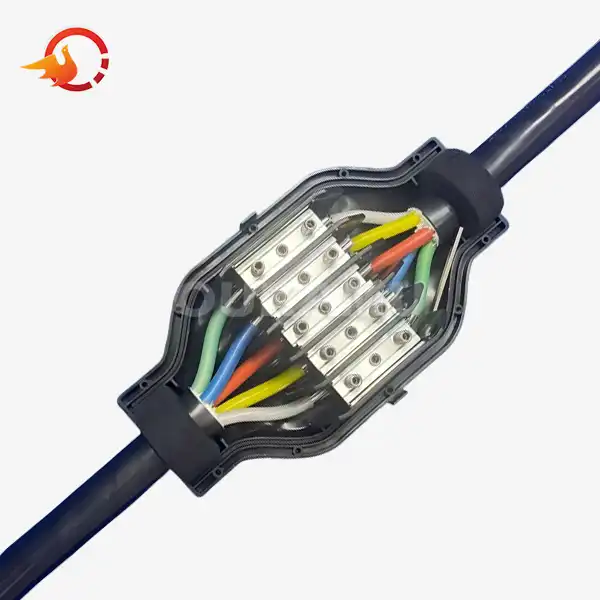
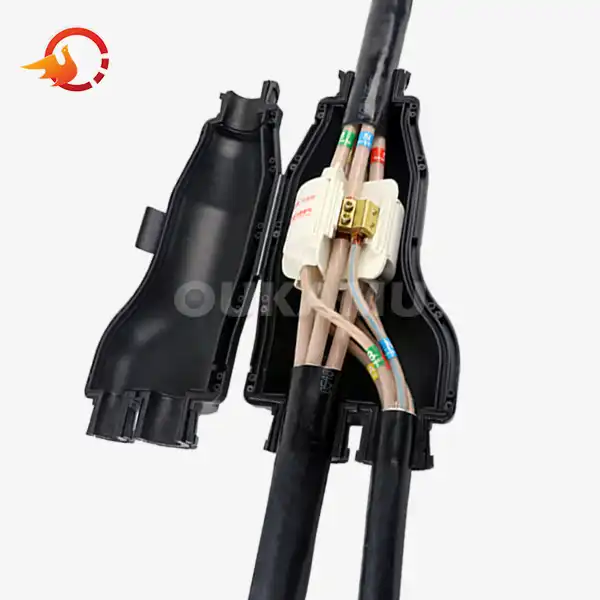
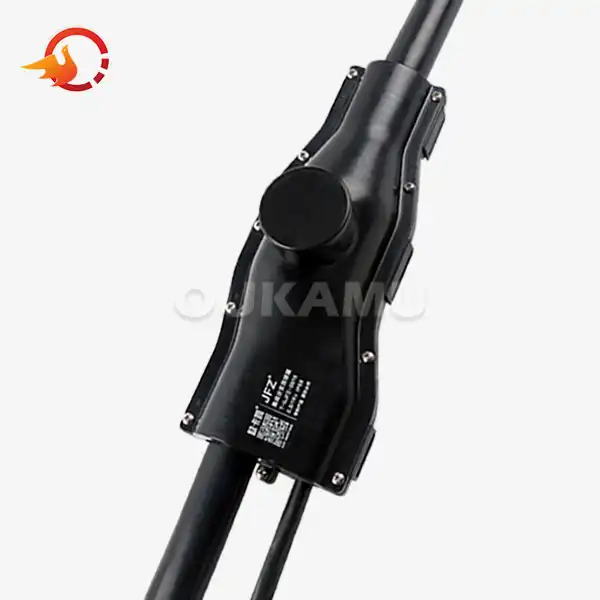
Cold-cured joints are easy to place because they don't need any extra heat. Technicians mix two-part glue mixtures on-site, then apply them to connections that have already been made and let them cure at room temperature. This versatility is very helpful for installations that need to be done from afar, fixes that need to be done right away, or cases where hot work isn't allowed. The Xi'an Oukamu ZR-JFZ-35/16 model is an example of advanced cold-cure technology. It has built-in branch connections that keep the main cable from having to be cut, as well as flame- and fire-resistant protection for cables from 10 to 35 mm in diameter and 2.5 to 16 mm in diameter on the branches, with a 0.6/1kV rated voltage.
Comparative Analysis with Alternative Methods
Heat shrink covers need to be applied with a torch and only fill in small gaps. With cold shrink tubes, you don't need heat, but there may be tiny holes. Silicone gel joints are flexible, but they don't protect against damage as well as solid plastic joints. Resin joints always perform better than other types when compared on factors like resistance to the climate, electrical integrity, mechanical strength, and service life. Because of this, they are the best choice for industrial plants that need to be up all the time, business buildings with strict safety rules, and green energy installations that will be exposed to extreme weather.
How to Choose the Best Resin Cable Joints for Your Project?
To choose the right parts, you need to carefully compare the technical specs to the project's requirements. When this process goes wrong, it leads to expensive problems in the field, late deliveries, and unhappy customers that hurt the names of distributors.
Voltage Rating and System Compatibility
Each joint has a maximum voltage value that must be the same as or higher than the voltage of the wire system. Low voltage systems usually work at 0.6/1kV, but some industry systems run a little higher. If you buy Resin Cable Joints that are rated below the system voltage, the shielding will break down and the joint will fail catastrophically. On the other hand, judging things way too highly raises costs without adding value. Before asking for quotes, procurement officers should check with engineering teams to make sure that the system power needs are correct.
Environmental and Mechanical Stress Assessment
Different installation settings are very different in how hostile they are to electrical lines. Vaults that are buried are always exposed to water. Installations outside have to deal with UV light and changes in temperature. Joints in factories may be exposed to vibrations, chemical vapors, or atmospheres that eat away at metal. For each stressor, different safety measures are needed. Underground runs are protected by waterproof joints that completely block water. UV-resistant formulas keep things from breaking down in the sun. Flame-retardant and fire-resistant features, like those in the ZR-JFZ-35/16 type that meets GB/T 14048.7-2016 standards, are very important for buildings that store dangerous materials or need better fire protection.
Installation Requirements and Project Constraints
Labor prices and project timelines are directly affected by how hard the installation is. Pre-molded joints are easy to install, but the cables need to be carefully prepared first. Cold-cured solutions are flexible, but they need to be mixed and applied carefully. Options that can be installed faster are better for projects with tight dates, even if they cost a little more in materials. On the other hand, setups with lots of schedule buffers can handle more complicated processes while still keeping unit costs low. Distributors who work with contractors like Oukamu's branch joints because they don't require cutting of the main wire, allow for flexible placement, and shorten the installation time. These benefits give contractors a competitive edge when bidding on projects.
Supplier Evaluation and Brand Comparison
The world market has a lot of different producers with different skills. Well-known names like 3M, ABB, and Siemens offer wide ranges of products that have been improved over many years. Regional experts can often offer cheap prices and helpful technical support. Procurement teams should look at how well sellers follow certification rules, how well technical paperwork is written, how many samples are available, and how quickly they respond to requests for help after the sale. With specialized R&D centers like Xi'an Oukamu's, which focus on improving products all the time through thorough testing, manufacturers show a commitment to quality that lowers long-term risk.
Resin Cable Joint Installation and Maintenance Guide
Even the best parts fail if they are not put together correctly. By carefully following the manufacturer's instructions and using proactive repair plans, you can protect your investment and keep service from being interrupted.
Cable Preparation Fundamentals
Careful planning of the cables is the first step to a successful fitting. Technicians must cut the insulation to the exact lengths given in the directions for fitting. Too much bare wire is exposed when you strip too far, and stopping short stops the connection from properly engaging. To get rid of rust, dirt, and wetness that make resin stick less well, cable surfaces need to be cleaned very well. When using advanced products like the ZR-JFZ line for branch connections, the main wire stays in place while the branch is prepared according to certain insertion depth standards. This keeps the main cable's integrity, which gets rid of a frequent way for it to fail and makes fitting easier.
Resin Application and Curing Protocols
For cold-cured Resin Cable Joints to work, the mixing ratios must be exact. Manufacturers usually say that the ratio should be 1:1 by volume. When these amounts aren't followed, too much hardener or glue is left over, which stops the polymerization process from finishing. To get rid of unmixed lines, scrape the sides and bottom of the jar as you mix. When you apply something counts; techs have to finish putting things together before gelation starts because of working time windows. Curing needs the right temperature ranges, which are usually 72°F to 85°F for best effects. Installations in cold places might need to be heated for a short time to make sure they dry properly. Putting heat on cold-cure resins or taking heat-cured parts out of the mold too soon hurts the structure's stability.
Quality Verification and Testing
Once the glue has hardened, it can be checked visually to make sure there are no gaps or cracks. A fully healed joint has a matte finish instead of a shiny one, which means the polymerization process isn't complete. Electrical testing with megohmmeters makes sure that the insulation resistance meets the basic requirements, which are usually hundreds of megohms. Pull tests on branch links show that the bonds are strong enough. Keeping track of all test results makes people responsible and gives information for fixing problems if they happen in the field. These steps of proof don't take long, but they save a lot of money by avoiding costly fails and service calls.
Preventive Maintenance and Inspection Schedules
Resin joints don't need as much upkeep as traditional ways, but they do last longer if they are checked on a regular basis. Visual inspections are done once a year to look for damage caused by vehicles, building work, or natural events. Thermal imaging finds "hot spots" that show problems are starting to form before they become too big to fix. Testing for moisture entry finds seal failure early on. These proactive steps are especially helpful for key lines that serve important loads and where unplanned outages can have very bad results.
Procurement Insights: Buying Resin Cable Joints Effectively
Strategic buying compares the immediate unit costs to the total costs of ownership while making sure that reliable supply chains meet customer promises and project deadlines.
Understanding Price Structures and Cost Drivers
Joint price takes into account more than just the cost of raw materials. A well-known brand usually comes with better technical help and guarantee terms, but it also costs more. Type of joint has a big effect on price; pre-molded parts are more expensive than cold-cure materials, but they require less fitting work. Large orders get big discounts, and wholesalers who combine purchases for several projects get better prices than small buyers who only buy one thing at a time. Costs are also affected by lead times, since faster shipping and making raise prices. Procurement managers get the most for their money by correctly predicting demand, grouping orders together to get bulk savings, and keeping extra supplies on hand to avoid having to pay extra for rush orders.
Supplier Reliability and Technical Support
Even though price is important, source dependability is often more important. Deliveries that are late slow down projects, which can lead to fines and unhappy customers. Poor quality leads to failures in the field that cost a lot to fix. Technical support that responds quickly can help with installation questions, while sellers that don't care leave customers suffering. Ask possible partners for customer examples and make sure they have worked on projects of a similar size before. Like Xi'an Oukamu, suppliers who give application engineering help, installation training, and field repair support provide value that goes beyond the product alone.
Balancing Local and International Sourcing
There are shorter lead times and easier operations with domestic sellers, but they may have fewer products or charge more. International suppliers, especially those in places with strong electrical component industries, offer reasonable prices and new goods. But longer shipping times, customs procedures, and trouble communicating mean that things need to be carefully managed. Stocking up on standard items that sell quickly from local sellers while also buying specialty items or large quantities from other countries is a common way to make good procurement decisions. Cost optimization and supply chain stability are both important in this mixed model for sourcing Resin Cable Joints.
Conclusion
To choose the best Resin Cable Joints for low-voltage uses, you have to weigh technical specs, fitting needs, and the cost of buying them. In harsh industrial and business settings, resin technology provides the best durability, safety, and efficiency. Knowing the differences between heat-cured, cold-cured, and pre-molded systems helps you choose the right goods for your job. Thoroughly evaluating suppliers, buying in bulk, and following the right installation steps all help to maximize value while reducing risk. Distributors, builders, and buying teams need to work with makers that are dedicated to innovation and customer success if they want to gain a competitive edge in their markets. This is because dependability standards are rising as electrical systems get more complicated.
FAQ
What advantages do resin joints offer compared to heat shrink alternatives?
Heat shrink covers can't completely fill in gaps, but resin joints can because they let liquid through. When the glue dries, it forms a single structure that is very strong, resistant to chemicals, and doesn't absorb water. Radial tension is what heat shrink methods depend on, but it can leave tiny holes where water can get in over time. Resin technology can also handle higher temps for longer periods of time without breaking down. This makes it better for industrial uses where the temperature is high or where circuits are under a lot of stress and making a lot of heat.
Can resin cable joints perform reliably in outdoor low voltage installations?
Today's resins are specially made to deal with problems that happen outside, like UV rays, changing temperatures, and water contact. Products that have UV inhibitors stop photodegradation from happening in the sun. Designs that are waterproof and completely enclose the electronics stop water from getting in even when they are submerged or flooded. Temperature-stable plastics keep their mechanical properties even when the temperature outside is between -40°F and 185°F. If you install outdoor joints correctly and follow the manufacturer's instructions, they will last for decades, meeting or even beating the longevity of indoor installations.
How long does typical resin joint installation require?
Installation time depends on the type of joint and the knowledge of the expert. With the right wire preparation, pre-molded joints can be put together in 15 to 30 minutes per link. Cold-cured systems take 30 to 60 minutes to mix, apply, and fix for the first time. However, the full cure takes 24 to 72 hours. The Oukamu ZR-JFZ-35/16 branch joint can be installed without cutting the main cable. This saves two to three meters of material and time compared to standard ways that need to cut the cable and reconnect it.
Partner with Oukamu for Superior Cable Connection Solutions
Distributors and purchasing officers looking for trusted resin cable joint sources will find that Xi'an Oukamu Electric Co., Ltd. offers the best value thanks to its 20 years of specialized experience. Our ZR-JFZ-35/16 type is a breakthrough in branch joint technology that protects against flames, fire, and water, while keeping the main cable's integrity. It meets the international standards of GB/T 14048.7-2016. The flexible, reusable installation design cuts down on wire length by two to three meters per link, which saves money on materials and speeds up project finish.
Email our team at info@okmbranchcable.com to talk about your particular needs, get technical specs, or set up product samples. You can look at our whole line of innovative cable connection items made for tough low voltage uses at okmbranchcable.com. We are a well-known manufacturer with advanced research and development (R&D) tools. We offer the expert help, consistent quality, and low prices that your business needs to succeed in tough markets.
References
1. International Electrotechnical Commission. (2020). "Low-Voltage Switchgear and Controlgear: Cable Management Systems." IEC Standard Publication Series.
2. Anderson, J. M., & Roberts, P. K. (2019). "Electrical Installation Practice: Modern Cable Joint Technology." Industrial Press Technical Manual, 4th Edition.
3. National Electrical Contractors Association. (2021). "Best Practices for Low Voltage Cable Termination and Jointing." NECA Installation Standards Committee Report.
4. Zhang, W., & Liu, H. (2018). "Comparative Analysis of Cable Joint Insulation Methods in Industrial Applications." Journal of Electrical Engineering & Technology, Vol. 13, No. 4.
5. European Copper Institute. (2022). "Cable Connection Reliability in Commercial Building Infrastructure." Technical Research Paper Series on Electrical Safety.
6. Williams, S. R. (2020). "Procurement Strategies for Electrical Distribution Components." B2B Industrial Supply Chain Management Quarterly, Spring Edition.